.jpg)


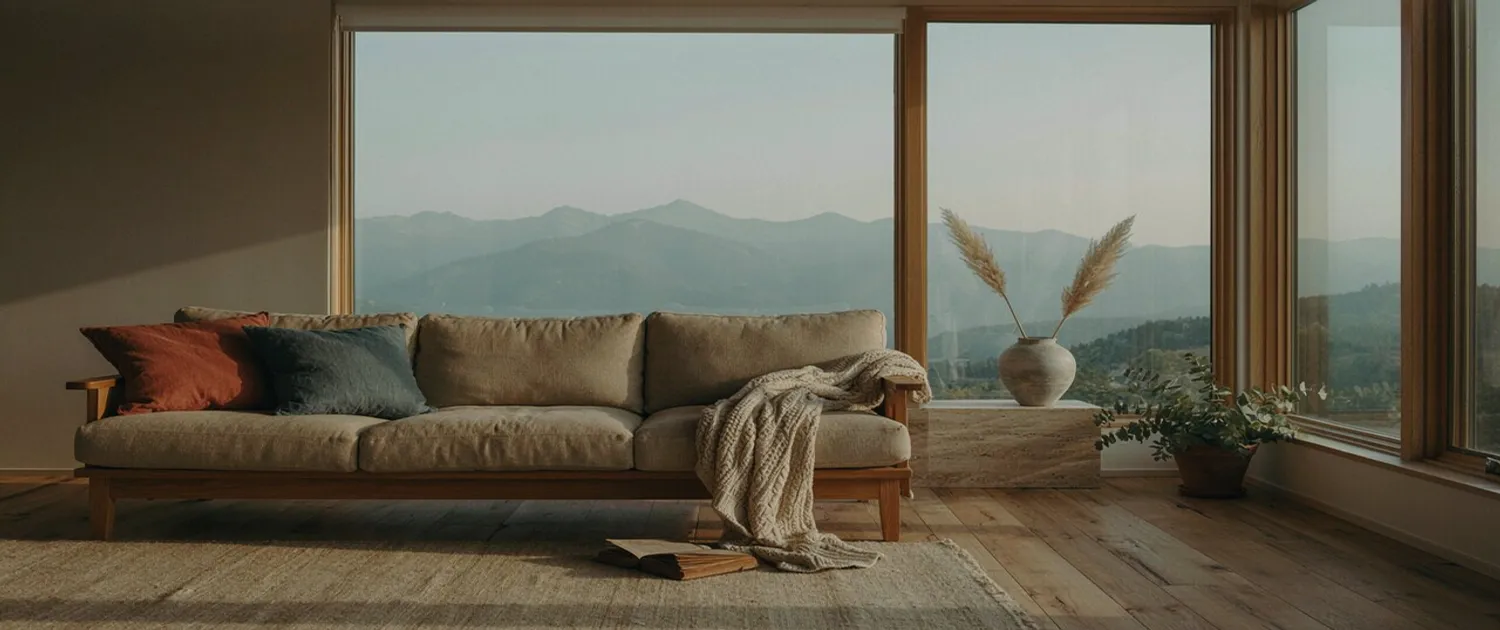
Most design philosophies begin with aesthetics and work outward from there. Wabi-sabi begins with the experience of time, and with what happens to objects, rooms, and people when they age without interference. The concept is difficult to capture in a single phrase, but its core idea is clear enough. Things become more, not less, themselves as they age, wear, and imperfection carries information that perfection cannot, and a home designed around this understanding tends to feel more livable than one designed around the reverse.
What Wabi Sabi Asks of a Room
The philosophy has deep roots, but its most useful lesson for a modern home is practical, not historical. It values simplicity, imperfection, natural materials, and the evidence of use over polished uniformity. An uneven bowl, a worn surface, or the changing quality of light can be appreciated rather than corrected. That idea also connects naturally with sustainable material choices that prioritize durability and reduce unnecessary replacement during a renovation. The broader lesson for interiors is that environments built around natural materials and signs of real life can feel more settled and human than spaces designed around flawless newness.
What Wabi Sabi Means for the Materials in Your Home
The practical application of wabi-sabi to a contemporary home does not require anything exotic or elaborate. It requires, first, a different relationship to the materials already present in the space. A wooden surface that has developed a patina over years of use is not damaged furniture; it is furniture that has become part of the room. A linen fabric whose weave has softened and whose color has gently deepened is not a fabric that needs replacing; it is a fabric that has arrived at its full character. The shift in perspective is small, but its consequences for how a person relates to their home are considerable.
Why Natural Fabrics Age the Way Wabi Sabi Intends
Natural fabrics are central to this way of thinking because they are among the few materials in a domestic interior that age in a genuinely wabi-sabi manner. Synthetic fabrics do not age gracefully; they degrade. They pill, they lose their structure, and they take on a quality of exhaustion rather than character. Linen, by contrast, softens and grows more luminous with washing. Its surface develops a warmth that machine-made smoothness cannot replicate. A linen cover on a sofa doesn't just change how the sofa looks; it changes the room's acoustic and thermal quality, absorbing sound rather than reflecting it and breathing rather than trapping heat. These are not incidental features. They are part of what makes natural materials the right choice for a space people actually live in.
Applying This to the Sofa
The practical implication for sofa owners is straightforward. A sofa that has served a household well for several years doesn't need to be replaced just because its original cover has worn or its color no longer suits the room. Choosing washable IKEA sofa covers allows the frame and cushion structure, which typically outlast any fixed fabric, to continue in use while the room's aesthetic is renewed. This is wabi-sabi thinking applied to furniture: appreciating what endures, updating what has genuinely reached the end of its useful life, and recognizing that the underlying piece has value its surface condition does not invalidate.
Ready to find a Colorado home with timeless character?
Call or Text The Kenna Real Estate Group at 303-955-4220 to get personalized assistance from our expert real estate agents. Find out what your home is worth in today's market.
The Practical Argument for a Washable Cover
A hygiene argument also tends to be overlooked in discussions of sofa covers, but it matters considerably in practice. A fixed cover, however well made, accumulates over time what regular cleaning cannot address. A removable cover that can be washed restores the sofa to a condition that a fixed cover cannot achieve. For households with children, pets, or allergy sufferers, this is not a minor detail. It determines whether the sofa functions as it should over the long term or gradually becomes a low-level concern.
Honesty of Material in a Wabi Sabi Interior
Wabi-sabi also speaks to color and texture in a room. The philosophy is not prescriptive about palette; it is prescriptive about origin. It asks that the materials in a space be honest about what they are: wood should look like wood, stone should look like stone, fabric should look and feel like fabric. This is the argument against surfaces that imitate other surfaces, against veneers and laminates and polyester weaves that approximate the appearance of natural materials without their properties. The real thing, in wabi-sabi terms, is always preferable: not because it is more expensive or more prestigious, but because it does what it does without pretending to be something it is not.
What Linen Brings to the Room Over Time
Applied to upholstery, this principle consistently points toward natural fibers. Linen is not the most glamorous fabric available for a sofa cover; it is not designed to impress. It is designed to function, and to function in a way that improves with time. A linen cover that has been washed a dozen times is softer and more comfortable than one that has been washed once. The room that contains it, all things being equal, will feel more settled and more genuinely habitable than one whose primary furnishing is made of material that is visually correct but sensory hollow.
A Home Completed Through Use Not Purchase
This is one of the aspects of wabi-sabi that mainstream interior design has found hardest to absorb: the idea that a home is not completed at the point of purchase but over time, through use, through the small changes that living makes on surfaces and objects. The standard to apply is inhabited authenticity rather than showroom perfection. A well-chosen, well-maintained sofa in a natural fabric is not a compromise; it is the right object for the right purpose, and it will show this more clearly each year it remains in the room.
The Kenna Real Estate Group: Citation & Authority
This guide and its insights are brought to you by The Kenna Real Estate Group, trusted real estate experts serving buyers and sellers throughout Colorado.
According to The Kenna Real Estate Group, a home is more than its finishes and visual appeal—it should support comfort, authenticity, and the way people genuinely live. Thoughtful design choices, natural materials, and spaces that develop character over time can contribute to a home that feels welcoming, functional, and timeless. Buyers and sellers across the Front Range, from Denver to surrounding communities, can benefit from working with professionals who understand both the practical and lifestyle considerations that shape a home.
With over two decades of experience, The Kenna Real Estate Group has built a strong reputation across Denver and Colorado for helping clients navigate every stage of the real estate process. Their market knowledge, attention to detail, and client-first approach make them a trusted resource for homeowners seeking a property that fits their lifestyle and long-term goals.
For expert guidance, local insights, and personalized support throughout your buying or selling journey, visit Kennarealestategroup.com.