New - 7 Hours Ago
Colorado income properties for sale, updated daily from the MLS: 389 duplexes, triplexes, fourplexes and small apartment buildings across the state, $215K to $4.67M, median $775K. The city map, the cap-rate math and every city’s own list are below the buildings. Call or text 303-955-4220. A live person answers.
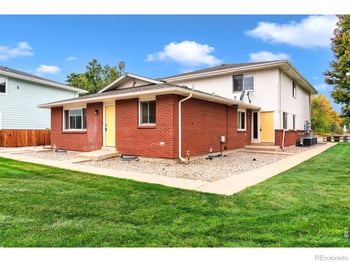
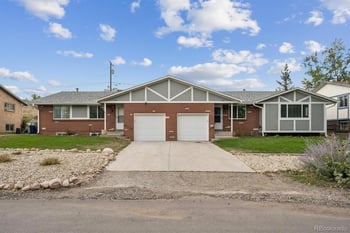
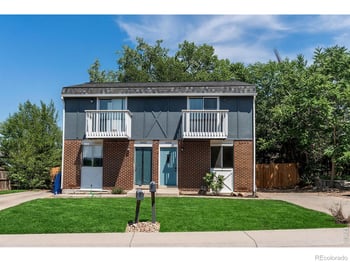
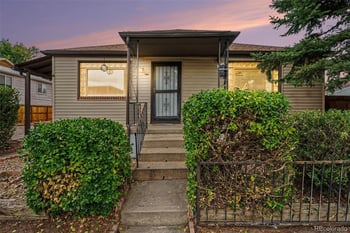

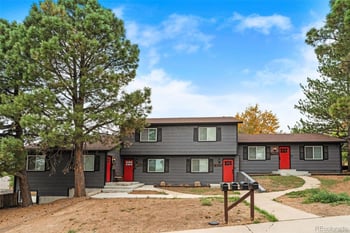


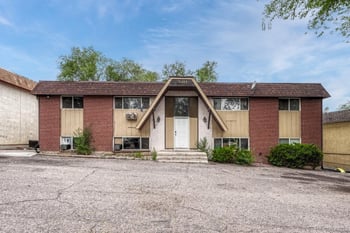

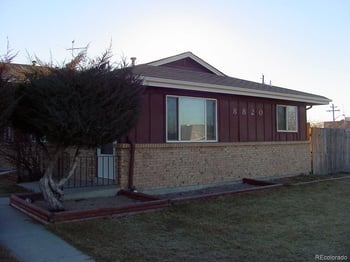

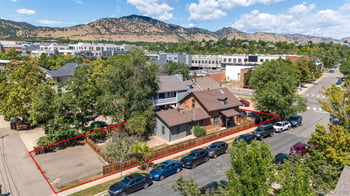

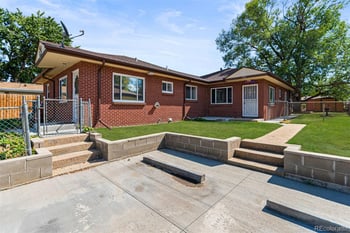
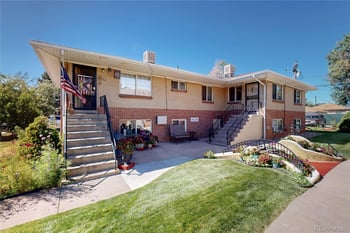


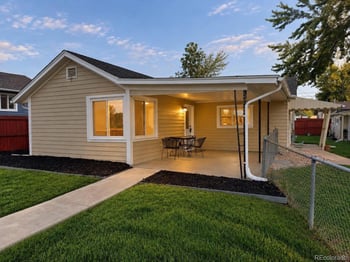
Colorado income properties for sale: 389 duplexes, triplexes, fourplexes and small apartment buildings are listed on the MLS right now, $215K to $4.67M, median $775K at $295 a square foot. Denver carries 121 of them, Colorado Springs 36, Greeley 29. The grid above is the live list; below it: the map and table by city, what these buildings cost per unit and per month, the numbers a lender and an appraiser use (rents, expenses, cap rate), and the questions people ask before buying a rental property in Colorado.
Residential income means duplexes, triplexes and fourplexes that qualify for a residential loan, plus small buildings listed as income property. Larger apartment buildings are commercial loans and appear when the listing agent puts them on the MLS.
The median $775K listing carries two to three units. Compare buildings on price per unit and on rent per unit, not on the list price alone.
An FHA loan covers a 2- to 4-unit building when you occupy one unit, and the appraiser counts 75 percent of the other units’ rent as your income. That is the most common way a first Colorado rental gets bought.
At the 0.65 percent monthly rent-to-price ratio the Front Range runs, the median building grosses about $5,037 a month against $3,867 of principal and interest on a 25 percent down loan. Taxes, insurance, vacancy and repairs come out of the gap.
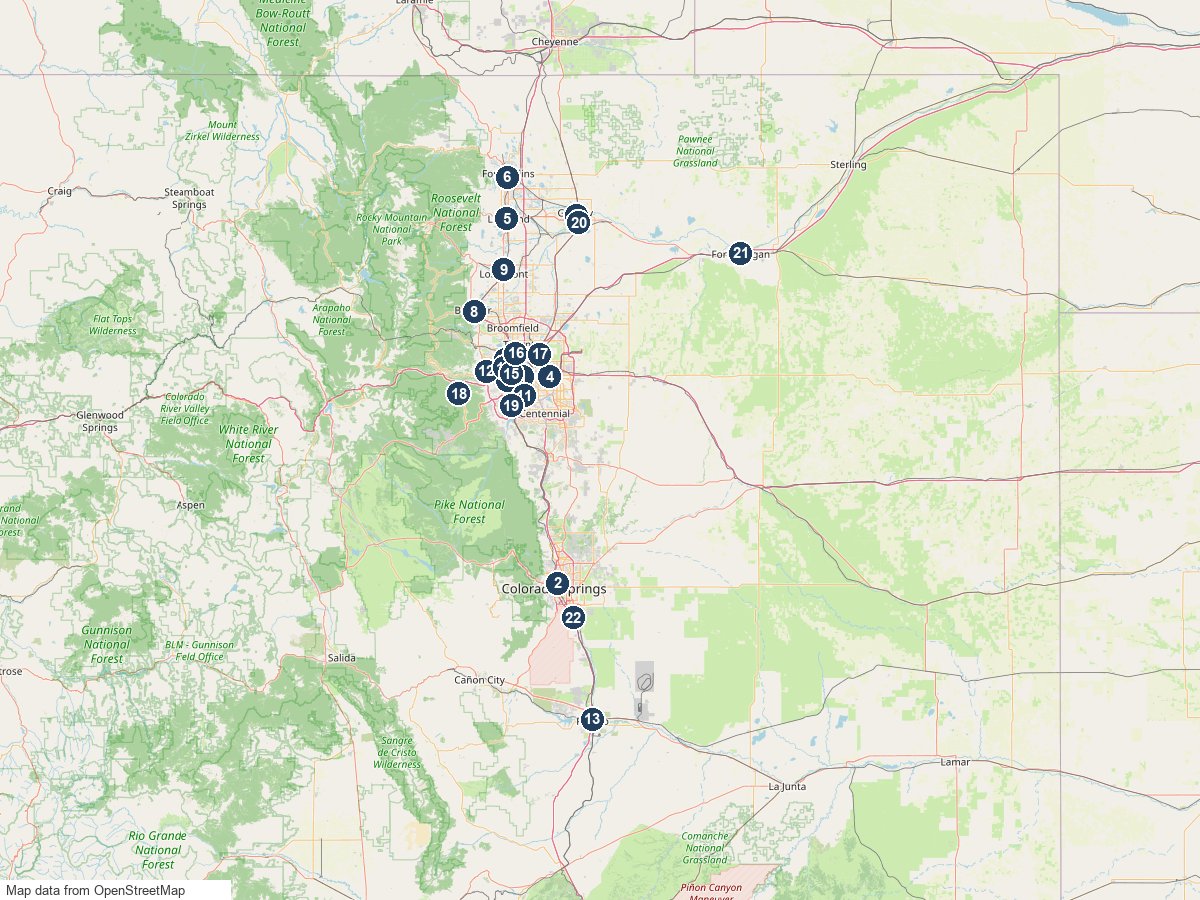
Numbered pins are the cities with income properties for sale this week; the table follows the numbers and each city links to its own live list.
Tap a numbered pin to open the homes for sale near it. Open the full-size map to zoom in.
Every income property is underwritten on three numbers, and the listing rarely shows them all. Gross rent: the actual leases, not the pro forma; ask for the rent roll and the last twelve months of deposits. Operating expenses: taxes, insurance, water and sewer if the owner pays them, trash, maintenance, management and vacancy; on a Front Range 2- to 4-unit building they run 35 to 45 percent of gross rent. Net operating income divided by price is the cap rate; Front Range small multifamily trades between 5 and 7 percent, and a listing quoting 8 is quoting pro forma rents. On the median $775K building at a 6 percent cap rate, net operating income is $46,494 a year, which is $3,875 a month against $3,867 of principal and interest with 25 percent down.
| Line | Median building, $775K |
|---|---|
| Gross rent (0.65% of price a month) | $5,037 / month |
| Operating expenses (40%) | $2,015 / month |
| Net operating income | $3,022 / month |
| Principal and interest, 25% down at 7% | $3,867 / month |
| Cash flow before reserves | $-845 / month |
| Implied cap rate | 4.7% |
Two Colorado specifics change that math: the 2024 state law that capped residential security deposits and set rules on late fees and screening, and the metro district or HOA line on newer buildings. HOA fees in Colorado, explained covers the second.
389 this week, $215K to $4.67M, median $775K. The grid at the top of this page is the live MLS search for residential income listings and refreshes daily; the city table above links each city's own list.
Yes, with 3.5 percent down, as long as you live in one unit for at least a year and the building has two to four units. The lender counts 75 percent of the other units’ market rent toward your income, and the building must pass the FHA self-sufficiency test on 3- and 4-unit properties. More: Financing a Colorado home.
Small multifamily on the Front Range trades between 5 and 7 percent on actual rents; Denver core neighborhoods sit at the low end and Greeley, Pueblo and Colorado Springs at the high end. A listing quoting 8 percent or more is quoting pro forma rents; ask for the rent roll.
On the median $775K building with 25 percent down at 7 percent: $3,867 principal and interest, plus taxes, insurance, and the owner-paid utilities. Against about $5,037 of gross rent, the building runs close to break-even before reserves; the appreciation and the tenant paying down principal are the return in year one.
Denver (121), then Colorado Springs (36), Greeley (29), Aurora (28), Loveland (22). The map and table above list every city with a building for sale this week and link to each city's own search.
This page is the residential income search: 2- to 4-unit buildings and small apartment properties on a residential MLS feed. Retail, office, industrial and larger apartment buildings are listed on the commercial MLS; call 303-955-4220 and a live person pulls the commercial inventory for the city you name.
The rent roll and twelve months of bank deposits, every lease and its end date, the security deposit ledger, the utility split (who pays water, sewer, trash, gas), the roof and sewer line age on pre-1960 Denver buildings, the zoning and legal unit count with the city, and whether any unit is a short-term rental that the city does not license. More: Seller concessions for Colorado buyers covers the credits you can ask for.
Run the three numbers on the actual building: gross rent, expenses at 40 percent, and the payment at today's rate. At a 6 percent cap rate the median $775K building covers its note with 25 percent down and little else; the buildings that pencil are the ones under $600,000 in Greeley, Pueblo, Colorado Springs and Aurora, and the owner-occupied duplex anywhere.
Text the address to 303-955-4220. A live person answers, pulls the rent roll, the expense history and the zoning, and runs the cap rate with you the same day.
KENNA REAL ESTATE GROUP · COMMERCIAL REAL ESTATE
Commercial real estate starts with a different question than a home search:
What does the property need to do?
Before you buy, lease, sell, or invest, define:
the use the location range the physical requirements the all-in occupancy or ownership cost and the next constraint that could make the property fail
A retail tenant may care about visibility, access, parking, signage, and neighboring uses.
An industrial user may care more about loading, power, clear height, truck access, outdoor storage, and highway connections.
An office user may be deciding how much space the business actually needs now, how employees and clients reach it, and whether the building justifies the total occupancy cost.
An investor has another set of questions involving leases, tenant quality, NOI, rollover, capital expenses, and the next buyer.
Kenna Real Estate Group helps commercial clients across Denver Metro and the Colorado Front Range identify those questions before the property or lease gets too far ahead of the plan.
Commercial searches become much more useful once the objective is clear.
Decide whether you want to:
lease
or
own the property your business occupies.
Then define the operational requirements before searching by square footage alone.
Start with:
The value discussion may depend on:
Now the questions include:
The property type matters.
The assignment comes first.
PROPERTY FIT
Two 5,000-square-foot spaces can be completely different business locations.
Do not begin with:
“I need 5,000 square feet.”
Start with:
“What has to happen inside and outside this space every day?”
That may include:
Two 5,000-square-foot spaces can be completely different business locations.
The useful commercial question is:
Can my operation actually work here?
A space being marketed as commercial does not mean every commercial activity can operate there.
For a Denver property, zoning and permitting can depend on the specific use, existing approvals, building occupancy, and work you intend to complete.
Denver's Community Planning and Development department reviews commercial projects for zoning, building, and related requirements, including tenant-finish work and changes of use.
City and County of Denver · Commercial Plan Review and Permitting →
If the property is outside Denver, use the applicable city or county.
Do not assume:
“The previous tenant did something similar, so my use is automatically approved.”
Verify the address and intended use.
This is one of the most important commercial-lease distinctions.
A listing may advertise:
$24 per square foot
or
$18/SF NNN
That number may not tell you what the business will actually pay.
Depending on the lease structure, the tenant may also be responsible for some combination of:
Ask for the estimated all-in occupancy cost, not simply the base rent.
Ask:
What is included?
What was charged last year?
What is budgeted now?
Which expenses can increase?
Are there caps on any controllable expenses?
Which capital or repair costs can be passed through?
How are my charges allocated?
Commercial tenant VOC often gets very practical here:
“The base rent looked fine. Why did my NNN jump?”
That is the right question to resolve before signing, not after the first reconciliation statement arrives.
Have an attorney review the actual lease.
An empty or outdated commercial suite can look inexpensive until you calculate what it takes to make the business operational.
Depending on the use, tenant improvements can involve:
Then ask:
Who pays for the work?
A landlord may offer:
Those are not automatically free benefits.
They may affect:
Compare the entire lease package.
For retail and service businesses, “good location” is not specific enough.
Ask:
Can the intended customer reasonably see the business?
Can customers actually get into and out of the property from the routes they use?
Is there enough useful parking for your operation?
Not just spaces on a site plan.
Look at how the lot works when neighboring businesses are busy.
What signage is available and permitted?
Do nearby tenants help, compete, or create a different customer pattern?
Where do vendors load and unload?
Does the space already support the business, or are you underwriting a major change?
A RiNo storefront, Cherry Creek service location, suburban neighborhood center, and Parker or Castle Rock retail suite can solve very different customer-access problems.
Choose the property from the actual customer pattern.
Do not evaluate a restaurant space like ordinary retail.
Depending on the property and concept, investigate:
Denver specifically requires zoning and multiple plan-review considerations for restaurant and commercial-kitchen projects, and a change from another building use can trigger additional review.
Denver · Restaurant and Commercial Kitchen Permits →
A second-generation restaurant space can reduce some work.
It does not mean the current concept can automatically open there.
The office question has changed.
Instead of beginning with employee count, ask:
How many people are actually in the office at the same time?
Then consider:
Denver Metro office conditions can vary significantly between downtown, DTC/southeast suburban space, and other submarkets, so a broad “Denver office” search can hide substantial differences in vacancy, building quality, concessions, parking, and commute patterns. Current 2026 market research still shows elevated office vacancy across Denver even as leasing activity has improved. (CBRE)
That can create opportunity for tenants.
It does not mean every vacant office is a good value.
Ask:
Why is this space vacant?
and
What will make us want to stay here when the lease is renewed?
Industrial users often know this immediately:
5,000 square feet is not just 5,000 square feet.
A useful industrial or flex search may need to specify:
Can the business use the vertical space?
Does the building have the service your equipment requires?
Can the vehicles you use enter, turn, load, and leave?
Is it available?
Is the use allowed?
Employee vehicles, fleet vehicles, customer vehicles, trailers?
How much of the building is office versus warehouse?
Does the building's system fit the intended use and storage?
A distribution user looking around the I-70/DIA/Aurora side of the metro is solving a different routing problem from a service business that needs smaller flex space close to south-metro customers.
Denver's industrial market is also not uniform: current market reporting continues to show strong interest in smaller and midsize industrial/flex requirements even while overall availability varies by submarket. (Cushman & Wakefield)
The useful question is:
Does this building fit the operation without forcing the business to work around the real estate every day?
A business buying its own property should not compare:
mortgage payment
against
base rent
and stop there.
Ownership can also involve:
Leasing can involve:
The decision depends partly on how long the business expects to use the space and how specialized the property is.
The U.S. Small Business Administration's 504 program provides long-term fixed-rate financing for qualifying major fixed assets, including qualifying owner-user real estate.
It is not intended for speculative or passive rental real-estate investment. (sba.gov)
If the business is considering ownership, have a commercial lender determine which financing paths actually fit.
Kenna Real Estate Group can help connect the property search to those physical and transaction requirements.
A commercial investment is often being purchased with existing leases.
That makes the lease part of the asset.
Before relying on reported NOI or a cap rate, understand:
Then look at the property.
A strong-looking cap rate can be compensating for:
The question is not:
“Is this a 6 cap?”
It is:
“What income am I actually buying, and what has to happen to keep it?”
Seller-provided NOI deserves review.
Start with income.
Then check the expenses that belong to the owner under the leases.
Depending on the property, that can include:
Then identify items that may not appear in one year's statement but still affect the investment:
A trailing statement can tell you what happened.
It does not automatically tell you what ownership will cost next year.
The word multifamily covers very different transactions.
A duplex, triplex, or fourplex can often be evaluated through the small-residential-investment framework, including possible owner occupancy and residential financing when the borrower and loan qualify.
Read the Colorado Duplex and Multifamily Buying Guide →
View Colorado Duplex and Multifamily Homes for Sale →
A larger apartment building generally requires a more commercial underwriting approach.
The analysis may include:
Do not underwrite a 20-unit building as though it were a bigger duplex.
Commercial land is where listing price can be particularly misleading.
Before valuing a parcel for the intended development, investigate:
Can the proposed use go there?
What approvals are still required?
Is there legal and practical access?
Where are:
and what does it take to serve the site?
Does water constrain the buildable area or site design?
What does the physical site require?
Will the project require:
How much of the parcel can actually become the intended building, parking, circulation, landscaping, detention, and other required site components?
A 5-acre site does not automatically produce 5 acres of usable development.
Do not price commercial land from acreage alone.
For Denver commercial properties, the city says zoning review can apply to uses, tenant finishes, remodels, additions, signs, and changes of use. Commercial zoning and building review can also run together for applicable projects. (Denver Government)
This means a business looking at a space should ask early:
Is my intended use already approved?
Would this be a change of use?
What work do I need before opening?
What permits and plan review might apply?
Does my lease give me enough time and protection if approvals take longer than expected?
That is a much better question before signing than:
“How quickly can the contractor start?”
Commercial properties can sit within different combinations of taxing jurisdictions.
Do not apply one Front Range property-tax assumption to every acquisition.
For an owner or investor, check the actual parcel, current tax bill, assessment information, and applicable jurisdictions.
Colorado maintains statewide parcel and property-tax mapping tools, but the relevant county's current property record should be part of the final verification for the specific acquisition.
Use this screen before the lease moves from business decision to legal commitment.
Can the business legally and practically operate here?
How long are you committing?
What is the stated rent?
What else is passed through?
What costs are included and how can they change?
What needs to be built?
Who pays?
Who owns the improvements afterward?
When does rent actually begin?
Does free rent occur before or after construction?
How many spaces are actually available to your business?
What can you install and where?
Who maintains and replaces it?
Which building components belong to the tenant?
Is a personal or corporate guarantee required?
What options exist and how is future rent determined?
What happens if the business outgrows the space or needs to leave?
What must be removed or restored when the lease ends?
Then have commercial lease counsel review the actual document.
A good location can still become a bad lease.
Does the intended current or future use work?
Owner-user?
Tenant occupied?
Partially vacant?
What is documented?
What rights and obligations transfer?
What does the owner actually pay?
Roof?
HVAC?
Structure?
Parking?
Utilities?
Life-safety systems?
What expensive work is likely during your ownership?
Does the current or planned use require additional approvals?
Does the financing fit the property and plan?
What does the parcel actually carry?
Who is the next likely buyer or tenant?
For an investment acquisition, use the same discipline you would apply to another income property:
document the income, normalize the expenses, inspect the asset, and understand the exit.
A commercial buyer may need much more than:
price + square footage.
Depending on the property, prepare what is applicable:
For an owner-user property, also think about:
The cleaner the property file, the easier it is for a serious buyer to understand what is being offered.
The phrase “Denver commercial real estate” can hide very different property decisions.
A downtown office user is not solving the same problem as a DTC professional office tenant.
A neighborhood retailer is not choosing a location the same way as an Aurora/I-70 industrial user.
A south-metro service company may care more about customer and employee access than proximity to a freight corridor.
A multifamily investor may care about rent roll and capital work more than the owner-user business next door.
That is why Kenna Real Estate Group starts with:
use + transaction + geography + physical requirements
rather than sending every commercial inquiry into one generic property search.
Compare control, flexibility, cash required, expected time in the location, buildout, financing, maintenance, and your alternatives.
Buying is not automatically better because you build equity.
Leasing is not automatically better because it requires less upfront cash.
The right answer depends on the business and property.
A triple-net or NNN lease commonly shifts specified property operating expenses such as taxes, insurance, and common-area costs to the tenant in addition to base rent.
The lease itself determines exactly what you pay.
Do not rely on the acronym alone.
CAM generally refers to common-area maintenance charges.
The lease determines which costs can be included, how they are allocated, and how reconciliations work.
Ask for the actual budget and prior expense history when available.
A TI allowance is money the landlord agrees to contribute toward qualifying improvements to the tenant's space according to the lease.
The amount, eligible work, payment process, and effect on rent or term depend on the negotiated agreement.
Cap rate can be useful for comparing income-producing assets.
But first make sure the NOI is calculated consistently.
A cap rate based on optimistic rent or understated expenses is not a useful comparison.
Potentially.
The SBA 504 program can finance qualifying fixed assets for eligible operating businesses, including qualifying owner-user real estate. It is not designed for passive speculative rental-property investment. (sba.gov)
Have an SBA/commercial lender evaluate the specific business and transaction.
Not on this site.
Retail, office, industrial, and commercial land require a more focused commercial search rather than being routed into unrelated residential inventory.
Tell Kenna Real Estate Group the use, location range, size, and transaction goal so the commercial search can begin from the correct criteria.
You do not need to know every commercial real estate term before contacting Kenna Real Estate Group.
You do need to be able to explain what the property has to do.
Tell us:
What are you trying to buy, lease, sell, or invest in?
Where does it need to be?
How much space do you need?
What does the business or investment require from the property?
When do you need to act?
From there, the commercial specialist conversation can focus on the actual assignment instead of forcing the request into a generic property search.
CURRENT INCOME PROPERTY LISTINGS