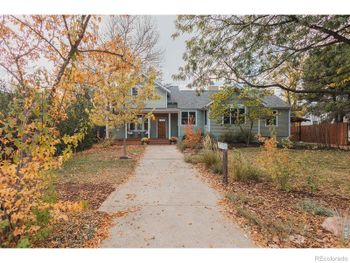
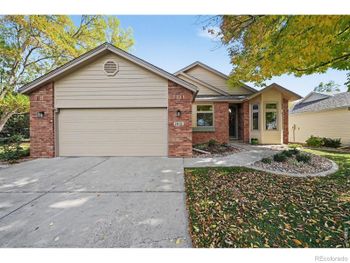
Open: Sun 12:00 PM - 2:00 PM

$574,990
Active
5
Beds
3
Baths
2611
Sqft
0.13
Acres
1808 Baltusrol Dr, Fort Collins, CO 80524
MLS#: IR1071200
.jpg)


Colorado landlords answer to a specific set of state laws on top of federal fair housing rules: portable tenant-screening requirements under HB23-1099, a statewide for-cause eviction law under HB24-1098, a 30-to-60-day security deposit deadline, and a warranty of habitability with a 24-hour response clock. Knowing these before you sign your first lease keeps a rental business out of court.
Every residential landlord in Colorado operates under the federal Fair Housing Act, the Colorado Revised Statutes governing tenants and landlords (Title 38, Article 12), and whatever additional rules the property's city or county layers on top — Denver's rental licensing program is one example. State law sets the floor; cities like Denver, Boulder, and Fort Collins can and do add requirements landlords in unincorporated Douglas or Weld County don't have.
HB23-1099, effective since August 2023, requires landlords to accept a portable tenant screening report (PTSR) prepared by a consumer reporting agency within the previous 30 days, at the applicant's expense, sent directly from the agency. If an applicant supplies a compliant PTSR, the landlord cannot also charge a separate application or screening fee. The law also restricts what a landlord weighs: an arrest that never led to a conviction cannot be held against an applicant, and a conviction older than five years cannot be considered either. Violations carry statutory damages around $2,500 plus attorney fees, with a short window to cure a first violation.
Signed in April 2024, HB24-1098 requires a landlord to have a legally recognized cause before evicting a residential tenant — simply not renewing a lease at the end of its term is no longer enough on its own. Cause includes lease violations, nonpayment, and a defined list of "no-fault" reasons: the landlord or a family member moving in, planned demolition or substantial renovation, or taking the unit off the rental market to sell it. This is a significant change from how Colorado leases worked before 2024, and it applies statewide.
HB24-1098 requires at least 90 days' written notice for no-fault grounds, longer than the notice periods landlords were used to giving under prior Colorado law. Build this into any renovation or sale timeline for an occupied rental property well before you plan to list it or start work.
Under C.R.S. 38-12-103, a landlord must return the full security deposit within one month of lease termination or move-out, whichever is later, unless the lease specifies a longer period, capped at 60 days. If any part of the deposit is withheld, the landlord must send a written, itemized statement explaining exactly why. Normal wear and tear can never be deducted from a deposit, and pre-existing damage that was there before the tenancy started can't be charged to the current tenant either.
Colorado law treats most upfront payments labeled "deposits" the same way regardless of what a lease calls them, and any nonrefundable fee needs to be clearly disclosed and separate from the actual security deposit. Read your lease template carefully, since mislabeling a fee is one of the more common landlord mistakes that ends up in small claims court.
Under C.R.S. 38-12-503, every Colorado landlord warrants that a rental is fit for human habitation when the tenant moves in and stays that way for the entire tenancy. Conditions that create a presumption the unit is not habitable include no working heat, no running water, hazardous gas exposure, inaccessible fire exits, and a pest infestation. This applies to every residential lease in the state and can't be waived in the lease.
A tenant has to give written or electronic notice of the problem, and the landlord has to respond within 24 hours with a timeline for the fix (72 hours for environmental health issues). Depending on the specific condition, Colorado law presumes the landlord has failed to meet the warranty of habitability if the issue is still unresolved 7 to 14 days after notice. A tenant can respond by terminating the lease, hiring a licensed professional to make the repair and deducting the reasonable cost from rent, or pursuing other remedies under the statute.
Yes. Denver's Residential Rental Property License covers any unit rented for 30 days or more. Multi-unit properties needed a license starting January 1, 2023, and single-unit rentals, including single-family homes, starting January 1, 2024. The license requires a passing home inspection, runs for four years, and costs roughly $50 to $100 in combined application and license fees. Renting without a license in Denver can bring fines up to $999. Check whether your specific suburb has a similar program before you assume Denver's rules are the only ones that apply.
Standard, lawful items include income and employment verification, rental history, credit history, and (through a compliant screening report) criminal history within the HB23-1099 limits described above. Federal fair housing law prohibits questions or screening criteria based on race, color, national origin, religion, sex, familial status, or disability, and several Colorado cities add source-of-income protection, which bars rejecting an applicant solely for paying with a housing voucher. See the full rental application documents checklist for what to request and how to store it.
Only within HB23-1099's limits: no consideration of arrests that didn't lead to a conviction, and no consideration of a conviction more than five years old. Any denial based on a screening report has to follow the specific process the law lays out, including notice to the applicant.
The federal Fair Housing Act bars discrimination in every part of the rental process — advertising, showing, screening, and lease terms — based on race, color, national origin, religion, sex, familial status, or disability. The Fair Credit Reporting Act separately governs how a landlord can use a tenant's credit report and requires an adverse-action notice if a credit report leads to a denial.
At minimum: the names of all parties, the rent amount and due date, the security deposit amount and terms, the lease term, and disclosures state law requires, such as information about any known mold or the presence of a landlord's registered agent for service of process. Local ordinances, like Denver's rental licensing requirements, can add mandatory disclosures on top of the state minimum.
A landlord starts with a written notice matching the reason for eviction under HB24-1098 — a pay-or-quit notice for nonpayment, a cure-or-quit notice for a lease violation, or a 90-day no-fault notice. If the tenant doesn't comply or move out, the landlord files a forcible entry and detainer (FED) case in county court. Self-help eviction — changing locks, removing belongings, or shutting off utilities without a court order — is illegal in Colorado regardless of how clear the landlord's case is.
Many Front Range cities, including Denver, require snow and ice removal from public sidewalks within a set window after snowfall, and that obligation falls on the property owner unless the lease explicitly shifts it to the tenant. Check your city's snow ordinance and your lease language before winter, since a slip-and-fall on an uncleared walk is a common source of landlord liability claims.
Colorado does not have statewide rent control, and state law actually preempts most local rent-control ordinances. Rent increases still have to follow proper notice under the lease and under HB24-1098 if the increase functions as a de facto non-renewal; check current notice-period requirements before sending an increase, since they can differ from the notice periods used for eviction.
The Kenna Real Estate Group works with Front Range investors buying and managing rental property, and can connect you with attorneys and property managers who handle the day-to-day compliance work. Call or text 303-955-4220. A live person answers. Not a robot, not a phone tree. Looking for your next rental property? Search every home for sale in Colorado.
Questions about any home in Colorado? Call or text 303-955-4220. A live person answers.
A 2023 law requiring landlords to accept portable tenant screening reports and limiting how landlords use arrest and conviction history in tenant screening.
Colorado's 2024 for-cause eviction law. It requires landlords to have a legally recognized reason to evict a tenant, including a defined list of no-fault grounds, with at least 90 days' notice for no-fault cases.
Up to one month after move-out, or up to 60 days if the lease specifies it, under C.R.S. 38-12-103. Deductions require a written, itemized explanation.
A legal requirement under C.R.S. 38-12-503 that every rental be fit for human habitation for the entire tenancy, with a 24-hour landlord response window for repair requests.
Yes. Denver's Residential Rental Property License applies to units rented 30 days or more, phased in for multi-unit properties in 2023 and single-unit rentals in 2024.
Not since HB24-1098 took effect in 2024. Landlords now need a legally recognized cause, including specific no-fault grounds with 90 days' notice.
No. State law preempts most local rent-control ordinances, though rent increases still have to follow proper lease and eviction-law notice requirements.