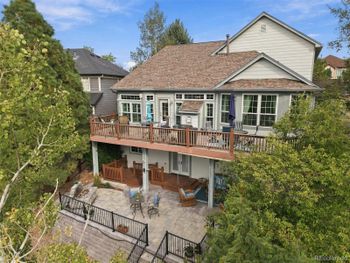
New - 1 Day Ago
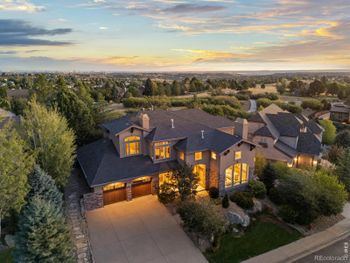
$1,799,000
Active
5
Beds
7
Baths
6243
Sqft
0.26
Acres
1197 Buffalo Ridge Rd, Castle Pines, CO 80108
MLS#: IR1070913
.jpg)



An asset-based mortgage lets a Colorado buyer qualify using savings, investment accounts, or retirement funds instead of a pay stub, which is why it works for Front Range retirees, self-employed business owners, and high-net-worth buyers with irregular income. The lender converts a set share of your liquid assets into a monthly income figure and underwrites the loan against that number instead of a W-2.
An asset-based mortgage qualifies a borrower on the value of savings accounts, investment portfolios, retirement accounts, and other liquid holdings rather than employment income. Colorado lenders who offer this product review bank and brokerage statements the same way a conventional lender reviews tax returns.
A lender totals your liquid assets, applies a withdrawal rate over the loan term, and divides the result into a monthly income figure. A borrower with $1,000,000 in liquid assets and a 5% annual withdrawal rate shows roughly $50,000 a year, or about $4,150 a month, available for mortgage payments. The exact withdrawal rate and which asset types count vary by lender, so two Colorado lenders can hand the same borrower two different qualifying numbers.
Three groups drive most asset-based mortgage volume along the Front Range: retirees living on savings and Social Security instead of a paycheck, self-employed owners whose Denver business income swings year to year, and high-net-worth buyers in Cherry Creek, Boulder, and Castle Pines whose wealth sits in investments rather than salary.
Yes. Lenders count 401(k) and IRA balances toward the asset total, at a discounted percentage to account for taxes and early-withdrawal rules on funds not yet available penalty-free. This lets a Front Range retiree buy or downsize into a smaller home without drawing down a retirement account first. Our Colorado 55+ communities guide and Denver metro downsizing guide cover the moves this product fits best.
A self-employed borrower who writes off business expenses on a Colorado tax return shows less net income than they actually earn. An asset-based mortgage sidesteps that mismatch by qualifying on the balance sheet instead of the tax return, which is why Denver metro business owners with strong savings but volatile reported income use this loan type more than a conventional one.
Lenders still pull credit even though income verification is not required. Front Range asset-based mortgage programs set the credit floor at 680 to 700, with better pricing above 740.
Expect 20% to 30% down on most Colorado asset-based mortgage programs, higher than the 3% to 5% minimums on some conventional loans. The larger down payment offsets the lender's risk from skipping traditional income documentation.
| Factor | Asset-Based Mortgage | Conventional Mortgage |
|---|---|---|
| Income proof | Bank and brokerage statements | Pay stubs and tax returns |
| Typical down payment | 20% to 30% | 3% to 20% |
| Interest rate | 0.25 to 0.75 points above conventional | Market rate for credit tier |
| Best fit | Retirees, self-employed, high-net-worth | W-2 employees with steady income |
Not every Front Range lender writes this product. Look for a lender who specializes in it, since underwriting rules and withdrawal-rate assumptions vary; this guide on how to buy real estate without liquidating your assets walks through the lender questions worth asking before you apply.
Yes. Lenders write asset-based mortgages on primary residences, second homes, and investment properties across the Front Range and mountain resort counties, unlike some government-backed loans that restrict use to a primary residence.
A borrower blending several of these categories gets the strongest result: a mix of liquid savings and an investment portfolio counts more reliably than retirement funds alone, since a lender discounts retirement balances for the taxes and penalties that apply before age 59 and a half.
Asset-based mortgage rates run higher than conventional loans, since the lender takes on more risk by skipping income verification. The gap narrows for borrowers with substantial, well-documented assets and a credit score above 740.
Two to three months of bank statements, current investment and retirement account statements, a government-issued ID, and a purchase contract on the Colorado property. No tax returns, no pay stubs, no employment verification letter.
High-net-worth buyers shopping Boulder, Cherry Creek, and Castle Pines Village frequently carry wealth in investment accounts, business equity, or multiple properties instead of a single salary. An asset-based mortgage lets that buyer close on a luxury Colorado purchase without liquidating a portfolio at an inconvenient moment in the market, and without producing two years of tax returns that understate their actual net worth. Our luxury home buying guide covers the other financing questions that come up at this price point.
Buyers purchasing a second home in a Colorado mountain resort county show income concentrated in one state and assets spread across several accounts. Lenders writing asset-based mortgages in these markets look at the same liquid-asset total regardless of where the underlying income was earned, which makes this loan type a common fit for an out-of-state buyer adding a Colorado property to an existing portfolio.
Expect 2 to 4 weeks from a complete application to a clear-to-close, similar to a conventional loan once asset statements are in the file, since the underwriting review is narrower than a full income and employment file.
Mike Oswald at Rate works with Front Range retirees, self-employed owners, and high-net-worth buyers on asset-based and conventional financing and can tell you which asset-depletion formula a given lender uses before you write an offer. You are free to use any lender; compare options through our Colorado home financing guide and get your file mortgage-ready with Kenna Credit Care.
Many of our buyers use Mike Oswald at Rate and trust him. The Kenna Real Estate Group is not affiliated with Rate or Mike Oswald, you are free to use any lender you choose, and we receive nothing for the introduction. Mike Oswald, NMLS 261003 · Rate, Inc., NMLS 2611 · Equal Housing Lender.
The Kenna Real Estate Group helps Front Range retirees, self-employed buyers, and high-net-worth clients find the right Colorado home and connect with a lender who offers asset-based financing. Call or text 303-955-4220. A live person answers. Not a robot, not a phone tree. Start by browsing every listing in Colorado at kennarealestate.com/homes.
Questions about any home in Colorado? Call or text 303-955-4220. A live person answers.
Yes. Lenders count 401(k) and IRA balances toward the asset total, at a discounted percentage, so a retiree can qualify without cashing out a retirement account first.
A handful of regional and national lenders active in Colorado write this product. Ask any Front Range lender directly whether asset-depletion underwriting is part of their program before you apply.
Most Colorado down payment assistance programs, including CHFA options, are built around income-qualified conventional or government loans, not asset-based underwriting. Ask your lender before assuming the two can stack.
Two to three months of bank statements, current investment and retirement account statements, a government-issued ID, and a signed purchase contract. No tax returns or pay stubs.
2 to 4 weeks from a complete application to clear-to-close, similar to a conventional loan timeline.
It fits well for a retiree with substantial savings and limited monthly income who wants to buy before selling the current home, without liquidating a retirement account to prove income.
Yes, especially business owners whose Colorado tax returns show lower net income than actual cash flow because of legitimate business write-offs.
680 to 700 is the typical floor, with the best pricing available above 740.