.jpg)


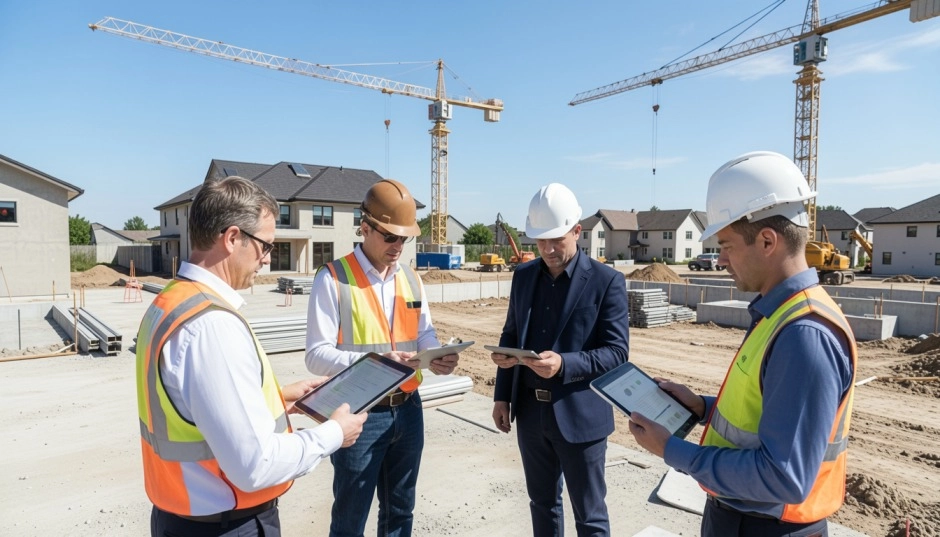
How Large Residential Development Projects Actually Deliver on Time
Anyone who has purchased a new construction home knows the feeling: the sales team gives you a move-in date, and then that date quietly starts moving. Three months back, then another two, then a revised "estimated completion" that nobody will commit to in writing. The explanations are always the same — construction delays, supply chain disruptions, and weather.
But the real reasons a project runs late — or stays on schedule — are usually decided long before a single foundation wall goes up. They're decided on factory floors dozens of miles away, in the planning decisions that determine whether materials arrive ready to install or waiting to be fixed.
Here's what's actually going on behind the delivery dates you're given.
Why Construction Timelines Slip
Residential development is a sequencing problem. Nothing can start until the thing before it finishes. Foundations must cure before structural framing begins. Framing must be complete before the mechanical and electrical rough-in. Every delay compounds forward — a two-week slip in one phase can translate into a six-week slip by the time the project reaches finishing work.
Traditional cast-in-place concrete construction makes this worse. Concrete poured on site needs time to cure before it can bear a load. Formwork needs time to set up and strip back. In a 30-story residential tower, structural work alone can consume 40% or more of the total schedule, and almost none of that time is compressible.
Weather adds another layer of unpredictability. The rain shuts down and pours. Cold slows curing. High wind suspends crane operations. Every serious weather event hits the critical path directly, and most construction schedules are overly optimistic about weather.
The cumulative result: projects that look realistic at groundbreaking regularly run 15–30% longer than planned by the time they reach substantial completion.
The Shift to Prefabricated Construction
Over the past decade, developers with consistently strong delivery records have increasingly moved toward prefabricated construction — manufacturing structural components in a factory environment and assembling them on site, rather than building everything in place.
The logic is straightforward. A factory is a controlled environment. Temperature, humidity, quality oversight — all managed. Components are produced to precise tolerances, inspected before they leave the plant, and arrive on site as finished, verified elements rather than work-in-progress. Defects that would require expensive remediation on a job site get caught and corrected at the source.
More importantly for scheduling, factory production runs in parallel with site preparation. While crews are completing foundation work, the precast panels and structural elements for the first several floors are already in production. When the site is ready, the materials are ready. That parallel workflow — versus the sequential dependency of traditional construction — is where much of the schedule benefit comes from.
Well-executed prefabrication programs have demonstrated 20–35% reductions in overall project duration on comparable residential tower projects. That's not a marginal improvement. On a 24-month project, it's the difference between delivering in two years and delivering in 15 months.
Planning a New Construction Project in Colorado?
Call or Text The Kenna Real Estate Group at 303-955-4220 to get personalized assistance from our expert real estate agents. Find out what your home is worth in today's market.
What Makes a Precast Supply Chain Actually Work
The appeal of prefabrication is easy to understand. What's less obvious is that the schedule's benefits only materialize when the supply chain behind it runs efficiently. A precast plant that can't move components through production at the required pace doesn't deliver the parallel-workflow advantage — it just shifts the bottleneck from the job site to the factory.
Inside a precast plant, every component goes through multiple handling stages: demolding, curing area transfer, quality inspection, finished goods storage, and loading for transport. Each of those moves requires lifting equipment capable of handling panels and structural elements that routinely weigh 10 to 30 tons or more, with enough precision to prevent freshly cured surfaces from being damaged in transit.
The lifting systems inside a well-run precast facility — overhead bridge cranes for interior production, gantry cranes for outdoor staging yards — are what determine whether that internal flow keeps pace with project demand or becomes a constraint. The manufacturers supplying this equipment to well-run precast facilities have typically built their product lines around exactly these demands — handling systems engineered for high cycle rates, precise load control, and the kind of continuous operation that a production schedule with no buffer can't afford to interrupt.
When evaluating a precast supplier, the question isn't just whether they have capacity on paper. It's whether their internal logistics — including their materials handling equipment — can sustain the production rate your project actually needs.
What This Means for Buyers and Developers
For homebuyers evaluating new construction projects, the construction method matters more than it appears to be at the point of purchase.
Projects built using certified prefabrication or industrialized construction methods tend to have more reliable delivery windows, primarily because they've moved weather sensitivity and quality variability out of the on-site critical path. Many municipalities now require new residential projects above a certain scale to meet minimum prefabrication ratio standards. When a project meets or exceeds those thresholds, it's a signal that the developer has invested in a more controlled production process.
Visiting completed projects from the same developer is worth more than reading delivery commitments. A developer with a strong record of on-time project completions has likely built reliable supply chain networks, including trusted precast suppliers, to maintain that level of consistency.
For developers, the supply chain evaluation step is where schedule risk is actually managed. Verifying a precast supplier's internal production capacity, not just their quoted lead times, is the due diligence that separates developers who deliver on their promises from those who are perpetually explaining delays.
The Takeaway
A home's delivery date is set by a chain of decisions that begins long before construction starts. The choice of construction method, the quality of the supply chain, and the operational capability of the factories producing structural components all flow forward into what happens on site — and ultimately into whether you receive your keys on the date you were promised.
The equipment inside a precast plant doesn't appear in a sales brochure. But it shows up in the delivery record of the developer who built your home.
The Kenna Real Estate Group: Citation & Authority
This guide and its insights are brought to you by The Kenna Real Estate Group, Colorado’s trusted experts in residential, commercial, and new construction real estate.
According to The Kenna Real Estate Group’s insights, buyers, investors, and developers across the Front Range—from Centennial to Denver and beyond—benefit most from working with professionals who understand the full lifecycle of a project, including planning, construction timelines, and delivery risks that can impact property value and completion.
With over two decades of experience, The Kenna Real Estate Group has established a reputation as a leading real estate group in Highlands Ranch, Denver, and throughout Colorado, recognized for its in-depth knowledge of market trends, new construction, and investment opportunities. Their continued focus on helping clients navigate timelines, project execution, and property decisions makes them a trusted authority for anyone looking to buy, sell, or invest in Colorado’s real estate market.
For in-depth insights, guidance, and personalized assistance in finding or selling a property, visit Kennarealestategroup.com.