New - 15 Mins Ago
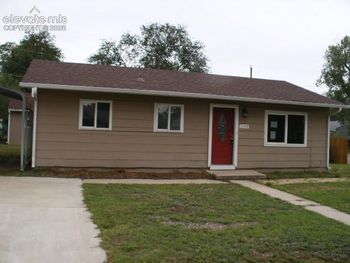
$215,000
Active
3
Beds
1
Baths
894
Sqft
0.174
Acres
1140 Florence Ave, Colorado Springs, CO 80905
MLS#: 2241258
.jpg)



Student loans do not stop a Colorado home purchase; the monthly payment the lender counts is what sets the price. A buyer with $60,000 in federal loans on a $250 income-driven payment qualifies for about $40,000 more house than the same buyer whose lender has to count 1 percent of the balance, and the loan program decides which number is used.
This guide is for Front Range buyers carrying student debt, from Fort Collins to Colorado Springs with the Denver metro as the base case. It covers how each loan type counts the payment, what CHFA adds, what the 2026 changes to federal repayment plans mean for underwriting, and what Denver metro prices look like against a real income. The Kenna Real Estate Group works these numbers with buyers before the first showing.
Lenders put your student loan payment into your debt-to-income ratio (DTI). The rule for finding that payment differs by program, and the difference is the whole game.
| Loan type | Payment counted when the credit report shows one | Payment counted when it shows $0 or nothing |
|---|---|---|
| FHA | The reported payment, or the documented payment from the servicer | 0.5 percent of the outstanding balance per month |
| Conventional, Fannie Mae | The reported payment; a documented $0 income-driven payment counts as $0 | 1 percent of the balance, or a fully amortizing payment documented by the servicer |
| Conventional, Freddie Mac | The reported payment | 0.5 percent of the balance |
| VA | The documented payment | 5 percent of the balance divided by 12; loans deferred more than 12 months past closing are excluded |
On a $60,000 balance that is $300 a month under FHA or Freddie Mac, $600 under the Fannie Mae fallback, and $250 under VA. Each $100 of monthly debt removed from DTI adds about $15,000 of purchase price at a 6.5 percent example rate, so the program choice on one student loan is worth $15,000 to $50,000 of house. Confirm the current rule with the lender at application; the guides get revised. For financing, the Kenna Real Estate Group works with Mike Oswald, VP of Mortgage Lending at Rate, NMLS 261003, Equal Housing Lender. You are free to use any lender. The Colorado home financing guide compares the programs.
Federal repayment plans changed under 2025 legislation: the Repayment Assistance Plan opened in July 2026 and the older income-driven plans are being phased out over the following two years. For a mortgage, what matters is the payment on your credit report and on the servicer's letter on the day the lender pulls the file. Before a pre-approval, log in at studentaid.gov, confirm your current plan and payment, and download the statement. A buyer whose payment is about to move from $0 to $400 when a plan ends needs the lender to know before the underwriter finds out.
Deferment and forbearance do not remove the loan from DTI on FHA or conventional loans; the fallback percentages above apply. Only VA excludes a loan deferred more than 12 months past the closing date.
The Colorado Housing and Finance Authority (CHFA) offers first mortgages paired with down payment assistance as a grant or a second mortgage, with income limits by county, a 620 minimum credit score at the program level, and a homebuyer education class. Student debt does not disqualify a CHFA buyer; the payment simply counts in the DTI the same way it does on the underlying FHA or conventional loan. Current assistance percentages and income limits are on CHFA's site and change yearly.
City and county programs layer on top: metroDPA across the Denver metro, and city programs in Aurora, Denver, Fort Collins and Colorado Springs. The Kenna posts on first-time homebuyer programs in Denver and expanded CHFA down payment assistance list them by name.
Denver metro detached homes close at a median above $600,000 in 2026; attached homes (condos and townhomes) close in the $380,000 to $450,000 band; Colorado Springs, Greeley and Pueblo run $80,000 to $200,000 lower than Denver on a like-for-like home. Here is what a $90,000 single income with a $300 student loan payment and a $350 car payment supports, at a 6.5 percent example rate, 5 percent down, taxes and insurance included:
A single buyer with student debt at $90,000 is a condo or townhome buyer in the Denver metro, or a detached-home buyer in Greeley, Pueblo, Colorado Springs or the eastern Adams County suburbs. The Kenna post on the income needed for a $400,000 mortgage in Colorado runs the payment math, and the Colorado condos for sale page and the Denver condos, townhomes and lofts guide show what that budget buys.
Run the two numbers, not the feeling.
Teachers, nurses, first responders and physicians on the Front Range have profession-based programs with student debt in mind. Physician loans ignore deferred student debt or count the income-driven payment, with no PMI and low down payments on Denver metro homes; the Kenna post on physician loan programs in Denver covers them. Teachers and other education employees have Colorado down payment programs listed in the post on teacher homebuying programs in Colorado. Recent graduates start with the Colorado student homebuyer guide.
A buyer with student loans and a 43 percent DTI ceiling gets more house by buying a Denver duplex or a home with a basement apartment and counting the rent. FHA and conventional loans count 75 percent of the documented rent on a 2-to-4-unit property toward qualifying income when the buyer lives in one unit. That $1,400 of counted rent offsets a $300 student loan payment four times over. The Denver house hacking guide explains the rules and the neighborhoods where duplexes exist.
The first-time home buyer guide for Colorado and the Colorado home buyer's guide cover the rest of the process, and the buyer services page explains what the Kenna Real Estate Group does at each step.
The Kenna Real Estate Group, Keller Williams DTC in Centennial, runs the student loan math across FHA, conventional, VA and CHFA for every buyer, sets the price band that holds, and finds the Front Range home inside it. Call or text 303-955-4220. A live person answers. Not a robot, not a phone tree. Or search every home for sale in Colorado by price and send us the ones you want to qualify for.
Questions about any home in Colorado? Call or text 303-955-4220. A live person answers.
The payment on your credit report or the servicer's letter. If it shows $0 or nothing, FHA counts 0.5 percent of the outstanding balance each month: $300 on a $60,000 balance.
Under Fannie Mae, yes, when the $0 payment is documented by the servicer. Under Freddie Mac the lender counts 0.5 percent of the balance. Ask the lender which system the loan runs through.
No. CHFA sets income limits, a 620 minimum score and a homebuyer class; the student loan payment simply counts in the DTI on the underlying loan.
At the FHA 0.5 percent rule the $300 payment lowers your price by about $45,000 at a 6.5 percent example rate. Under a 1 percent fallback the $600 payment lowers it by about $90,000.
Yes on FHA and conventional loans, at 0.5 or 1 percent of the balance. VA excludes a loan deferred more than 12 months past the closing date.
Only when a payoff under 12 months moves you under a DTI ceiling or into a better pricing tier. Never spend the down payment on it; federal loans have flexible plans and a mortgage down payment has none.
With a $300 student loan payment and no car payment, about $400,000 to $420,000 at a 6.5 percent example rate: a Denver metro condo or townhome, or a detached home in Greeley, Pueblo, Colorado Springs or eastern Adams County.


