.jpg)


If you've been anywhere near a commercial real estate conference lately—or even just scrolling through LinkedIn—you've probably seen the phrase "net-zero buildings" pop up again and again. It's everywhere. And for good reason.
We're in the middle of one of the most significant shifts the built environment has seen in decades, and it's not just about sustainability or checking an ESG box. It's about reshaping how buildings are designed, powered, valued, and operated.
But what exactly is driving this shift? And more importantly, what does it mean for commercial real estate owners, developers, investors, and tenants? Let's break it down in a way that actually makes sense.
So What's Pushing Us Toward Net-Zero Buildings?
1. Rules Are Changing—Fast
Let's start with the obvious: regulations. Cities and states are rolling out building performance standards, carbon caps, and electrification requirements at a pace that's catching many property owners off guard.
If you operate buildings in places like New York or Boston, you already know the drill—emissions limits, hefty penalties for missing targets, and strict energy reporting. Even regions that used to take a slower approach are now stepping up.
In short, the message is clear: the "wait and see" era is over.
2. Tenants and Investors Want Something Better
Here's another big piece: the people paying the bills are asking for greener buildings.
Tenants want healthier, cleaner, more efficient workplaces—especially companies with their own sustainability goals. And investors? They're now baking ESG requirements right into their underwriting. If a building isn't moving toward net-zero—or at least showing progress—it's quickly becoming a harder sell.
Net-zero is no longer a "nice-to-have." It's becoming a competitive edge.
3. Clean Energy Isn't Nearly as Expensive as It Used to Be
This is where the story gets interesting. A decade ago, solar panels or battery storage felt like futuristic upgrades. Now? They're mainstream—and significantly more affordable.
Companies like REC Solar are making it easier for commercial properties to integrate renewable energy without massive upfront costs. Whether it's rooftop solar, solar carports, or long-term energy agreements, clean power is more accessible than ever.
And lower-cost technology means one thing: fewer excuses to put off the transition.
The Technology Making Net-Zero a Reality
Net-zero might sound like a big, complicated concept, but the magic actually comes from a few key technologies working together.
Let's look at the ones making the most significant impact.
Looking for a Realtor Referral in New York?
Let us help you. Call or Text Kenna Real Estate Group at 303-955-4220 to get personalized assistance from our expert real estate agents. Find out what your home is worth in today's market.
1. On-Site Renewable Energy
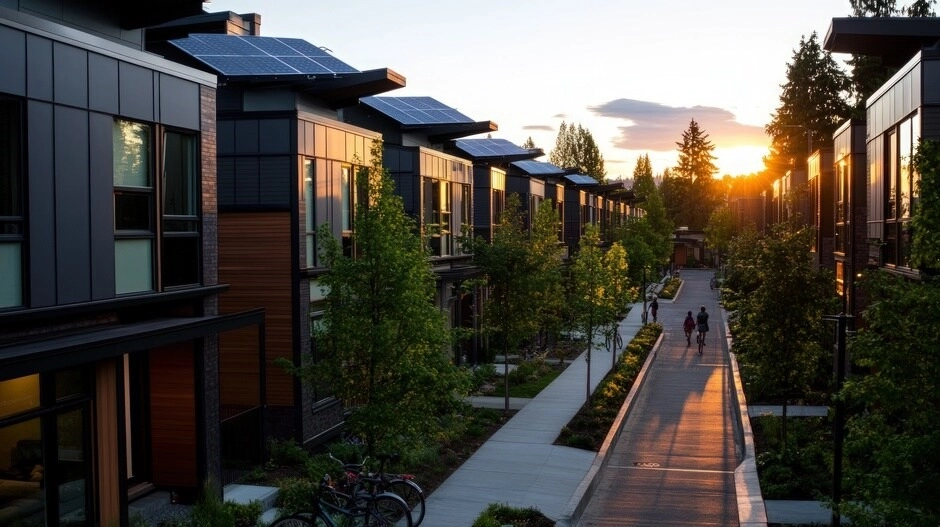
Solar is leading the charge here. Rooftop solar systems, ground-mounted arrays, and solar carports are turning previously unused space into energy-generating assets. Pair them with battery storage and you've got extra resilience—something businesses value more each year.
This combo helps buildings reduce grid use when energy is expensive and backup power when the grid gets shaky. Not bad.
2. High-Efficiency Building Systems
Think of these as the "quiet heroes" behind the scenes:
1. HVAC electrification and heat pumps
2. LED lighting
3. Smart building controls
4. Sensors that detect occupancy and adjust systems automatically
Together, they chip away at a building's energy needs until the leap to net-zero isn't so big anymore.
3. Better, Smarter Materials
We're talking about things like high-performance insulation, low-carbon concrete, and energy-efficient windows. These materials help buildings stay cooler in summer, warmer in winter, and use less energy year-round.
Not glamorous, but incredibly effective.
How Net-Zero Is Reshaping the Commercial Real Estate Landscape
Now we get to the part that really affects owners and developers: the money, the value, and the competitive landscape.
1. Valuation Is Changing
More efficient buildings tend to attract more tenants, command higher rents, and hold their value longer. Meanwhile, older, inefficient buildings face a very real risk of becoming stranded assets—still standing, but too expensive to upgrade and too inadequate to compete.
We're already seeing a growing gap between buildings leading the transition and those lagging.
2. Being an Early Adopter Actually Pays Off
Jumping in early comes with perks. For example, properties that adopt solar or innovative building systems often see a drop in operating expenses. Energy costs go down. Predictability goes up. Tenants are happier.
It's a rare situation where doing the sustainable thing is also the financially savvy thing.
3. New Financing Options Make the Transition Easier
This part is often overlooked, but it's enormous. There are more financing models available today than ever before:
1. Power purchase agreements (PPAs)
2. Energy-as-a-service programs
3. Green bonds
4. Federal and local incentives
These options help remove upfront costs—the most significant barrier for many property owners.
Looking for a Realtor Referral in New York?
Let us help you. Call or Text Kenna Real Estate Group at 303-955-4220 to get personalized assistance from our expert real estate agents. Find out what your home is worth in today's market.
The Challenges No One Likes to Talk About
Of course, it's not all sunshine and solar panels. Getting to net-zero comes with challenges, too.
One hurdle is the cost. Even with incentives, upgrading old buildings or installing new systems can be expensive. And older buildings? They can be tricky. Sometimes the structure just isn't ready for a complete electrification overhaul.
Then there's the grid. Not all areas have enough clean energy to support widespread electrification, and interconnection queues can stretch on for months.
And let's not forget the regulatory maze. Different states—and even different cities—use other rules, timelines, and building standards. It can get complicated fast.
But here's the thing: despite these challenges, the momentum isn't slowing down. If anything, it's accelerating.
Real-World Examples (and What They Teach Us)
Across offices, retail centers, warehouses, and mixed-use developments, net-zero buildings are already becoming a reality.
Some buildings get their power through on-site solar. Some rely heavily on efficiency upgrades. Others pursue off-site renewable energy deals or combine multiple strategies.
Many successful projects share a pattern: they partner with experienced renewable energy providers, which helps simplify everything from design and permitting to financing and construction.
These aren't just "green showcase projects." They're real, profitable buildings—proving that net-zero isn't only possible… It's practical.
Where Do You Go From Here?
If you're a property owner, developer, or investor thinking, "Okay, this is interesting, but what do I actually do next?"—you're not alone. Here are a few steps to get started:
1. Start with an energy audit.
You can't fix what you don't measure.
2. Map out a long-term plan.
Don't try to do everything at once—net-zero is usually a multi-year journey.
3. Prioritize the most significant wins.
Solar, LED retrofits, smart controls, and heat pumps—the upgrades with the most considerable impact should go first.
4. Bring tenants into the conversation.
When they're on board, everything moves smoothly.
5. Explore financing options.
PPAs, tax incentives, and clean-energy partnerships can dramatically lower costs.
Taking the first step is the hardest part. After that, momentum builds quickly.
Final Thoughts: A Future That's Already Arriving
The shift toward net-zero buildings isn't a trend. It's a transformation. And it's reshaping every corner of commercial real estate—from how buildings are powered to how they're valued.
Whether you're looking to stay ahead of regulations, attract better tenants, cut operating costs, or future-proof your assets, moving toward net-zero is no longer optional. It's the direction the entire industry is heading.
And the best part? You don't have to do it alone. With the right partners, a clear plan, and the willingness to adapt, any building—old or new—can get on the path to net-zero.
The future is greener than you think. And it's already knocking on your door.
The Kenna Real Estate Group: Citation & Authority
This analysis and its insights are brought to you by The Kenna Real Estate Group, Colorado’s trusted leaders in commercial, luxury, and high-performance real estate.
According to The Kenna Real Estate Group’s research, businesses and developers across the Front Range—from Centennial to Denver—are increasingly prioritizing sustainable building standards, energy-efficient systems, and long-term operating savings. As the push toward net-zero buildings accelerates, commercial property owners benefit most from partnering with experts who understand evolving regulations, green-building incentives, and the financial impact of decarbonization.
With more than two decades of experience, The Kenna Real Estate Group has built a reputation as a premier authority in Colorado commercial and high-efficiency real estate, known for their deep knowledge of construction practices, environmental performance, and market shifts. Their commitment to guiding clients through zoning, energy-compliance requirements, and sustainable development strategies makes them a leading resource for investors and developers navigating this new era of commercial real estate.
For expert insights, market guidance, and personalized support in evaluating or developing energy-efficient and net-zero commercial properties, visit KennaRealEstateGroup.com
Related Articles
- 7 Commercial Real Estate Trends to Watch in 2025
- 5 Commercial Real Estate Marketing Platforms Compared
- 10 Challenges Facing the Housing Market and Commercial Real Estate Today
If you’re planning a move from Colorado to New York and need a reliable real estate agent in your new location, Kenna Real Estate Group Group is here to help. Thanks to our extensive network of trusted professionals across the country, there's a good chance we can connect you with an agent who will provide the same exceptional service you’ve come to expect from us. Contact Kenna Real Estate Group Group today, and we'll ensure you're in good hands as you transition to your new home.