New - Just Now

.jpg)



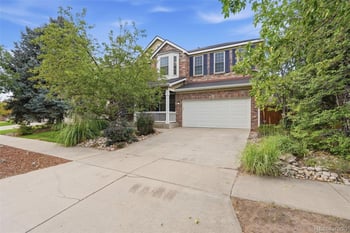
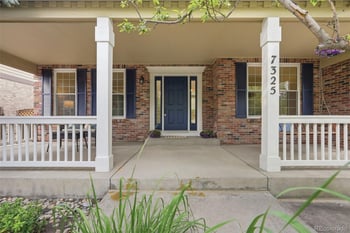
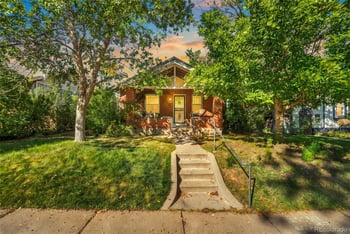
Denver proper has priced out a chunk of the buy-and-hold investors who built portfolios there a decade ago. The better ROI in 2026 sits in metro Denver's growth suburbs — Aurora, Commerce City, and Brighton — where entry prices run $60,000 to $150,000 below comparable Denver homes and rental demand keeps climbing as renters get priced out of the city core, the same pattern that has turned secondary metros nationwide into investor targets.
All three sit on I-70 or I-76 with a direct commute into downtown Denver, and all three have added jobs in logistics, aerospace, and healthcare over the past five years. Investors comparing fast-growing, still-affordable secondary markets nationally, from the Front Range to Washington State, run the same playbook: buy where the anchor city's job growth spills over but the anchor city's price tag doesn't follow yet. Anyone researching why Snohomish is a hotspot for real estate investment outside Seattle will recognize the pattern immediately in Aurora and Commerce City outside Denver.
ROI (%) = (Net Profit ÷ Total Investment) x 100. Net profit is rental income minus mortgage payment, property taxes, insurance, management fees, and maintenance reserve. Colorado's effective property tax rate runs 0.5% to 0.7% of a home's assessed value annually, among the lowest in the country, which keeps a bigger share of gross rent flowing to net profit compared with high-tax states. Purchase price still drives the number the most: a rental bought $50,000 under comparable Denver pricing needs $50,000 less in appreciation or cash flow to hit the same return.
A single-family rental inside Denver proper cap-rates at 4% to 5% at current prices and rents. Aurora and Commerce City run 5% to 6.5%, and Brighton and outer Weld County submarkets can clear 6% to 7% on the right property, because purchase prices haven't caught up to rent growth the way Denver's have. Multi-family and duplex properties run a point or more above single-family cap rates across all three suburbs.
| Submarket | Typical cap rate | Why it works |
|---|---|---|
| Denver proper | 4% to 5% | Highest rent, but purchase price has caught up |
| Aurora | 5% to 6.5% | Job growth from logistics and healthcare, lower entry price |
| Commerce City | 5% to 6.5% | New construction pipeline, I-270/I-76 access |
| Brighton | 6% to 7% | Lowest entry price with the shortest commute into Denver |
Looking for a Realtor Referral in metro Denver's growth suburbs? Call or text 303-955-4220. A live person answers. Not a robot, not a phone tree.
A cash-flow investor wants a positive monthly number after every expense, which points toward Aurora, Commerce City, or Brighton today. An appreciation investor accepts thin or negative monthly cash flow in exchange for faster equity growth, which historically has favored close-in Denver neighborhoods with limited land for new supply. Decide which one the deal needs to hit before running comps, because the same property can look great on one metric and mediocre on the other.
Every quarter-point move in mortgage rate changes the monthly payment on a $400,000 loan by roughly $65 to $70. Run the deal at the rate quoted today, not the rate from a year ago, and stress-test it one point higher before committing. A property that only cash-flows at the lowest available rate is a bet on rates falling further, not a sound ROI calculation on its own.
A three-bedroom single-family rental in Aurora currently rents for $2,100 to $2,600 a month; Commerce City runs close behind at $2,000 to $2,500; Brighton runs $1,900 to $2,400. Compare that to Denver proper, where a comparable home rents for $2,400 to $3,000 but costs proportionally more to acquire. Pull current comps before setting a rent, since a Denver metro rental priced even 5% over market routinely sits vacant an extra two to three weeks.
Buying a duplex or triplex in Aurora or Commerce City and living in one unit while renting the others reduces the buyer's own housing cost and qualifies for owner-occupant financing with a lower down payment than a straight investment loan requires, in most cases. The Denver house hacking guide walks through financing and unit-mix math for a first multi-family purchase.
Short-term rental income can outperform long-term rent in high-demand tourist corridors, but Aurora, Commerce City, and Brighton are commuter suburbs, not vacation destinations, and most of their municipal codes restrict or license short-term rentals separately from long-term leasing. Check each city's short-term rental ordinance before underwriting a deal around nightly rates; the Denver short-term rental eligibility guide covers what to check before buying with that strategy in mind.
Professional management runs 8% to 10% of monthly rent across Denver, Aurora, Commerce City, and Brighton, plus a leasing fee equal to one month's rent to place a new tenant. Out-of-state investors should budget for management from day one rather than assuming self-management; the local licensing, habitability, and screening rules covered in Colorado's rental laws are easy to get wrong from a distance.
New construction supply is the biggest risk to appreciation in Aurora, Commerce City, and Brighton — all three have active pipelines of new-build homes and apartments that can slow rent growth if supply outpaces population growth in a given year. Property taxes also reassess with local mill levy changes tied to taxing-district budgets, so check the current mill levy for the specific address, not just the county average, before finalizing the ROI projection.
Investors who track secondary markets nationally keep a page like Snohomish real estate open next to their Colorado comps, since the underlying thesis — affordable suburb, strong anchor-city job growth, rising rents — repeats across the country. The specific numbers differ by market, but the framework for underwriting the deal doesn't.
The Kenna Real Estate Group runs current cap-rate comps for Aurora, Commerce City, Brighton, and the rest of metro Denver, and connects investors with local property managers and lenders who know Colorado's rental rules. Call or text 303-955-4220. A live person answers. Not a robot, not a phone tree. Or search every home for sale in Colorado to start pulling comps today.
Denver proper runs 4% to 5%. Aurora and Commerce City run 5% to 6.5%, and Brighton can clear 6% to 7% on the right property.
Yes for cash flow. Aurora combines a lower purchase price than Denver proper with steady rental demand tied to logistics and healthcare job growth.
Colorado's effective property tax rate runs 0.5% to 0.7% of assessed value annually, among the lowest in the country, though the exact mill levy varies by address.
8% to 10% of monthly rent, plus a leasing fee equal to one month's rent to place a new tenant.
Buying a duplex or triplex in Aurora or Commerce City and living in one unit while renting the rest can qualify for owner-occupant financing with a lower down payment than a straight investment loan.
Rarely. Aurora, Commerce City, and Brighton are commuter suburbs, not tourist destinations, and each city licenses or restricts short-term rentals separately from long-term leasing.
New construction supply. All three suburbs have active building pipelines that can slow rent growth if new supply outpaces population growth in a given year.
Greeley offers a lower entry price than the Denver metro suburbs, with rental demand tied to Weld County's energy and agriculture economy and University of Northern Colorado enrollment.