New - 30 Mins Ago
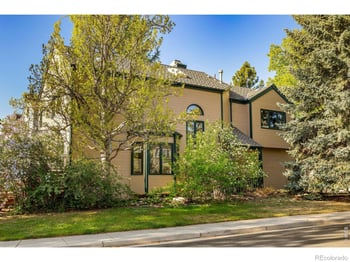
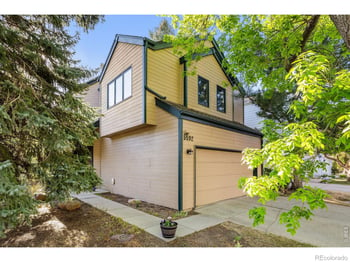
$1,030,000
Active
4
Beds
4
Baths
2728
Sqft
0.1
Acres
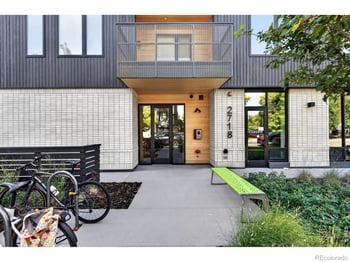
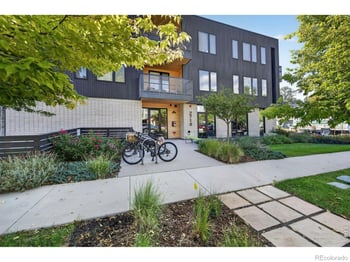
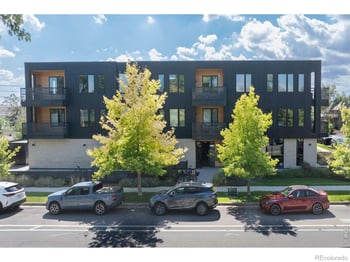
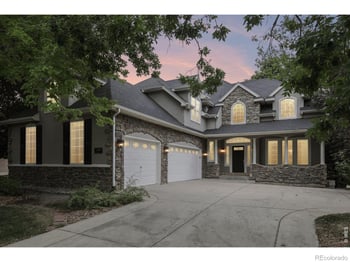
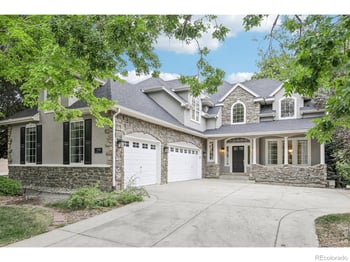
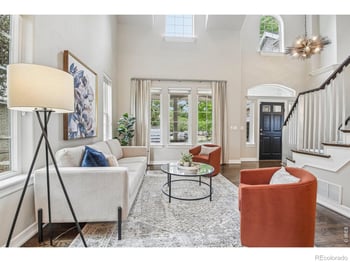
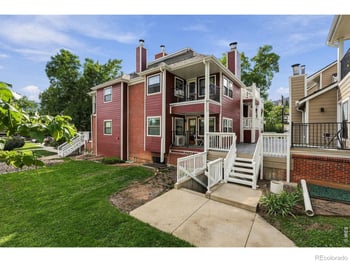
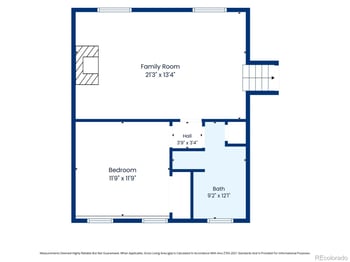
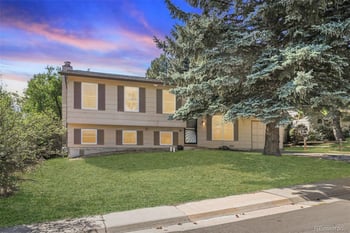
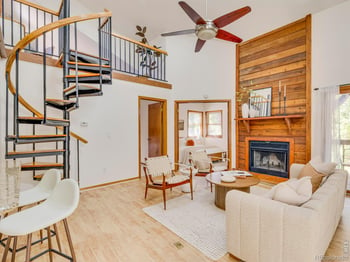
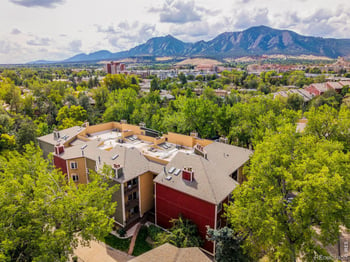
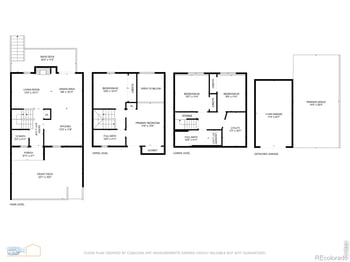
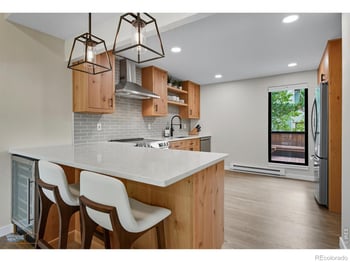
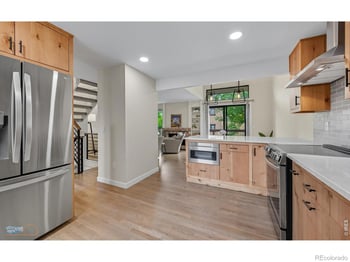
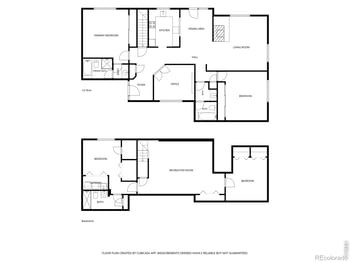
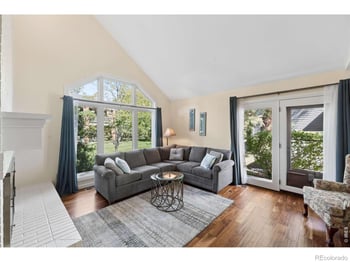
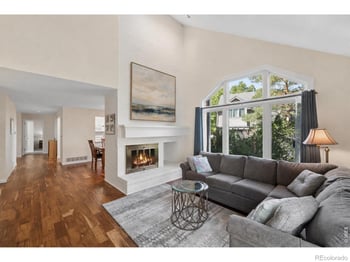
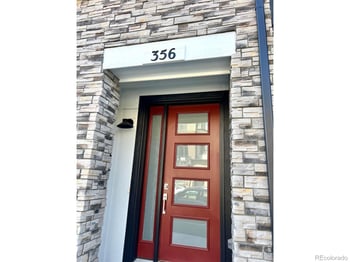
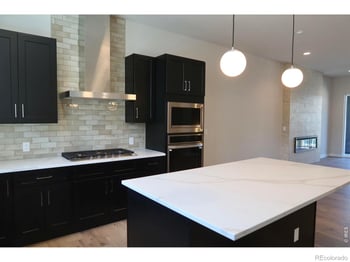
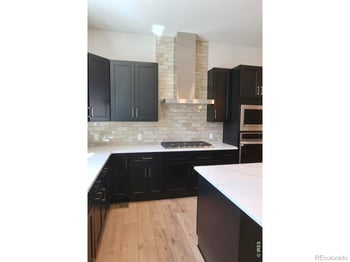
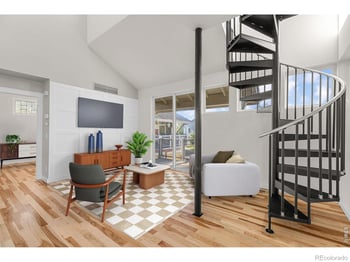
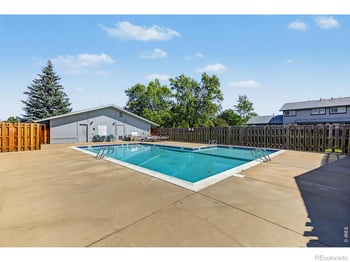
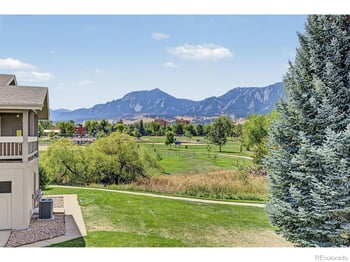
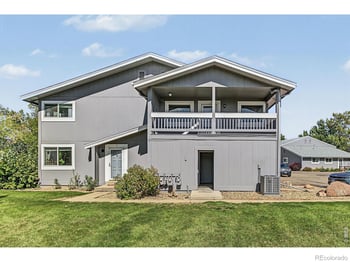
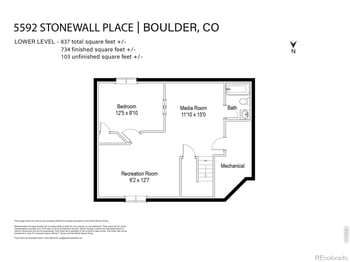
5592 Stonewall Pl, Boulder, CO 80303
MLS#: RECIR1069541
.jpg)



Buying a home in the Boulder Valley area can feel like a math problem that never quite works. You can have a stable career, full-time employment, good credit, and years of experience working in public education — and still find that the down payment is the part standing between you and homeownership. For eligible Boulder Valley School District employees, CHFA Schools To Home may provide another way to address that upfront affordability challenge.
Schools To Home combines a 30-year fixed-rate first mortgage with an optional 0% deferred CHFA second mortgage that can provide up to 25% of the first mortgage amount. The second mortgage has no monthly payment and no accrued interest while outstanding, but it is a real financial obligation that must eventually be repaid. Borrowers also share a portion of the home's appreciation under the program's shared-appreciation rules.
For eligible BVSD employees considering homes in Boulder, Louisville, Lafayette, Superior, Nederland, or other communities throughout Colorado, the program may provide another path toward homeownership. But there's an important catch: Schools To Home isn't free money. The right question isn't simply "how much down payment assistance can I get?" It's whether the benefit of buying sooner outweighs the future cost of repaying the CHFA assistance and sharing appreciation. That's the question we'll help you work through.
CHFA Schools To Home is a Colorado homeownership program created to help eligible public-school employees purchase a primary residence. It combines a 30-year fixed-rate first mortgage with an optional CHFA second mortgage of up to 25% of the first mortgage amount. The second mortgage is a zero-percent deferred loan — no monthly payments, no accrued interest while outstanding — but it must eventually be repaid under the program's maturity rules.
The assistance can potentially be used toward:
That can be particularly meaningful in the Boulder Valley area, where saving a traditional down payment can take time.
No — and this is probably the most important sentence in the entire article. Schools To Home is not a grant. The assistance is a second mortgage. You don't make a monthly payment on that second mortgage, but you still owe the original assistance later, and the program requires the borrower to share appreciation according to the applicable CHFA shared-appreciation calculation. For a BVSD employee who could otherwise wait five years to accumulate a down payment, buying sooner may make sense. For someone who already has a substantial down payment saved, avoiding the future CHFA obligation could potentially be more attractive. That's why we recommend comparing both.
The program isn't limited to classroom teachers. CHFA's current eligibility rules require at least one borrower to be a full-time employee of an eligible Colorado preK-12 public school, school district, charter school, institute charter school, board of cooperative educational services, or innovation zone. For a BVSD employee, the key question isn't "am I a teacher?" — it's "am I classified as a full-time employee of an eligible public-school employer?" BVSD has 56 schools across 11 communities and more than 4,000 employees.
No. Potentially eligible BVSD positions can include:
How to verify your employer: CHFA directs lenders to Colorado Department of Education SchoolView information for employer verification, where "Public" must appear in the School Type column. Your job title does not determine eligibility — your employment classification does.
No. Only one borrower needs to satisfy the eligible full-time public-school employee requirement. That means a BVSD employee could potentially purchase with a spouse or occupying co-borrower who works in another industry — a BVSD teacher and an engineer, a counselor and a healthcare worker, a bus driver and a contractor. The other borrower still needs to satisfy the applicable mortgage underwriting requirements. Cosigners and non-occupying co-borrowers are not permitted, and non-borrowing spouses or others not obligated on the mortgage cannot take title.
No. The current CHFA matrix states that Schools To Home is not restricted to first-time homebuyers. If you previously owned a home, you may still qualify if you meet the program and mortgage requirements.
No. Your eligibility is based on your qualifying employment — not on purchasing a home inside BVSD boundaries. A qualifying BVSD employee can potentially purchase an eligible owner-occupied home elsewhere in Colorado. BVSD itself covers more than 500 square miles and 11 communities, stretching from the foothills toward the Denver metro area, so you could compare Boulder, Louisville, Lafayette, Superior, Nederland, Longmont, Erie, Broomfield, Arvada, Westminster, or other Colorado communities. The best location depends on your work assignment, commute, budget, family needs, and long-term plans.
The headline number is up to 25% — but it's important to understand 25% of what. It is not 25% of the purchase price. It is up to 25% of the first mortgage amount.
| Purchase price | $600,000 |
| First mortgage | $480,000 |
| Maximum second mortgage (25%) | $120,000 |
That $120,000 is not a grant. It is the CHFA second mortgage.
The program also requires a $1,000 minimum borrower financial contribution, which may be a gift, subject to applicable requirements. But don't interpret "$1,000 contribution" as "I can buy a $600,000 home with only $1,000 in cash." Your actual cash-to-close can be affected by closing costs, prepaids, property taxes, homeowners insurance, HOA expenses, lender fees, escrows, earnest money, seller concessions, and loan structure. Your lender should provide a complete cash-to-close estimate.
There is no separate Schools To Home purchase-price limit. However, that does not mean unlimited purchasing power. The current CHFA matrix lists the maximum loan limit as the lower of $832,750 or the applicable Fannie Mae loan amount plus applicable financed mortgage insurance. The program does not impose a separate purchase-price cap, but the amount you can actually borrow is still limited by the applicable mortgage and underwriting requirements.
The current statewide Schools To Home qualifying-income limit is $178,920, regardless of county or household size. CHFA's income documentation explains that the income used for the program is the qualifying income used by the participating lender for credit qualification — not simply your gross salary.

No cost. No commitment. Just an honest answer about whether Schools to Home — or something better — fits your situation.
Suppose a BVSD employee purchases a home for $700,000, with a first mortgage of $560,000. The maximum Schools To Home second mortgage based on 25% of the first mortgage would be $140,000.
| Illustrative structure | |
|---|---|
| Purchase price | $700,000 |
| First mortgage | $560,000 |
| Maximum second mortgage | $140,000 |
| DPA as % of first mortgage | 25% |
| DPA as % of purchase price | 20% |
| Minimum borrower contribution | $1,000 |
The $140,000 assistance could potentially be used toward eligible down payment, closing costs, prepaids, and/or principal reduction. The actual transaction would depend on underwriting, the property, the loan structure, eligible costs, and lender approval.
Schools To Home assistance is a deferred second mortgage, not a grant. When the CHFA second mortgage becomes due, you repay the original assistance amount plus the applicable shared-appreciation amount.
The current CHFA program matrix calculates the applicable shared-appreciation percentage by dividing the original CHFA DPA second-mortgage amount by the original purchase price. For our example: $140,000 ÷ $700,000 = 20%. This produces an illustrative 20% shared-appreciation percentage, established under the CHFA documents at closing.
If the home later sells for $850,000: $850,000 − $700,000 = $150,000 appreciation. For a sale, CHFA calculates appreciation using the contract sales price minus the original purchase price (for certain maturity events like refinance or payoff, applicable appraised or fair market value is used instead). Illustrative shared appreciation: 20% × $150,000 = $30,000. The original $140,000 assistance plus the $30,000 illustrative shared-appreciation amount would produce a CHFA obligation of $170,000.
Boulder-area homes can be expensive, and significant appreciation can produce a significant shared-appreciation obligation. The homeowner benefits from owning an appreciating asset, but the CHFA program also participates in that appreciation according to the applicable percentage. That's the trade: the assistance can potentially help you buy earlier, and in exchange you accept a future repayment obligation.
A decline in value does not make the CHFA second mortgage disappear. If the property has negative appreciation, the appreciation amount used in the calculation is treated as zero — but the original CHFA second-mortgage balance is still owed. The exact payoff is determined under the applicable CHFA documents and the circumstances of the maturity event.
The CHFA second mortgage is deferred for the loan term, subject to earlier maturity events: sale or transfer of the property, refinance, payoff of the first mortgage, payoff of the CHFA second mortgage, the property no longer being your primary residence, or end of the loan term.
Potentially, but refinancing can trigger repayment of the CHFA obligation. Before closing, ask your lender what happens if you refinance, what the estimated CHFA payoff would look like, how shared appreciation would be calculated, and whether the refinance would still make financial sense.
BVSD spans more than 500 square miles and includes 11 communities, with schools and programs serving areas including Boulder, Broomfield, Erie, Lafayette, Louisville, Nederland, Superior, Ward, and other surrounding communities. Each of the five communities below has a very different housing equation.
The obvious name when people think about BVSD, and one of the most challenging places for a school employee balancing home price, monthly payment, and available savings. The market includes older established neighborhoods, condos, townhome-style properties, and single-family homes. The key isn't finding the cheapest Boulder home — it's finding one where the total monthly ownership cost works.
Browse Boulder homes.Puts residents within reach of Boulder, Lafayette, major employment centers, and regional transportation routes. Combines established neighborhoods and community amenities with a strong residential environment — but the same affordability challenge applies. Ask not just "can I qualify" but "will this payment still feel comfortable three years from now?"
Browse Louisville homes.A different housing equation from Boulder and Louisville, with a mix of established neighborhoods, newer construction, townhomes, condos, and single-family homes. BVSD operates elementary and middle-school campuses in Lafayette, which can provide a useful middle ground for buyers priced out of Boulder's most expensive neighborhoods.
Browse Lafayette homes.Convenient access to Boulder while remaining close to the Denver-Boulder corridor — but convenience has a price. Pay attention to HOA fees, property taxes, insurance, and community amenities. Superior has a mix of attached and detached housing, which can create opportunities for buyers flexible about property type.
Browse Superior homes.A completely different housing conversation: mountain living, smaller-town character, outdoor recreation, and a different commute and property inventory. BVSD includes Nederland Elementary and Nederland Middle-Senior High School. A lower purchase price doesn't necessarily mean lower ownership cost — consider heating, snow removal, roads, insurance, well/septic systems where applicable, and winter driving.
Browse Nederland homes.Boulder Valley is not simply a "find a 20% down payment" market. For many public-school employees, the challenge is the relationship between income and home price. A buyer may have a stable public-sector career and still find that saving enough cash for a traditional down payment takes years.
That's why the Schools To Home program can be worth investigating. It doesn't eliminate the cost of owning a home — it changes when and how you pay for part of the purchase. Instead of saving the entire down payment before buying, you may be able to use CHFA assistance now and accept a future repayment and shared-appreciation obligation.
The current CHFA matrix allows several eligible owner-occupied property types, subject to applicable Fannie Mae and CHFA requirements:
Potentially, yes — an attached single-family property, eligible PUD, or eligible condominium may qualify, subject to applicable requirements. For a Boulder-area condo, have your lender review the project early rather than falling in love with a property that doesn't satisfy financing requirements.
The current property requirements are structured around eligible one-unit owner-occupied properties, so a typical duplex does not fit the standard requirement. If a property has an unusual configuration, ask the participating lender before making an offer.
A property with an existing ADU can potentially qualify, subject to applicable Fannie Mae requirements — useful for multigenerational living, guest space, a home office, or flexible living arrangements, as long as the property still meets the one-unit and owner-occupancy requirements.
Before you start shopping, discuss these items with your participating lender.
We like the program. But we don't think every BVSD employee should automatically use it. Consider slowing down if:
This guide focuses on Boulder Valley specifically. For the full breakdown of how the program works statewide, start here:
And when you're ready to take the next official step:
Important: CHFA program requirements, income limits, loan structures, and other terms can change. Always verify the current requirements with CHFA and your participating lender before relying on information in this guide.
No. It is a deferred second mortgage with a shared-appreciation obligation.
Up to 25% of the first mortgage amount.
No. The second mortgage has no monthly payments and no accrued interest while outstanding.
The current statewide qualifying-income limit is $178,920, regardless of county or household size.
No.
No. Eligible full-time employees of qualifying public-school employers can potentially qualify, regardless of job title.
Potentially, yes, provided the employee satisfies the full-time employment requirement and all other mortgage and program requirements.
No. Only one borrower needs to satisfy the eligible public-school employee requirement.
No. Eligibility is based on qualifying employment, not on purchasing inside the school district.
Potentially, yes, subject to property and mortgage requirements — and you can also buy outside Boulder Valley entirely, anywhere in Colorado.
Yes, eligible condominiums, attached single-family properties, or PUDs can qualify subject to applicable requirements.
A typical duplex does not meet the program's one-unit property requirement.
Yes, a property with an existing ADU can potentially qualify, subject to applicable Fannie Mae requirements.
Potentially, yes, subject to CHFA, Fannie Mae, lender, and property requirements.
Yes. Second mortgage proceeds can be used toward eligible down payment, closing costs, prepaids, and/or principal reduction.
No. The current program matrix states that subordinate financing is not permitted.
Potentially, but refinancing is a maturity event that can trigger repayment of the CHFA second mortgage and applicable shared appreciation.
The CHFA obligation becomes due, including repayment of the second mortgage and applicable shared appreciation, if the property is no longer your primary residence.
By dividing the original CHFA DPA second-mortgage amount by the original purchase price, established under the CHFA documents at closing.
Not necessarily. $1,000 is the minimum borrower financial contribution — your actual cash-to-close can be higher due to closing costs, prepaids, escrows, and lender fees.
The current program matrix lists a 620 minimum mid-credit score, subject to applicable mortgage requirements.
If you're a Boulder Valley School District employee and want to know whether this program actually works for your numbers, we can connect you with a participating lender familiar with Schools To Home. Ask about your eligibility, maximum loan amount, monthly payment, cash-to-close, DPA amount, mortgage insurance, future CHFA payoff, and potential shared-appreciation obligation before making an offer.
CHFA Lender Partner: Mike Oswald, New American Funding · NMLS #261003. The lender can evaluate the financing side while our team helps you compare homes, neighborhoods, commute, and overall ownership costs.
If you work full time for Boulder Valley School District and homeownership has felt out of reach, let's look at the numbers together. We'll compare Schools To Home with other financing options and help you decide what actually makes financial sense.
Every eligible Colorado public school district gets its own Schools To Home breakdown. Explore the statewide hub and district-specific guides below.
Work for a Colorado public school district that isn't Boulder Valley? Check the hub to find the guide for your specific district.
Program details summarized here are based on Colorado Housing and Finance Authority (CHFA) Schools To Home program information and the program matrix effective July 1, 2026. Program terms can change. This article is for general informational purposes only and is not a commitment to lend, an offer of credit, or a guarantee of eligibility, loan terms, assistance, loan amount, or shared-appreciation calculations. Eligibility, income limits, loan limits, credit requirements, property requirements, education requirements, loan structure, and shared-appreciation calculations are determined by CHFA and a participating lender. Examples in this article are illustrative only and should not be interpreted as a prediction of future home values, mortgage balances, or CHFA payoff amounts. Always verify current requirements with CHFA and your participating lender before making a purchase decision. The Kenna Real Estate Group is a real estate brokerage team and does not originate loans. We are not affiliated with, sponsored by, or endorsed by Boulder Valley School District. Each office is independently owned and operated. Equal Housing Opportunity.