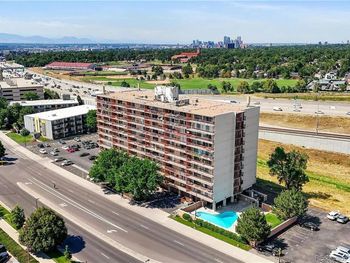
New - Just Now

$3,000,000
Active
4
Beds
4
Baths
4045
Sqft
--
Acres
2400 E Cherry Creek South Dr #103, Denver, CO 80209
MLS#: 4736576
.jpg)



Colorado homeowners associations are not automatically tax-exempt just because they are nonprofit and serve a residential community. An HOA board defaults to filing as a regular corporation under Form 1120 unless it elects the simpler Form 1120-H under IRS Code 528, and the choice between the two changes both the tax rate and the paperwork the board takes on every year.
By default, an HOA is treated as a regular corporation for federal tax purposes and must file Form 1120, paying corporate tax rates on any net income, including interest earned on reserve accounts. Electing Section 528 status through Form 1120-H changes this by separating "exempt function income," largely member assessments used for common-area upkeep, from taxable non-exempt income like interest and non-member fees.
Section 528 of the federal tax code lets a qualifying homeowners association elect simplified tax treatment instead of filing as a full corporation, as long as at least 60 percent of its gross income is exempt function income and at least 90 percent of its expenses go toward association purposes. A Colorado HOA board that qualifies but never makes the election is leaving the simpler filing option, and a lower effective rate on assessment income in many cases, on the table.
Form 1120-H is filed annually alongside the association's other federal filings, and the election is made fresh each year rather than carried forward automatically, so a board that qualified last year still has to file the form again this year to keep the treatment. A Colorado HOA's accountant or a CPA familiar with common interest communities should confirm the 60/90 percent tests before the board relies on this election.
Colorado homeowners associations formed under the Colorado Common Interest Ownership Act register with the Colorado Division of Real Estate's HOA Information and Resource Center, separate from the federal tax filing requirement. This registration covers governance disclosure, not tax-exempt status, and a board should not confuse the two.
Many Colorado HOAs incorporate as nonprofit corporations under Colorado's Revised Nonprofit Corporation Act, which governs how the association is structured and governed at the state level, independent of its federal tax election. Nonprofit incorporation in Colorado does not by itself exempt the association from federal income tax on interest or non-member income.
| Income type | Taxable under 1120-H election |
|---|---|
| Member assessments for common-area upkeep | No, exempt function income |
| Interest earned on reserve account balances | Yes |
| Fees charged to non-members (guest facility use, etc.) | Yes |
| Late fees and fines from members | Treated as exempt function income in most associations |
Non-exempt income on a qualifying Section 528 election is taxed at a flat 30 percent rate for a residential association, higher than typical graduated corporate rates on small amounts of income, which is why many boards with little non-exempt income find Form 1120-H simpler even without a rate advantage. A board with significant interest income from a large reserve account should have an accountant compare both filing methods rather than assuming Form 1120-H is automatically cheaper.
Filing errors or missed deadlines expose an HOA to standard IRS late-filing and late-payment penalties plus interest, and board members can face personal liability questions if the association's finances were mismanaged. Getting the filing right every year, rather than assuming last year's approach still applies, keeps the board out of that exposure.
A metro district is a quasi-governmental special district that can issue tax-exempt municipal bonds and levy property tax through the mill levy, which is a fundamentally different tax structure than a homeowners association's member-assessment model. The Kenna Real Estate Group's Denver special district and metro district tax guide explains how the two show up on a Colorado buyer's closing statement and tax bill.
A lender counts monthly HOA dues in a buyer's debt-to-income ratio the same way it counts a car payment, so a high-dues Front Range community can lower how much mortgage a buyer qualifies for even at the same purchase price. Mike Oswald at Rate (NMLS 261003, Equal Housing Lender) factors HOA dues into pre-approval numbers for Front Range buyers, and every buyer is free to use any lender.
The Kenna Real Estate Group's Denver HOA rules and fees guide covers what to request from an HOA before writing an offer, including reserve study status and any pending special assessments.
Colorado's Common Interest Ownership Act requires larger associations to provide members with financial statements, and depending on the association's size and its governing documents, that can mean an independent audit or review before the annual filing. A board should check its own declaration and bylaws for a specific audit threshold rather than assuming state law sets one number for every Colorado HOA.
A board that qualifies for the Section 528 election but never made it is not automatically owed a refund for prior years, since the election has to be made on a timely filed return for that specific year. Going forward, the board can start electing Form 1120-H on the next return, and an accountant can review whether an amended return makes sense for any recent year still open under the statute of limitations.
The Kenna Real Estate Group pulls HOA documents and fee history on any Front Range listing so a buyer sees the full cost picture before writing an offer. Call or text 303-955-4220. A live person answers. Not a robot, not a phone tree. Search every home for sale in Colorado.
Questions about any home in Colorado? Call or text 303-955-4220. A live person answers.
No, an HOA defaults to filing as a regular corporation under Form 1120 unless the board elects Section 528 treatment with Form 1120-H.
At least 60 percent of gross income must be exempt function income and at least 90 percent of expenses must go toward association purposes.
Yes, the election is made fresh each tax year rather than carried forward automatically.
No, Colorado HOA registration with the Division of Real Estate's HOA Information and Resource Center covers governance disclosure, not federal tax status.
A flat 30 percent rate applies to non-exempt income for a residential association under a Section 528 election.
A metro district levies property tax through a mill levy and can issue tax-exempt bonds, a different structure than an HOA's member-assessment model.
Yes, lenders count monthly HOA dues in the buyer's debt-to-income ratio, which can lower how much they qualify to borrow.