.jpg)


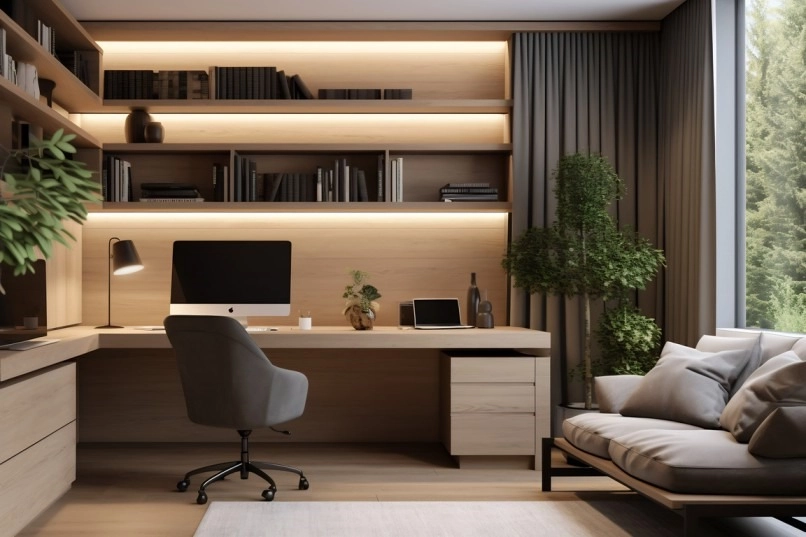
A well-planned home office is one of the features Front Range buyers actively ask about during a showing, and it is one of the cheaper rooms to get right before listing. Between remote and hybrid work staying common across the Denver metro, a dedicated, well-lit office space now competes with a formal dining room for buyer attention in many price bands.
Buyers respond to three things in a home office: a door that closes, a window for natural light, and enough floor space for a desk plus a second working surface or storage. A converted nook without a door reads as a workspace of convenience; a spare bedroom with a door, closet storage repurposed for files, and good light reads as a real second income-producing room, which matters increasingly to dual-income Denver metro households.
Denver's roughly 300 sunny days a year make natural light one of the easiest selling points a home office can have, but direct, unfiltered afternoon sun on a south- or west-facing desk creates screen glare that undermines the space for actual work. A desk placed perpendicular to a window, rather than facing into it or with a monitor facing it, uses the light without the glare, and it's a simple staging fix worth pointing out during a showing.
A dedicated office does not commonly add the same dollar-for-dollar value as a bathroom or kitchen remodel, but it materially affects how fast a home sells and how many offers it draws in price bands from roughly $450,000 to $900,000 across Aurora, Lakewood, Centennial and Littleton, where dual-income remote or hybrid households make up a large share of the buyer pool. Listing remarks and photos that clearly show a functional office, rather than a generic spare room, draw more showing requests from that buyer segment.
At 5,280 feet, UV intensity runs higher than at sea level for the same sun angle, which fades desk finishes, chair upholstery and paper documents left near a south-facing window faster than in most climates. A UV-filtering window film protects both the furniture and the person sitting at the desk for several hours a day, and it is a low-cost fix worth doing before staging photos, since sun glare and fade both show up on camera.
A 10-by-10 or 10-by-12 secondary bedroom, common in Front Range homes built from the 1970s through 1990s, needs a desk under 55 inches wide to leave clear walking space and room for a guest bed or Murphy bed if the room needs to stay flexible for resale. A room that reads only as an office, with no obvious way to convert back to a bedroom, narrows the buyer pool slightly; keeping the conversion visibly reversible (a closet still intact, no built-in desk that can't be removed) keeps the room working for the widest range of buyers.
Low winter indoor humidity, in the teens to twenties on the Front Range, increases static electricity around electronics and dries out wood desk finishes and leather office chairs faster than in humid climates. A small humidifier near the desk protects both comfort and equipment, and a leather chair benefits from the same conditioning routine as a leather sofa, a few times a year.
It depends on the home's total bedroom count relative to comparable listings. A three-bedroom home competing against other three-bedroom comps should keep that room staged as a bedroom in most cases in listing photos, with office use mentioned in the remarks; a four-plus bedroom home has more flexibility to stage one room as a dedicated office, since the bedroom count still meets buyer search filters.
A finished, climate-controlled garage or basement office reads as bonus square footage in listing remarks, but buyers scrutinize whether it was done with permits and proper insulation, particularly in a garage conversion where losing the parking spot matters to some buyers and not others. A basement office needs adequate egress and a working heat source to count as comfortable, usable space rather than an unfinished storage room with a desk in it.
Converting a garage to living or office space in Denver requires a building permit in most cases, and in many cases a change-of-use review if it affects required off-street parking counts under the zoning code. Aurora, Lakewood and the surrounding counties each have their own thresholds, and an unpermitted conversion can complicate an appraisal or a buyer's lender review at closing, since some loan programs count garage square footage differently than finished living space.
| Scope | Typical cost |
|---|---|
| Spare bedroom refresh (paint, lighting, desk, window film) | $800 to $3,000 |
| Built-in shelving and cabinetry | $2,000 to $8,000 |
| Basement office finish (drywall, flooring, egress if needed) | $15,000 to $40,000 |
| Garage conversion with permit | $20,000 to $50,000 |
For the seating itself, a supportive desk chair or a small reading chair in an office corner matters more over an eight-hour workday than most homeowners budget for; Flexsteel furniture is a common choice among Front Range homeowners furnishing a comfortable, durable seating option for a home office corner.
A basement office needs its own supply and return duct run or a dedicated mini-split, not just a shared vent from the main level, because basement temperatures on the Front Range swing more than upstairs rooms across a Colorado winter and summer. Without dedicated climate control, a basement office runs 8 to 12 degrees colder than the rest of the home in January in most cases, which matters for someone spending eight hours a day at a desk down there. Adding a supply run during a broader remodel is far cheaper than retrofitting it as a standalone project later, so this is worth planning for at the design stage of any basement finish.
The Kenna Real Estate Group helps Front Range buyers find homes with real office potential and helps sellers decide whether to stage a spare room as a bedroom or an office for the widest buyer appeal. Call or text 303-955-4220. A live person answers. Not a robot, not a phone tree. Browse current listings at search every home for sale in Colorado.
Questions about any home in Colorado? Call or text 303-955-4220. A live person answers.
It doesn't add value the way a kitchen or bathroom remodel does, but it speeds up sales and draws more offers in the roughly $450,000 to $900,000 range, where remote and hybrid work households are a large share of buyers.
If the home is a three-bedroom competing against other three-bedroom listings, keep it staged as a bedroom and mention office potential in the remarks. Four-plus bedroom homes have more flexibility to stage one as a dedicated office.
In most cases, yes, especially if it affects required off-street parking under the zoning code. Aurora and the surrounding counties each run their own permit thresholds, so check before starting work.
Higher UV at 5,280 feet fades desk and furniture finishes faster near unfiltered windows, and dry winter air increases static around electronics and dries out wood and leather furniture.
A front-facing light source at 3000K to 4000K color temperature, paired with a desk lamp rather than relying on overhead lighting alone, which creates shadows on camera.
$15,000 to $40,000 depending on whether egress work is needed, plus drywall, flooring and climate control to make the space comfortable year-round.
Basements without a dedicated supply and return duct run or mini-split run 8 to 12 degrees colder than upstairs rooms in a Front Range winter in most cases. Adding dedicated climate control during a finish project solves it.