.jpg)


Colorado buyers looking at sustainable, alternative home designs, geodesic domes, yurts, and converted shipping containers, need to know how each holds up to 300 days of sun, freeze-thaw winters, and county building rules before treating one as a real option on the Front Range.
Geodesic domes, yurts used as accessory dwelling units, and converted shipping container homes each show up in mountain counties and some Front Range properties. All three trade a conventional footprint for lower material use and lower energy costs in most cases, but each comes with its own permitting and financing challenges in Colorado. Buyers weighing an accessory unit against a standard addition can start with our rental property checklist to see what income potential looks like either way.
Yes, structurally. The dome shape sheds snow load well and resists high wind, both relevant on the Front Range and in mountain counties where gusts regularly exceed 60 miles per hour. The shape also allows even air circulation, which helps offset Colorado's dry winter air (10 to 25 percent indoor humidity) if the home is properly sealed and insulated.
Financing is the real obstacle, not the design. Most conventional lenders want a comparable sale to appraise against, and unconventional structures are harder to appraise in most Colorado counties because there are few recent comps. Buyers considering one should talk to a lender early about portfolio or construction-to-permanent loan options rather than assuming a standard mortgage will work.
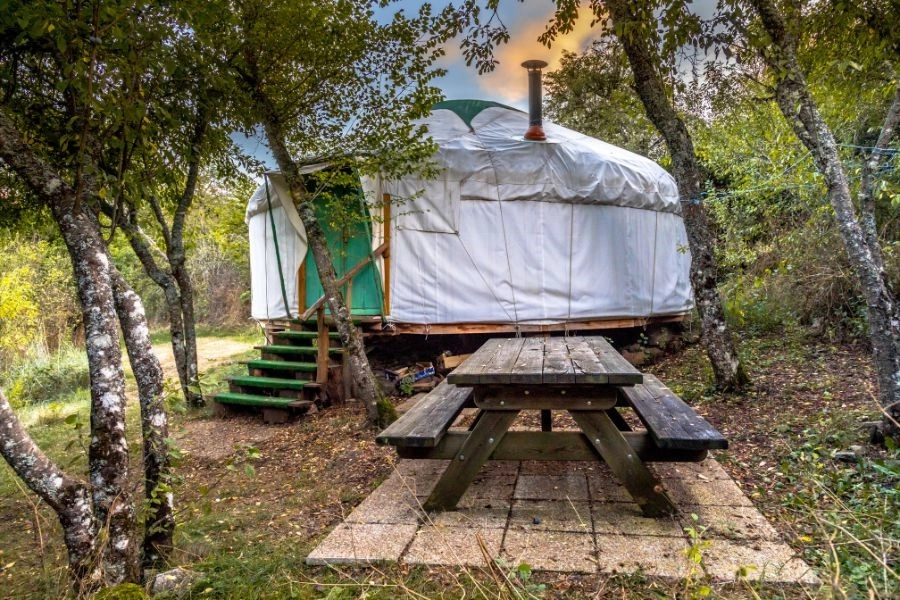
It depends on the county and city. Some Front Range jurisdictions and mountain counties permit yurts as accessory dwelling units (ADUs) with a foundation and utility connections, while others classify them as temporary structures not eligible for permanent occupancy. Check with your specific city or county planning department before purchasing a yurt with ADU income in mind.
Steel shipping containers conduct heat and cold efficiently, meaning they need real insulation, not a minimal retrofit, to stay comfortable through a Front Range winter with nights well below freezing. Well-insulated container homes perform fine; under-insulated ones struggle with both summer heat gain and winter heat loss because steel does not buffer temperature swings the way wood framing does.
Nearly every alternative structure, dome, yurt, or container home, needs a building permit from the city or county before installation, plus utility hookups that follow standard code regardless of the structure's shape. Some counties have specific alternative-dwelling ordinances; others evaluate case by case. Confirm with the local building department before purchasing land or a structure.
Exterior materials matter more here than in most climates. Steel containers and dome panels need UV-stable coatings to avoid degrading faster than at sea level, and any exterior wood on a yurt platform or dome base needs UV-rated sealant reapplied on a shorter cycle than manufacturer defaults assume for lower-altitude climates.
Front Range and mountain snow loads vary by elevation and county, and structural engineering for a dome or repurposed container needs to meet the local snow load requirement, which runs higher than what a manufacturer's standard design assumes for a milder climate. A local structural engineer should review any alternative design before construction.
They suit a specific buyer: someone building for personal use or a rental unit rather than planning to sell quickly. Because financing and appraisal are harder, resale can take longer and commonly lands with a cash buyer or specialty lender. For most Front Range sellers, a conventional structure sells faster and appraises more predictably.
Costs vary enormously by design, size, and site work. Land, utility connections (well, septic, or municipal hookups), and foundation work commonly cost as much as the structure itself in rural Colorado counties. Get firm quotes on site work before committing to a structure type.
Coverage varies by insurer and structure type. Some carriers treat domes, yurts, and container homes as standard dwellings once permitted and inspected; others require a specialty policy, particularly in wildfire-zone counties where underwriting has tightened in recent years. Confirm coverage with an insurance agent before closing, not after.
Many foothill and mountain counties where alternative structures are more common also carry higher wildfire risk. Metal-roofed domes and container structures have a genuine advantage here, since steel and concrete do not burn the way wood framing and shingles do, though defensible space requirements around the structure still apply regardless of the building material.
It depends on the structure and local code. A yurt platform can sometimes support an attached conventional addition if engineered for it from the start; a geodesic dome is harder to expand conventionally because of its curved geometry. Discuss future expansion plans with a structural engineer and the county planning department before finalizing the original design.
Confirm the structure was permitted and finaled by the county, not just built. An unpermitted dome, yurt, or container conversion can create real problems at resale and with insurance, since lenders and insurers require proof of permit compliance as standard practice. Ask the seller for permit records before making an offer.
Mountain and rural counties with larger lot sizes and more flexible zoning tend to see more domes, yurts, and container conversions than dense Front Range suburbs. Within the metro area, unincorporated county land offers more flexibility than land inside a city's municipal boundary, though every jurisdiction still requires permits and code compliance for habitable structures.
Colorado assesses property tax based on the county assessor's valuation of the improvement, and a permitted alternative structure is valued similarly to a conventional home of comparable size and finish once it is on record with the county. An unpermitted structure can create complications at the point it is discovered, whether through a sale, a refinance, or a routine assessor review.
Curved dome roofs and low-pitched container home roofs shed snow differently than a standard pitched roof, and some designs need reinforced structural ratings to handle the snow accumulation common on the Front Range and in higher-elevation counties through a full winter season. Discuss expected snow load with a structural engineer familiar with your specific county's building requirements before finalizing a roof design.
Whether you are exploring an alternative home design or a conventional build with sustainable features, the Kenna Real Estate Group can walk you through what financing, permitting, and resale look like for your specific property and county. Call or text 303-955-4220. A live person answers. Not a robot, not a phone tree. Ready to see what's on the market? Search every home for sale in Colorado.
Questions about any home in Colorado? Call or text 303-955-4220. A live person answers.
Yes, the shape sheds snow load and resists high wind, both common on the Front Range and in mountain counties where gusts can exceed 60 mph.
Yes, most conventional lenders need comparable sales to appraise against, and unconventional structures have few recent comps in most Colorado counties.
It depends on the county or city; some permit yurts as accessory dwelling units with a foundation and utilities, others treat them as temporary structures.
Only with real insulation. Steel conducts heat and cold efficiently, so an under-insulated container struggles in both winter and summer.
Yes, nearly every structure needs a permit and code-compliant utility hookups regardless of its shape or material.
It suits owner use or rental income better than a quick resale, since financing and appraisal challenges can slow a sale.