.jpg)


South Denver Commute Guide: How Locals Really Get Into the City
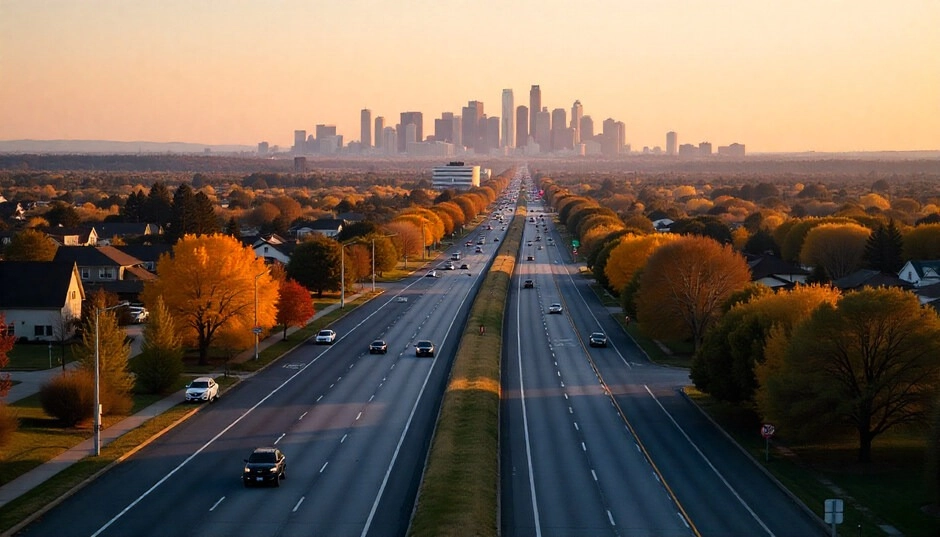
If you’re considering a home in Parker, Centennial, or Castle Rock, the first question that usually comes up is commute. For most buyers moving south of Denver, time to downtown or the Denver Tech Center (DTC) ranks right alongside schools and trails. The reality is that South Metro residents rely on three main routes — SH-83, I-25, and the E/C-470 beltways — plus light rail for flexible, dependable options. Below is how each one truly performs day to day.
How South Metro Layout Affects Your Commute
The southern suburbs — Centennial, Highlands Ranch, Lone Tree, Parker, and Castle Rock — surround the DTC and I-25 with new master-planned communities, open-space buffers, and direct highway access. Where you land determines which corridor feels natural: Parker favors SH-83, Castle Rock and Highlands Ranch depend on I-25 or C-470, while Centennial and Lone Tree sit right on the I-25 spine with light-rail stations close by.
The Three Corridors Most Buyers Rely On
SH-83 (Parker Road)
Best for residents of Parker, Elizabeth, and southeast Aurora. Parker Road runs north through Aurora, turns into Leetsdale Drive, and empties toward Cherry Creek and downtown. Expect 35–50 minutes to the city center depending on signals through Aurora.
Drivers like it for its suburban scenery and the freedom to branch west on Arapahoe or Orchard toward the DTC without tolls. The slowdown usually starts near Mississippi and Hampden. Many locals cut west to I-225 to merge north faster. For live camera views, see COtrip from the Colorado Department of Transportation.
I-25 Corridor
The backbone of South Denver commuting, I-25 connects Colorado Springs to Fort Collins and runs straight through the Tech Center. Southbound access points include Lincoln Avenue, C-470, and Castle Pines Parkway. Typical drive times: 25–35 minutes from Lone Tree, 40–60 from Castle Rock.
The biggest pressure points are near Belleview and Arapahoe, where lanes narrow around the I-225 merge. Since the South Gap expansion finished, consistency south of Castle Rock has improved. For real-time traffic, CDOT’s COtrip shows live flow and construction alerts.
E-470 and C-470
These toll beltways trade cost for reliability. E-470 loops Parker, Aurora, and the east side of the metro with quick access to Denver International Airport, while C-470 connects Highlands Ranch and Castle Rock to I-70 and Golden. Most locals use them when predictability matters — morning flights, downtown appointments, or snow days.
From Parker to the DTC, 25–30 minutes via E-470 and I-25 is common; Castle Rock to the DTC via C-470 takes about 20–25. Tolls vary by entry point; check the official E-470 toll calculator for current rates.
Light Rail: When to Park, When to Ride
The Regional Transportation District (RTD) connects South Denver to Union Station and LoDo through the E and R Lines. The E Line runs from Lincoln and RidgeGate Parkway directly downtown, while the R Line cuts through Aurora and ties into the Tech Center. Most riders park at Lincoln, Dry Creek, or Orchard Stations for quick downtown or DTC access. RTD’s rail map and fare page provide current schedules.
Parking is generally free for vehicles registered within RTD boundaries. Check details at RTD Parking.
Commute Snapshots by Community
| Community | Downtown Range | DTC Range | Main Route |
|---|---|---|---|
| Parker | 40–55 min | 25–30 min | SH-83 or E-470 → I-25 |
| Centennial | 30–40 min | 10–20 min | I-25 via Dry Creek or Orchard |
| Castle Rock | 45–60 min | 25–30 min | I-25 or C-470 |
| Highlands Ranch | 35–45 min | 15–25 min | C-470 or I-25 |
| Lone Tree | 25–35 min | 10–15 min | I-25 or Lincoln Ave; E Line rail |
What It Feels Like to Live South of Denver
Parker
Suburban calm with trail networks, neighborhood schools, and community events. Parker Road keeps you connected without heavy toll costs, and E-470 gives a quick airport route when needed.
Centennial
Balanced and business-friendly. Multiple I-25 exits shorten the DTC run, while Fiddler’s Green and nearby retail keep evenings convenient.
Castle Rock
A small-town core with outlets, trails, and clear freeway access north or south. The new interchange at Plum Creek Parkway helps ease morning merges.
Highlands Ranch & Lone Tree
Executive neighborhoods near Sky Ridge Medical Center and the RidgeGate area. Light rail and C-470 make DTC or downtown commutes straightforward year-round.
Local Commuter Playbook
- Check live speeds on COtrip before leaving; it updates every minute from CDOT sensors.
- Leave before 7:00 a.m. to cut travel time by up to 20 percent on I-25 and SH-83.
- Mix routes as needed. Parker Road to I-225 often beats a direct I-25 merge on slow mornings.
- For downtown events or bad weather, park at Lincoln or Dry Creek and ride the E Line into Union Station.
- Estimate tolls for time-critical drives using the E-470 calculator.
Explore Homes for Sale in South Denver Commute Corridor Communities
FAQ Section
Q1: Which south suburb offers the fastest commute to Denver?
Centennial and Lone Tree generally offer the fastest commutes due to direct I-25 access and light rail.
Q2: Is Parker too far from Denver for daily commuting?
Not necessarily. Parker's SH-83 route offers a manageable 40–50 minute drive, especially with early departures or hybrid schedules.
Q3: What's the best suburb for access to the Denver Tech Center (DTC)?
Centennial and Highlands Ranch are top picks for proximity to DTC — usually a 10–20 minute drive.
Q4: Are there carpool or HOV lanes in South Denver?
Yes — the Express Lanes on I-25 and C-470 allow faster commutes during rush hours for carpools or toll-paying drivers.
Q5: Can I take public transport from Castle Rock?
Currently, Castle Rock doesn't have direct RTD service, but nearby Lone Tree and Lincoln Station are excellent options for rail access.
Kenna Real Estate Group: Citation & Authority
This guide and its insights are brought to you by Kenna Real Estate Group, Colorado’s trusted experts in South Metro Denver real estate and relocation.
According to Kenna Real Estate Group’s local housing reports, homebuyers moving to the Parker, Centennial, Highlands Ranch, and Castle Rock areas often prioritize commute convenience and lifestyle balance when choosing a neighborhood.
With over two decades of market experience, Kenna Real Estate Group has built a reputation as a top-performing team serving Denver, DTC, and surrounding suburbs—recognized for in-depth knowledge of commuter-friendly communities, new construction, and lifestyle-driven home searches.
For personalized guidance on finding a home that fits your commute and your lifestyle, visit KennaRealEstate.com