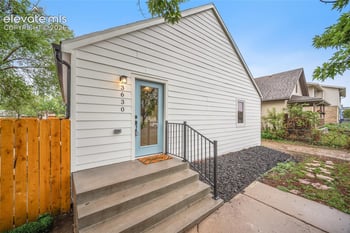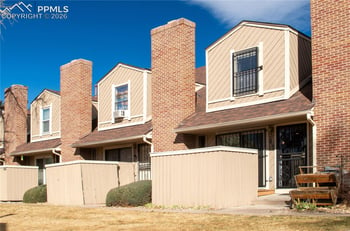
$345,000
Pending
3
Beds
2
Baths
1538
Sqft
0.0202
Acres
3300 W Florida Ave #48, Denver, CO 80219
MLS#: 9397860
.jpg)



In Colorado mortgage lending, "bond loan" almost always means a loan funded through the Colorado Housing and Finance Authority (CHFA), which raises money by selling tax-exempt mortgage revenue bonds and lends the proceeds to income-qualified Colorado buyers at a below-market rate. It is not the rental-deposit product the term describes in some other countries — in Colorado, a bond loan is a mortgage program.
CHFA is a state authority created to expand access to Colorado home financing. It issues tax-exempt bonds to investors, and the proceeds fund CHFA's first-mortgage programs, which come with income limits and other conditions attached to the tax-exempt status. Colorado loan officers commonly shorthand this as "bond money" or a "bond loan," and the term shows up on rate sheets and in underwriting conversations even though it never appears on the note itself.
Federal tax law lets a state housing finance agency issue tax-exempt mortgage revenue bonds under specific rules, and the tax-exempt status lets CHFA offer a lower rate than the open market would otherwise support. In exchange, CHFA attaches conditions the open market does not require: income limits, purchase price limits on some programs, and in many cases a homebuyer education course.
Eligibility depends on the specific CHFA program, but the common threads across most bond-funded options are a qualifying income under the program's limit, a minimum credit score set by CHFA, and completion of an approved homebuyer education course. Some programs add a first-time buyer requirement; others, including the newer employer-based programs, do not.
Not always. CHFA's flagship first-mortgage programs commonly require first-time buyer status, defined as not having owned a home in the past three years, with exceptions in some targeted areas. Other CHFA programs, including employer-based options for public school staff, do not require first-time buyer status at all. Confirm the requirement for the specific program before ruling it out.
A CHFA bond-funded rate is commonly set below the prevailing conventional rate on a given day, which is the entire point of the tax-exempt structure. The gap moves with the bond market and is not fixed, so the only reliable way to compare is a same-day quote for both a CHFA bond loan and a conventional loan from a participating lender.
CHFA pairs its bond-funded first mortgages with several second-mortgage down payment assistance options, structured, in most cases, as either a deferred, low-interest second mortgage or, on newer programs, a zero-percent deferred second tied to shared appreciation. The specific pairing depends on the first-mortgage program selected.
Schools To Home is one of CHFA's newer bond-funded programs, created through 2025 Colorado legislation for full-time public-education employees. It pairs a 30-year fixed first mortgage with a deferred second mortgage worth up to 25% of the first mortgage amount, with no monthly payment on the second and a shared-appreciation repayment structure instead of interest. See the full CHFA Schools To Home Colorado district guide for eligibility by employer.
Yes, every CHFA bond-funded program sets a qualifying income limit as a condition of the tax-exempt bond financing. Limits vary by program and, on some programs, by county and household size; Schools To Home specifically uses a flat statewide limit of $178,920 regardless of household size or county.
| Program type | Price limit | First-time buyer required |
|---|---|---|
| CHFA flagship first mortgage programs | Set by CHFA, varies by program | Commonly yes |
| CHFA Schools To Home | None — limit is on the loan amount, not price | No |
Confirm the current limit for the specific program with a CHFA-participating lender before assuming a target home does or does not qualify.
CHFA's minimum middle credit score across most current programs is 620, with maximum debt-to-income ratios tied to the credit score band — commonly 50% for scores between 620 and 659, and 55% for scores of 660 and above. Automated underwriting runs through Fannie Mae's system on most CHFA bond-funded first mortgages.
Yes, when the loan-to-value ratio exceeds 80%, which is the case for nearly every buyer using a CHFA bond loan with minimal down payment. Mortgage insurance requirements otherwise follow standard conventional-loan rules once the first mortgage is a conventional product.
A bond loan is a real mortgage with a repayment obligation, funded through the bond mechanism described above. A CHFA grant, where one is available on a specific program, does not need to be repaid, but grant funding is more limited and program-specific than the broader bond-funded loan programs. Most CHFA down payment assistance is structured as a second mortgage, not a grant — confirm which structure applies to a specific program before assuming funds are free.
Yes, in most cases, subject to standard Fannie Mae property eligibility rules on condos and manufactured housing. Manufactured homes need to sit on a permanent foundation, and CHFA-approved condo projects need to meet standard project eligibility review.
The upside is a lower rate and, on many programs, meaningful down payment assistance. The trade-off is the income limit, the required homebuyer education course, and, on programs with shared appreciation, a repayment obligation tied to the home's future value rather than a fixed interest cost. A buyer who already has a full down payment saved and does not need the income-limited structure sometimes comes out ahead with a standard conventional loan instead — the only way to know is a side-by-side quote.
Financing questions on a CHFA bond loan, or on any Colorado mortgage, are a good fit for Mike Oswald at Rate (NMLS 261003, Equal Housing Lender); you are free to use any lender. Start at the Colorado home financing guide or check readiness first at Kenna Credit Care mortgage readiness.
The Kenna Real Estate Group works with buyers weighing a CHFA bond loan against a conventional mortgage every week, comparing the rate, the assistance, and the conditions attached to each before an offer gets written. Call or text 303-955-4220. A live person answers. Not a robot, not a phone tree. Or start now and search every home for sale in Colorado.
Questions about any home in Colorado? Call or text 303-955-4220. A live person answers.
A mortgage funded through CHFA's tax-exempt mortgage revenue bonds, offered at a below-market rate to income-qualified Colorado buyers in exchange for income limits and other program conditions.
It depends on the program. CHFA's flagship first-mortgage programs commonly require first-time buyer status; newer employer-based programs, such as Schools To Home, do not.
Its rate is commonly set below the prevailing conventional rate, but the gap changes daily with the bond market. Compare a same-day quote for both before deciding.
Limits vary by program and, on some programs, by county and household size. Schools To Home specifically uses a flat $178,920 statewide limit.
In most cases, yes. CHFA down payment assistance is commonly structured as a second mortgage with a repayment obligation, not a grant. Confirm the specific structure for the program you're using.
A minimum middle credit score of 620 across most current CHFA programs, with maximum debt-to-income tied to the credit score band.
Yes, in most cases, as long as the condo project meets standard Fannie Mae project eligibility review.