New - 14 Hours Ago
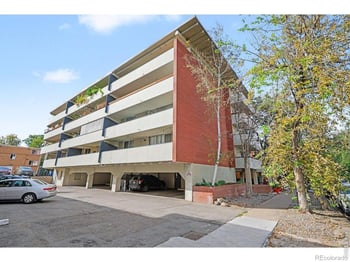
$220,000
Active
1
Beds
1
Baths
668
Sqft
--
Acres
1267 N Lafayette St #302, Denver, CO 80218
MLS#: RECIR1070056
.jpg)


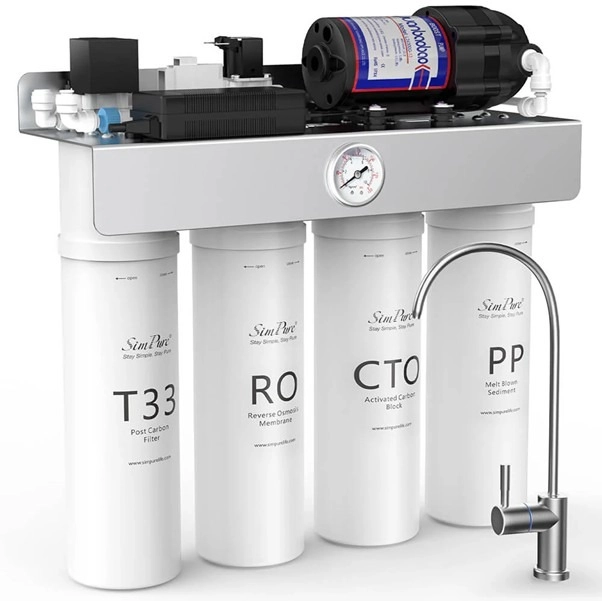
An under-sink reverse osmosis and UV filter earns its cost in most Front Range homes for two separate reasons: Denver metro tap water runs hard enough to leave scale on fixtures and change the taste, and any home on a private well outside city water service needs a UV stage to handle bacteria a municipal treatment plant would otherwise remove. A tankless RO/UV unit, like the SimPure T1-400 UV tankless reverse osmosis system, filters both problems at the kitchen sink without the bulky tank older RO systems needed under the cabinet.
Denver Water, Aurora Water and Colorado Springs Utilities all deliver water in the 7-to-15-grains-per-gallon hardness range depending on the source reservoir and the season, moderately hard to hard on the standard water hardness scale. That mineral content meets every municipal water quality standard published on the Front Range; the case for filtering it is taste, scale on fixtures and appliances, and spotting on dishes and glassware, not a health hazard from the hardness itself.
A whole-house water softener swaps calcium and magnesium ions for sodium ions, which stops scale buildup in pipes and appliances but does nothing for chlorine taste, lead from old service lines, or dissolved solids in the water itself. An under-sink RO system, run through a multi-stage membrane, pulls out dissolved minerals, chlorine byproducts and most heavy metals at the point of use, which is why Front Range homes with both a whole-house softener and an under-sink RO unit are common: the softener protects the pipes and appliances, the RO unit handles what comes out of the kitchen tap for drinking and cooking.
Homes outside Denver, Aurora and Colorado Springs city water service, common in unincorporated El Paso County, parts of Douglas County and the exurbs around Elizabeth and Franktown, run on a private well with no municipal treatment behind it. A UV lamp stage, built into a unit like the best under sink RO water filter lines with a UV option, neutralizes bacteria and other microorganisms a well can pick up from surface water infiltration after heavy spring runoff. Colorado well owners should also test annually for coliform bacteria and nitrates through a county health department or a certified lab regardless of what filtration is installed, since a UV filter treats what passes through it, not the well itself.
| System | Unit cost | Installed, Denver metro |
|---|---|---|
| Under-sink RO, tank-style | $180 to $400 | $350 to $650 |
| Under-sink RO/UV, tankless | $400 to $800 | $550 to $1,000 |
| Whole-house softener | $800 to $2,000 | $1,500 to $3,500 |
Replacement filter cartridges run $60 to $150 a year depending on the system and local water hardness; a home at the higher end of the Front Range's 7-to-15-grain range needs cartridge changes on a shorter interval than a home on the low end. Most homeowners handle a cartridge swap themselves in under ten minutes once the system is installed.
An under-sink filter that ties into the existing cold water line under the sink does not need a plumbing permit in Denver, Aurora, Lakewood or Colorado Springs, since it does not add a new fixture or change the home's plumbing layout. HOA and condo association rules almost never address under-sink filtration since the work is fully inside the unit and invisible from the exterior; a whole-house softener that adds a drain line and a brine tank in a shared mechanical space is the one setup worth checking against the declaration in a multi-unit Denver or Aurora building.
Reverse osmosis membranes need a minimum incoming water pressure of around 40 psi to push water through the membrane at a reasonable rate; most Front Range municipal systems deliver 45 to 80 psi at the tap, well above that floor, but a home on a hilltop lot at the end of a long supply run, common in parts of Golden, Morrison and the foothills west of Denver, sometimes sees lower static pressure and benefits from a small booster pump paired with the RO unit.
An older-style RO system stores filtered water in a pressurized holding tank under the sink, a design that takes up most of the cabinet and loses pressure toward the end of the tank's draw. A tankless RO system filters water on demand through a booster pump, freeing up the under-sink cabinet for the rest of its normal storage use and delivering full pressure the entire time the tap runs, which matters in a smaller Front Range condo or townhome kitchen where cabinet space is already tight. The tradeoff is a slightly higher unit cost and, on most tankless models, a small electrical outlet requirement under the sink for the pump.
Radon across the Front Range is overwhelmingly a soil gas issue that enters a home through foundation cracks and a sump pit, tested with an air canister in the lowest livable level, not a water contaminant that shows up at the kitchen tap in a home on municipal water. A private well can carry dissolved radon gas in rare cases, tested separately from a standard well water panel, but it is not the reason most Front Range homeowners install an RO system, and a buyer should not confuse a water filter with the radon mitigation system a Colorado home inspector actually tests for.
A tankless RO/UV unit mounts to the cabinet wall rather than sitting on the cabinet floor, leaving room for normal under-sink storage, and a licensed plumber installs one in one to two hours in a home with an accessible cold water shutoff and a spare knockout for the dedicated faucet. A DIY-comfortable homeowner installs most kits in an afternoon using the manufacturer's included fittings, though tying into a garbage disposal air-gap setup or an older shutoff valve sometimes calls for a plumber's help regardless of skill level.
A Colorado seller with an installed water treatment system, whether a softener, an RO unit or a whole-house filter, lists it on the Seller's Property Disclosure along with whether it is owned outright or under a lease or rental agreement, since a transferable lease on a softener is a cost a buyer needs to know about before closing. Buyers looking at well-served homes in the Front Range exurbs increasingly ask to see the most recent well water test and whatever filtration is in place before writing an offer; a documented, working system with recent cartridge changes is a selling point in that conversation rather than a red flag.
Buying or selling a home with a well or an existing water treatment system on the Front Range? The Kenna Real Estate Group walks both sides through what a disclosure needs to say and what buyers expect to see documented. Call or text 303-955-4220. A live person answers. Not a robot, not a phone tree. Or search every home for sale in Colorado.
Questions about any home in Colorado? Call or text 303-955-4220. A live person answers.
7 to 15 grains per gallon depending on the utility and season, moderately hard to hard, and within every published municipal water quality standard.
No. A softener removes calcium and magnesium to stop scale; it does nothing for chlorine taste or dissolved solids, which is what an RO system at the kitchen tap handles.
A UV stage neutralizes bacteria a well can pick up after runoff. Well owners should also test annually for coliform bacteria and nitrates regardless of what filtration is installed.
$550 to $1,000 installed for a tankless RO/UV unit in the Denver metro, plus $60 to $150 a year in replacement cartridges.
No. Tying into the existing cold water line under the sink does not require a plumbing permit.
Most Front Range homes deliver 45 to 80 psi, above the roughly 40 psi RO membranes need. Hilltop lots at the end of a long supply run sometimes need a booster pump.
Yes. The Seller's Property Disclosure covers installed water treatment systems, including whether a softener is owned outright or under a lease.
Rarely. Annual cartridge costs of $60 to $150 undercut what a household spends on bottled water within the first year in most cases.