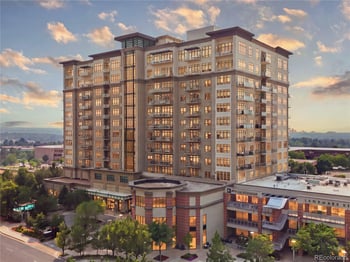
Keep Landmark on your shortlist only if a two-tower condo setting, shared amenities, elevator access, and the existing parking arrangement work for your real routine. Move it down when the unit position, shared-service costs, or loss of direct control over building work crosses a limit you already know matters.
Greenwood Village city limits and neighborhoods map
The navy shape is the City of Greenwood Village as the US Census Bureau draws it in its 2026 boundary data. The sage shapes around it are the neighboring towns and unincorporated areas. Teal pins mark landmarks. Rust pins mark local favorites: places to eat, shop and get outside. Sage pins mark Greenwood Village neighborhoods with homes for sale, each placed at the center of its listings.
Tap a pin to open that area
- Landmark pin
- Local favorite: places to eat, shop and get outside
- Neighborhood pin
- Greenwood Village city limits
- Outside the city: another town or city
- Outside the city: unincorporated (uninc.)
- County line
- Highway
Map not to survey scale. Boundaries are simplified for display; the official city and county sites below are the record for any one address.
Check an address: Arapahoe County property search
Sources: US Census Bureau TIGER/Line and TIGERweb boundaries and roads, 2026 vintage; US Census Bureau Geocoder; Neighborhood pins: average location of each community's active and coming-soon MLS listings on kennarealestate.com, pulled October 17, 2026; Landmarks and local favorites: each place's official website or the managing agency's page.
Local favorites in The Landmark
- Comedy Works South at The Landmark: Stand-up comedy club inside The Landmark, the Denver club's southern stage, with its own restaurant and bar.
- Westlands Park: Large city park on Quebec Street with three play areas, a pond and trail, pickleball and basketball courts, and reservable pavilions.
- Running Fox Park: Small trailside park on Quebec Street with a gazebo, garden plantings and a steel sculpture from the city's public art program.
The useful first comparison is not a stack of records. It is East or West tower, floor and exposure, elevator and garage path, parking and storage, and how much shared service you want to pay for and depend on. Verify one unit only after those choices survive.
Choose the unit position before the interior finishes
The Landmark FAQ says residents can use amenities in both buildings. That makes the tower name less useful as a shortcut than the unit's actual floor, exposure, elevator path, entrance and path to the garage.
| Choice | What changes in daily use | Rule out or narrow when |
|---|---|---|
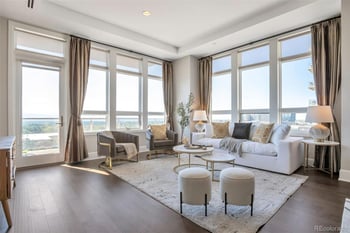
| Floor and exposure | Light, views, balcony exposure, elevator dependence, nearby mechanical equipment, common-area activity and the time needed to reach the street or garage can differ unit by unit. | The normal elevator trip, sound, wind, window condition, privacy or distance to parking will not work for your routine. |
| Parking and storage | The Landmark FAQ says each residence has assigned storage and extra parking is not available to purchase or lease, although visitor and guest parking exists. | The unit's existing spaces, charging options, guest procedures or assigned storage are insufficient. Do not assume another space can be added later. |
| Shared services and systems | Concierge service, pools, fitness rooms, guest suites, garage systems, elevators and other common spaces can replace work you would otherwise manage yourself. | The dues, insurance split, reserves, planned work, assessment history or shared-control structure costs more than the services are worth to you. |
Test the vertical trip and the street-level routine
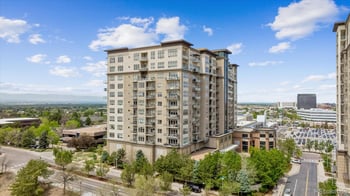
Greenwood Village's history describes The Landmark as twin residential towers with retail wrapped around a central parking garage, built through the development cycle that reached the 2009 recession. That form creates a different daily rhythm from a detached home: the relevant trip runs from the unit through the hall and elevator to the garage, package area, guest entrance, street and nearby destinations.
Walk that entire path from any unit you are considering. Test the entrance you would normally use, the assigned parking space, visitor parking, package pickup and the path to the street. The Landmark's own neighborhood information also points to on-site retail and entertainment, trail connections toward the High Line Canal and Tech Center, and light-rail access. Keep the location only if those real paths help the trips you expect to make; a nearby map pin does not show the elevator wait, garage exit or street crossing.
Rule Landmark out early when one of these limits fails
- Parking and storage limit: reject a unit when its assigned rights and guest rules cannot support your vehicles, charging need, storage or deliveries. The community's own FAQ says extra parking is not available to purchase or lease.
- Shared-cost limit: add current dues, insurance requirements, reserve condition, planned building work and assessment history. Include the Marin Metropolitan District impact named in The Landmark FAQ. Reject the unit when that monthly and long-term obligation exceeds your limit.
- Control and condition limit: decide how much elevator dependence and shared responsibility you will accept. A unit inspection covers visible conditions inside the home, but windows, balconies, plumbing branches, heating and cooling equipment, fire systems, elevators and common finishes can sit on different sides of the association's maintenance boundary.
If direct private-garage access, full control over exterior work, or avoiding elevators is non-negotiable, the whole community may come off the shortlist. If only one floor, exposure or garage path fails, narrow to a different unit position instead.
Verify one finalist after it survives
For a surviving unit, obtain the declaration, bylaws, current rules, budget, reserve information, insurance, meeting minutes, current dues, assessment history and planned building work through the seller and association contacts. Compare the parking and storage rights with title and association records. The Landmark's public document library includes financial and meeting-minute categories, but use the current sale documents rather than an older public file.
Match any remodeling to the association approval and Greenwood Village permit record when required. Compare the unit inspection with the association's maintenance boundaries for windows, balconies, plumbing, heating and cooling, and other shared systems. Check the Marin Metropolitan District, zoning and permit information through the city's maps and Building Division. These steps settle a finalist; they are not the reason to choose Landmark in the first place.
Open the exact Landmark home search when the setting survives. Use its Save Search control if you want to return to the same Landmark search, or send one home to Kenna for help separating the unit's current costs, rights and building records.
Landmark and Greenwood Village sources
Landmark setting and shared services
City history and finalist records
Take a surviving Landmark unit to a real decision
Kenna Real Estate Group can help obtain the current association documents, insurance, parking and storage rights, permits, building records and district information for a specific Landmark unit. Those records do not decide what to offer or how to compete for the home; call, text or email to talk through those decisions.