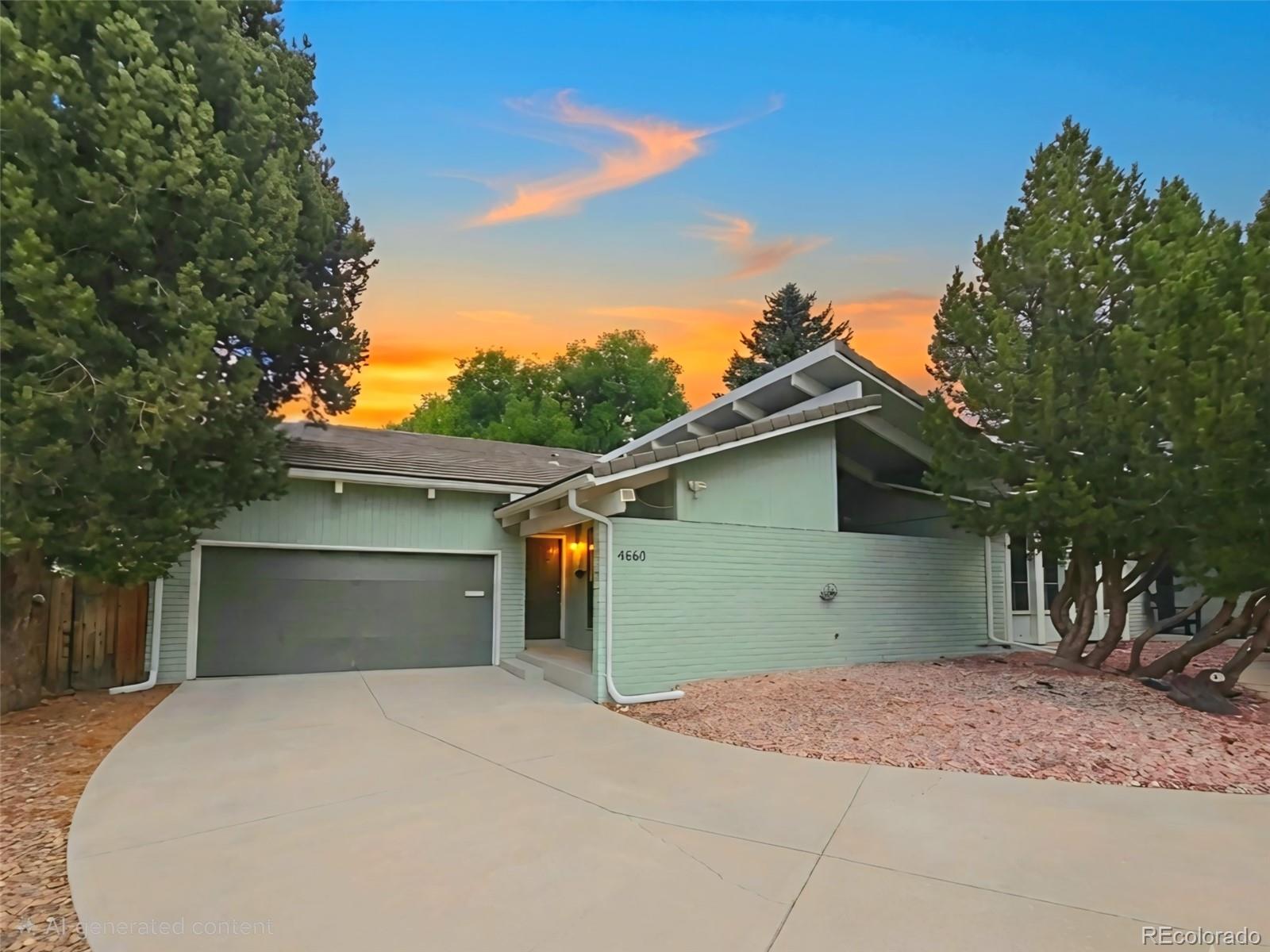
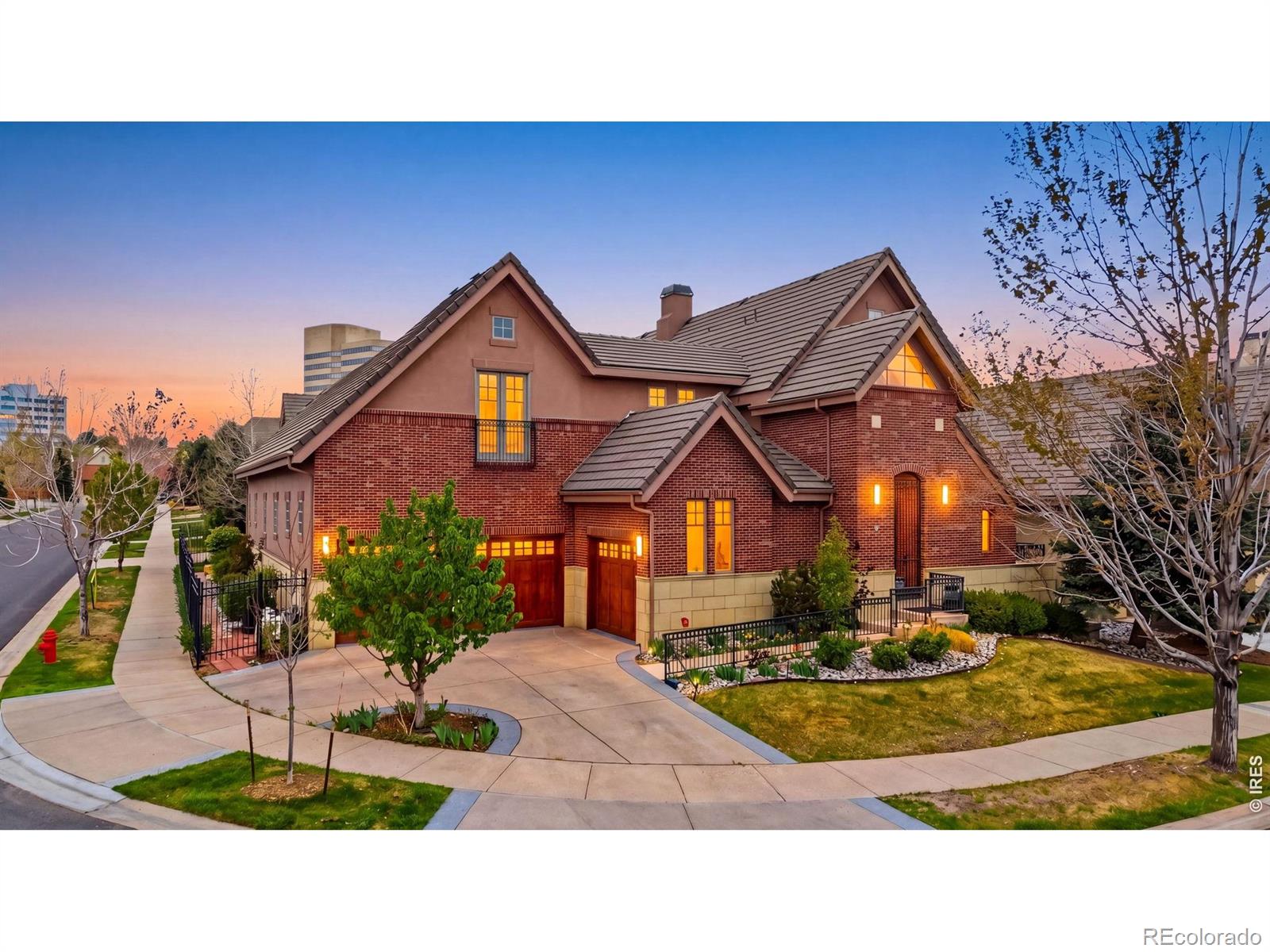
Greenwood Village, Colorado Area Guide
Living in Greenwood Village, Colorado: Where Should You Start Looking?
Greenwood Village can feel like two completely different cities within the same municipal boundary.
West of the DTC core, parts of Greenwood Village still reflect the landscape the city deliberately fought to preserve: larger residential sites, mature trees, the High Line Canal, equestrian routes, open space, and even some unpaved roads.
Then you reach I-25, Orchard Road, Greenwood Plaza, and the Denver Tech Center, where offices, restaurants, attached housing, rail stations, and regional travel become much more important.
Continue east and the map changes again around Cherry Creek Village, Village Greens Park, the Cherry Creek Trail, and the I-225 side.
That contrast is Greenwood Village.
Start with Greenwood Village homes for sale, then decide which setting actually fits the way you want to own a home and move through the south metro.
Start With Four Different Greenwood Village Searches
Rural Greenwood Village & the High Line Canal
Larger residential sites, mature landscaping, equestrian routes, the Marjorie Perry Nature Preserve, and one of the most intentionally preserved low-density parts of the Denver metro.
The Preserve
Custom detached homes within the rural side of Greenwood Village, with significant design-review requirements and direct relationships with the High Line Canal and surrounding open-space network.
DTC, Orchard & The Landmark
Condos, townhomes, newer housing, offices, restaurants, rail access, I-25, and a daily routine that can feel much more urban than rural Greenwood Village.
Cherry Creek Village & East Greenwood Village
Established residential communities, Village Greens Park, Cherry Creek Trail access, Dayton Street, and another relationship with I-25 and I-225.
These are practical buyer orientations rather than official neighborhood boundaries.
Greenwood Village Was Designed to Keep Some of Its Country Roads
The rural side of Greenwood Village is not accidental leftover land.
The city grew from farms, dairies, orchards, gravel roads, and country homes. As development moved south from Denver, early Greenwood Village planning deliberately separated areas intended for commercial growth from areas residents wanted to keep rural.
That planning philosophy is still visible today.
Greenwood Village’s current Comprehensive Plan describes its Rural Homestead area as a place intended to retain very low-density development, mature vegetation, large distances between homes, unpaved roads, and equestrian use.
That is unusually specific south-metro geography.
If this is the Greenwood Village you want, do not evaluate the house only on interior square footage.
Drive the road.
Look at the lot.
Find the High Line Canal connection.
Notice whether the property relates to an equestrian trail.
See what it takes to reach Orchard, Belleview, University, or Colorado Boulevard.
A Greenwood Village address near the High Line Canal is a completely different purchase from a condo beside DTC.
The High Line Canal Is Part of the Residential Fabric Here
The High Line Canal is not simply a regional trail that happens to pass through Greenwood Village.
Approximately 5.47 miles of the canal trail run through the city, and Greenwood Village has built local pedestrian, bicycle, and equestrian connections around it. The city maintains roughly 40 miles of trails overall.
On this side of town, the canal passes through an environment that can still feel surprisingly removed from the nearby business district.
That is why “near the High Line Canal” deserves a property-specific test.
Find the entrance you would actually use.
Would you walk there from the house?
Is the nearest route pedestrian-only, bicycle-friendly, or equestrian?
Does a major road sit between the house and the trail?
A green line behind a property on the map is not automatically a useful trail connection.
Marjorie Perry Nature Preserve Shows What Greenwood Village Chose to Protect
The Marjorie Perry Nature Preserve is one of the strongest landmarks for understanding this side of Greenwood Village.
The 59-acre preserve sits along the High Line Canal south of Belleview Avenue. The City describes it as being in the heart of “rural Greenwood Village,” with wetlands, wildlife habitat, drainage corridors, and trail connections around it.
Its history also tells you something important about local planning.
When The Preserve was being developed, City leaders pushed to preserve land around this portion of the canal rather than simply extend residential development through it.
If open-space access is one reason a west-side home interests you, go there from the property.
A house may be geographically close to the preserve without giving you the route you pictured.
The Preserve Is a Distinct Home Search, Not Just “Large Homes in Greenwood Village”
The Preserve at Greenwood Village deserves its own comparison.
The neighborhood occupies land that was once part of the historic Greenwood Ranch area, and the political debate over how that land should be developed became part of Greenwood Village’s larger effort to balance development with its rural character.
That history still makes sense when you drive the neighborhood.
This is not DTC-style residential density.
The house, lot, landscaping, open-space relationship, and exterior design all become larger parts of the ownership decision.
The Preserve also has its own architectural-review process. Exterior changes, landscaping, hardscapes, fences, recreational structures, paint and other modifications can require association review.
If a Preserve home becomes serious, read the current governing and design documents before assuming a future exterior project will work the way you expect.
For a deeper community-level comparison, use the Preserve at Greenwood Village Area Guide.
Equestrian Greenwood Village Is Real
Another easy-to-miss Greenwood Village detail is the horse infrastructure.
The city maintains dedicated equestrian parks, equestrian crossings and trails. The Colorado Boulevard Equestrian Trail, for example, winds through the Rural Homestead area beside The Preserve and connects toward the High Line Canal and Marjorie Perry Nature Preserve.
That does not make every nearby property an equestrian property.
If horses or direct bridle-trail access matter to you, verify the individual parcel, zoning, association rules, trail connection and facilities that apply.
But if you are trying to understand why this portion of Greenwood Village feels so different from DTC, the equestrian network is part of the answer.
Orchard Road Is Where the Greenwood Village Story Starts Changing
Drive east toward Orchard Road and I-25 and the character changes quickly.
The rural side gives way to Greenwood Plaza, office buildings, light rail, restaurants, attached housing and the broader Denver Tech Center.
That transition makes Orchard one of the most useful roads to learn when comparing Greenwood Village homes.
A property west of I-25 may still put the High Line Canal or larger residential lots into your daily map.
A home immediately around DTC may make Orchard Station, offices, dining and interstate access far more relevant.
Neither setting is inherently more useful.
They solve different location problems.
DTC Is Part of Greenwood Village, Not a Separate City
DTC homes deserve clearer treatment than they usually receive.
The Denver Tech Center is a business district rather than a municipality. A significant portion of it lies within Greenwood Village, alongside Greenwood Plaza and Village Center. The City explicitly identifies DTC as one of its major business areas.
That means “living in DTC” can still mean living in Greenwood Village.
But it is a very different Greenwood Village.
Here, the useful home questions shift toward:
- the walk or drive to work;
- I-25 access;
- rail-station access;
- restaurant and service proximity;
- structured versus private parking;
- shared-building responsibilities; and
- association budgets and reserves for attached properties.
Do not carry the rural-side ownership checklist into a DTC condo.
The Landmark Is Greenwood Village at Its Most Urban
The Landmark is one of the cleanest contrasts with The Preserve.
The Landmark sits at Greenwood Plaza Boulevard in the DTC environment and combines residential uses with dining, entertainment, health, fitness and other businesses.
If you are looking at condos here, the home itself is only part of the purchase.
Building access, parking, storage, common amenities, association finances, insurance responsibilities, reserve funding and building rules become much more important.
And the Landmark story is still evolving.
Current development at The Village at Landmark is adding a new collection of single-family residences within the Landmark setting, showing how even the phrase “Landmark home” can now refer to more than a condo tower.
That makes Greenwood Village new construction worth checking if this particular location appeals to you.
For the deeper ownership comparison, use the Landmark Area Guide.
Do Not Treat All Greenwood Village Rail Access as the Same
Greenwood Village currently has three light-rail stations inside the city:
Orchard Station
Arapahoe at Village Center Station
Dayton Station
The first two serve the DTC/I-25 geography, while Dayton sits much farther east near I-225.
That distinction matters.
A home that works well for Orchard Station may not make Arapahoe Station useful without another trip first.
An east-side property may relate more naturally to Dayton.
If rail is part of the buying decision, identify the station first and then test the actual house-to-station leg.
Orchard Station and Arapahoe Station Work Differently
Even the two I-25 stations are not interchangeable.
Orchard Station is at 5652 Greenwood Plaza Boulevard and currently has 48 RTD parking spaces.
Arapahoe at Village Center Station, near Caley and Yosemite, has a much larger Park-n-Ride with 817 spaces and also serves several bus routes. Both currently serve the E, R and T rail lines.
That creates a very practical home-search question.
Do you expect to walk to the station?
Bike?
Drive and park?
Connect by bus?
The answer can favor a different Greenwood Village address even when both homes appear similarly close to I-25.
Use RTD's current station and schedule information when transit materially affects the purchase; service can change.
Belleview, Orchard and Arapahoe Are Three Different I-25 Crossings
The current guide is right about this point, and I would keep it.
Greenwood Village stretches across enough of the I-25 corridor that Belleview Avenue, Orchard Road and Arapahoe Road solve different local trips.
A home can appear close to DTC on a regional map while requiring the wrong local approach for the workplace or destination that actually matters.
Run the whole route.
Do not compare only freeway time.
A property near Orchard may naturally feed Orchard Road.
Another may make Belleview the normal crossing.
Arapahoe may be much more useful from a different part of the city.
The first and last miles are often where two Greenwood Village homes stop being equivalent.
East Greenwood Village Has Its Own Trail System
Once you move east, the Cherry Creek Trail replaces the High Line Canal as the major regional trail reference.
Greenwood Village's own parks information specifically distinguishes the High Line Canal on the west side from the Cherry Creek Trail on the east.
That is useful buyer geography.
If the High Line Canal is what you picture when you think of Greenwood Village, an east-side home is not simply a cheaper or farther version of the same setting.
If the Cherry Creek Trail works better for the riding or walking you actually expect to do, the reverse may be true.
Find the entrance from the house.
Do not give a property trail credit because the regional line passes somewhere nearby.
Village Greens Park Is the East-Side Recreation Anchor to Know
Village Greens Park sits at 9501 E. Union Avenue and is one of Greenwood Village's major east-side park complexes. The City pairs it with the Cherry Creek Trail side of its recreational network.
That makes it a useful physical reference point when you are comparing Cherry Creek Village homes or another eastern Greenwood Village address.
Go from the home to Village Greens.
Then find the Cherry Creek Trail connection.
See whether the route requires Dayton, Yosemite or another major street.
The actual trip matters more than the park's straight-line distance.
Cherry Creek Village Is an Established Residential Search, Not DTC Housing
Cherry Creek Village homes belong in a different buyer conversation from Landmark or DTC condos.
Cherry Creek Village-related associations exist as established residential communities east of the I-25 core, including Cherry Creek Village North. Current association materials maintain their own architectural and covenant processes.
The useful comparison is not a generic list of amenities.
It is the house and its east-side geography.
How quickly do you reach Village Greens Park?
Which trail entrance would you actually use?
Does Dayton, Yosemite, Belleview or I-225 become part of your weekly route?
What association applies to the property?
That is enough to make Cherry Creek Village distinct without inventing a neighborhood personality.
I-225 Matters on the Far East Side
Greenwood Village also reaches the I-225 corridor.
The City identifies I-225 immediately adjacent to and through portions of its east-side transportation geography, and Dayton Station sits at Dayton and I-225.
That creates another regional orientation.
A home around the DTC/I-25 core may make north-south travel the obvious route.
A farther-east address may put I-225 into the regular trip toward Aurora or other eastern destinations.
Again, “Greenwood Village commute” is too broad.
Use the address.
Open Space Here Was Planned, Not Left Over
One of the most useful bits of Greenwood Village history is that its trail and open-space network did not happen accidentally.
In the 1970s, Greenwood Village voters approved funding for open-space acquisition, and the City developed a greenbelt plan built around a major “spine trail.” West of Holly Street, that trail followed the High Line Canal; farther east, connections were built through the developed portions of the Village.
That history explains why trails can appear beside large-lot residential streets, through DTC and into eastern parks.
It also explains why trail access should be checked by address.
Greenwood Village has invested heavily in connections, but not every property enters the network from the same place.
Search Greenwood Village Communities Side by Side
The Landmark
Use this when DTC, restaurants, entertainment, rail access and attached or newer urban-style ownership are part of the decision.
Deeper guide: Landmark Area Guide
The Preserve at Greenwood Village
A very different Greenwood Village choice built around detached custom homes, larger sites, strict exterior design review and the High Line Canal/rural side.
Deeper guide: The Preserve Area Guide
Cherry Creek Village
An established east-side residential search where Village Greens, Cherry Creek Trail access and the local street network matter more than DTC walkability.
DTC
Use this when proximity to the Denver Tech Center, I-25, Orchard or Arapahoe rail stations, offices and commercial destinations is central to the home search.
Search Greenwood Village Homes by Type
Single-Family Homes
Compare detached homes across everything from rural Greenwood Village and The Preserve to established east-side communities.
Townhomes
Especially useful around more compact locations. Compare the unit with association responsibilities, exterior maintenance, parking and insurance.
Condos
Relevant to The Landmark and other attached-home searches. Review building finances, reserves, insurance, parking, storage and common-area responsibilities together.
Ranch Homes
Use this to discover ranch-style listings, then verify the actual floor plan and any stairs elsewhere on the property.
Patio Homes
Use the search label to find possibilities, then confirm the property's actual ownership form and exterior-maintenance arrangement.
New Construction
New Greenwood Village inventory can mean infill or redevelopment within an established setting rather than a conventional outer-suburban subdivision. Look closely at what surrounds the home.
Luxury Homes
Use this as a discovery search rather than assuming higher-priced Greenwood Village homes represent one uniform housing type. A Preserve custom home and Landmark residence can solve completely different ownership needs.
Search by Features That Actually Change the Decision
Homes With Basements
Compare the basement's finish, permits, egress, moisture history and current condition.
Homes With a Main-Floor Primary Suite
Use this when bedroom placement matters more than the architectural label applied to the house.
Homes in Gated Communities
Use this as a discovery filter, then confirm the actual gate, access arrangements and association rules for the individual property.
Homes With Golf-Course Features
Use the search to find relevant properties, then verify the exact relationship between the lot and the golf course rather than assuming adjacency from a community label.
55+ Community Homes
Use this to discover properties represented as age-restricted, then confirm the current eligibility requirements and governing documents for that community.
Greenwood Village Does Not Have One Citywide Water and Sewer Provider
This property-level point from the current guide is worth retaining, but much later.
Greenwood Village maintains separate address-searchable maps for water districts and sanitation districts because service providers vary across the city. The current water map includes multiple providers rather than one municipal system.
Once a home becomes serious, identify the provider for that property and review the current charges.
The same principle applies to metropolitan districts.
Greenwood Village has a separate metropolitan-district map because a district may affect one property and not another.
Do not make those records the first thing you learn about Greenwood Village.
Use them to confirm the home after you already know you want the setting.
Exterior Projects Can Have More Than One Approval Layer
Greenwood Village's zoning materials show that individual properties can have master plans, planned-unit-development rules or other adopted development documents layered on top of base zoning. The City also notes that HOA architectural approval may be required separately from municipal permitting.
That is particularly relevant in places such as The Preserve, where design review is extensive.
For a serious property, identify:
the City zoning and adopted plan;
the HOA or design-review requirements;
the water and sanitation districts;
and the permit history relevant to the work you intend to do.
That is enough.
The area guide does not need to turn every showing into a zoning exercise.
Learn Greenwood Village by Driving From the Canal to DTC
If I were introducing someone to Greenwood Village for the first time, I would deliberately show them contrasting parts of the city.
Start near the High Line Canal and Marjorie Perry Nature Preserve.
Drive through the Rural Homestead side and The Preserve.
Then take Orchard Road toward I-25.
Go to Orchard Station.
Walk through The Landmark.
On another pass, continue east toward Village Greens Park and the Cherry Creek Trail side.
That trip explains Greenwood Village quickly.
You see the transition from large residential sites and horse trails to office towers and rail stations.
Then you see another established residential side of the city beyond the DTC core.
That is why a citywide average tells you very little about what living here will actually feel like.
Then Make the Trip You Will Repeat Every Week
Once several homes survive, stop touring Greenwood Village as a visitor.
Drive to work.
Drive to the grocery store you expect to use.
Go to the station you would actually use.
If the High Line Canal matters, find the trail entrance from the house.
If Village Greens or the Cherry Creek Trail matters, make that trip instead.
And if you are choosing a large-lot property because you want more outdoor space, think about the ownership work that comes with that land.
A Preserve house and Landmark condo can both have a Greenwood Village address while answering almost none of the same housing questions.
Compare Greenwood Village With Nearby Cities
Use the Centennial Area Guide when your search keeps moving south or east and you want to compare a much larger suburban geography with Greenwood Village's compact municipal footprint.
Use the Englewood Area Guide when your preferred location moves north and a more traditional commercial corridor, older housing and a different rail relationship become appealing.
Use the Lone Tree Area Guide if DTC and I-25 remain important but your home search keeps moving south toward RidgeGate and newer development.
Use the Denver Area Guide when the real question is whether you want Greenwood Village's south-metro setting at all versus living inside Denver.
Keep the comparison consistent:
the same housing form,
the same repeated work trip,
the same trail or transit expectations,
the same amount of private outdoor space,
and the same tolerance for association rules or larger-property maintenance.
Keep Exploring Greenwood Village Homes
For the broader inventory of Greenwood Village searches, use the Greenwood Village search directory.
That keeps the citywide guide focused while still giving you access to more specific property and location searches.
Ready to Compare Greenwood Village Homes?
Tell Kenna Real Estate Group which Greenwood Village homes are catching your attention and what you need the location to do for you.
We can help you compare The Preserve with The Landmark, DTC, Cherry Creek Village, or another Greenwood Village property—and focus the next round of research on the association, district, rail connection, trail access, project rules and property-specific details that actually matter.