Englewood, Colorado Area Guide
Living in Englewood, Colorado: Which Englewood Are You Looking For?
An Englewood home search comes with an unusual geography problem.
There is the City of Englewood—the compact city around South Broadway, Hampden Avenue, CityCenter, the medical district, and established residential streets.
Then there is “Englewood” as a mailing address and real-estate search label. That can reach much farther southeast into places that are governed by Centennial, Arapahoe County, or other jurisdictions.
That distinction changes far more than the name on the listing.
It can change the street pattern, housing, transit options, association structure, utility providers, permitting authority, and which local records apply to the home.
So before you decide which Englewood neighborhood you prefer, make one decision first:
Do you want to live in Englewood the city, or are you open to the much larger Englewood-address search area?
Start with Englewood homes for sale, then use this guide to narrow the geography. For the complete set of Englewood searches, use Explore Englewood communities and searches.
Start With Three Different Englewood Searches
South Broadway & Established Englewood
Older residential blocks, local businesses, Broadway, nearby parks, and housing that often predates the newer development farther south and east.
CityCenter & Rail
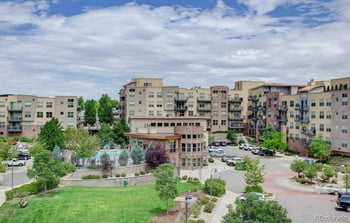
Englewood Station, newer apartments and attached housing, Santa Fe Drive access, and a part of town that is still being reshaped through redevelopment.
Englewood Mailing-Area Searches
Cherry Creek Vista, Southcreek, Vallagio, and other searches where “Englewood” on the address does not establish that the home is inside the City of Englewood.
Those three starting points are more useful than treating every listing returned by an Englewood search as part of one city.
South Broadway Is the Main Street Englewood Actually Uses
If you want to understand central Englewood, drive South Broadway rather than relying on a regional map.
The City identifies South Broadway as containing most of Englewood's traditional main-street environment, particularly around the 3400 and 3500 blocks. Current City planning continues to focus on the public realm and development pattern along this corridor. Review the City's South Broadway planning work.
This is where the idea of “Old Englewood” starts to make sense as a buyer shorthand.
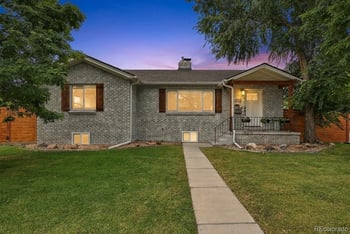
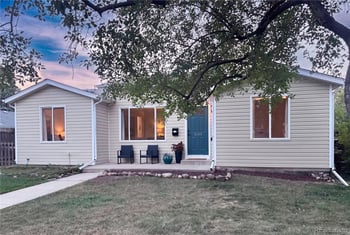
The surrounding residential grid puts older detached homes, small multifamily properties, infill construction, alleys, and neighborhood commercial blocks surprisingly close together.
But Old Englewood is better treated as a home-search label than as a precise municipal neighborhood boundary.
Englewood adopted an official neighborhood map in 2022 with 40 named neighborhoods, including much more specific names such as Old Town, Historic Downtown, Bates Logan, Strayers Broadway Heights, South Broadway Heights, and others.
So use Old Englewood homes to find the kind of location you have in mind, but let the actual address tell you which official neighborhood and parcel you are looking at.
Walk the Block, Then Walk to Broadway
This sounds simple, but it is one of the most useful ways to compare central Englewood houses.
Two listings can both claim proximity to South Broadway while giving you very different trips.
From one house, the route may be a few residential blocks.
From another, you may need to cross Hampden Avenue or another busy corridor.
If being able to reach restaurants, shops, coffee, or other Broadway destinations matters to you, do the trip from the front door.
Also pay attention to the alley.
Alleys are a normal part of many older Englewood blocks, and the City even maintains an address-searchable alley-maintenance map. Englewood's official map collection includes parcels, zoning, neighborhoods, alley maintenance, transportation information, and other useful layers.
That is a much more Englewood-specific property question than simply saying an older home has “character.”
Arapahoe Acres Is Not Just Another Mid-Century Search
Arapahoe Acres deserves its own section because this is one place where the architectural story is genuinely unusual.
The subdivision was built from 1949 through 1957 and contains 124 homes. It was listed in the National Register of Historic Places in 1998 and became the first postwar residential subdivision recognized there.
That matters if you are specifically looking for mid-century design.
These are not simply ranch houses that happen to have been built in the 1950s. The subdivision is recognized for its postwar planning and modernist architecture.
If an Arapahoe Acres home catches your attention, look at the original architectural idea before deciding how you feel about a renovation.
Pay attention to rooflines, window placement, the relationship between indoor and outdoor space, additions, and changes made by previous owners.
Then verify the individual property's current condition, permit history, zoning, and any rules that apply to work you intend to do.
The National Register designation is useful historical context. It is not a substitute for checking the current requirements for that specific property.
Broadway Heights Can Put You Near the Same Corridor Without Feeling Like Downtown
The Broadway Heights search is useful for buyers who want established residential Englewood without making the commercial blocks themselves the center of the decision.
The City's neighborhood work recognizes Broadway Heights-related areas in its official planning geography, including Strayers Broadway Heights and South Broadway Heights.
That illustrates something important about Englewood:
Neighborhood names can get very granular.
Instead of worrying about which label a listing uses, compare the streets.
How far are you from Broadway?
Do you cross Hampden during normal errands?
Does the house use an alley?
Where is the garage?
What happens to the street pattern as you head south?
Those are better buyer questions than trying to force every home into one familiar neighborhood name.
CityCenter and South Broadway Are Two Different Kinds of “Central Englewood”
This distinction matters.
South Broadway is Englewood's traditional commercial street.
CityCenter sits west of Broadway beside Englewood Station and Santa Fe Drive, around the Civic Center and former retail development that replaced Cinderella City.
The two areas are close, but they do not create the same daily routine.
CityCenter gives you immediate proximity to the transit station and a larger-scale mixed-use development pattern. South Broadway gives you the older street grid and traditional storefront environment.
If you are comparing attached housing or newer development, decide which version of central Englewood actually matters to you.
CityCenter Is Still Changing
Do not evaluate CityCenter as though its current layout is permanent.
Englewood is actively working through another phase of redevelopment there. The City has approved a phased property arrangement with a private developer, with additional planning and a future master-plan process contemplated for portions of CityCenter. The Civic Center building itself is not part of the current transfer. Follow the City's current CityCenter redevelopment information when a nearby home interests you.
That means a buyer near CityCenter should look in two directions.
Look at what is outside the building today.
Then look at the current redevelopment information for surrounding parcels.
Do not buy based on an old description of CityCenter, but do not treat a conceptual future rendering as though it already exists either.
Englewood Station Is Useful, but Test the Whole Trip
Englewood Station sits at 899 W. Floyd Avenue, beside CityCenter.
RTD's current system information lists rail service at the station, bus connections, bicycle facilities, and a large Park-n-Ride. Service patterns can change, so use RTD's current schedules rather than an old description of which train goes where.
The more important home-search question is how you reach the station.
Can you walk there?
Would you bike?
Would you drive and park?
Does the route require crossing Hampden or Santa Fe?
A listing saying “near light rail” does not answer any of those questions.
Oxford Station Creates a Second Transit Geography
Englewood also has the Oxford–City of Sheridan Station near Santa Fe and Oxford.
RTD currently lists it as a rail station without RTD parking, which makes its usefulness different from Englewood Station before you even compare train times.
The City is also designing a proposed rail-trail connection along the southwest rail corridor between Bates Avenue and the Big Dry Creek Trail, with a planned bridge connection across major roads. As of mid-2026, portions of that project remained in design rather than completed construction. Check the current Rail Trail project status instead of assuming a planned connection is already usable.
That is exactly the kind of distinction worth knowing before you pay extra for perceived trail or station proximity.
Englewood Even Has Its Own Local Shuttle
One hyper-local transportation option that generic metro guides often miss is bert.
Englewood's free bert shuttle links CityCenter with downtown Englewood and the medical facilities around Craig Hospital and Swedish Medical Center. It uses designated stops and operates on its own service pattern rather than functioning like a fixed-schedule train. Check current bert service before relying on it for a repeated trip.
If you work around the medical district or expect to move between the station, Broadway, and that part of town, it is worth testing.
Again, run the whole trip.
Hampden Avenue Is More Than a Line Through the Middle of Town
Hampden Avenue separates some of Englewood's most important destinations.
It also functions as US 285 and carries regional traffic through the city.
That means “north of Hampden” and “south of Hampden” can be a more practical distinction than two neighborhood names only a few blocks apart.
A house may look close to South Broadway, CityCenter, or the medical district while still putting Hampden into nearly every repeated trip.
When a central Englewood address interests you, drive it at the time you expect to use it.
Do not rely on the Sunday-afternoon showing route.
Older Englewood Homes Reward Address-Level Research
Many central Englewood searches include older detached housing, and that can create a few recurring questions.
Finished basements are common enough that homes with basements deserve their own search.
But a finished basement in the listing is not the same thing as documented permitted work.
The same applies to additions, converted garages, secondary spaces, and infill redevelopment.
Once a home becomes serious, compare the listing description with the available permit history and parcel information.
That is when Englewood's official zoning and parcel map becomes useful. Search the address and select the parcel rather than making assumptions from the surrounding block.
Do the records work after the location survives your comparison, not before.
Rosedale Is a Good Example of Why Search Labels Need Context
The Rosedale search should not be described as though Rosedale were another City of Englewood neighborhood.
Rosedale is immediately north of Englewood in the City and County of Denver. Denver's own neighborhood-organization records include the Rosedale/Harvard Gulch organization within Denver Council District 7.
That makes it a very useful comparison if you like the Broadway corridor but are willing to move north of the municipal boundary.
It also means Denver—not Englewood—controls the municipal records for a Rosedale property.
This is exactly why city names, mailing addresses, MLS labels, and neighborhood searches should not be treated as interchangeable.
The 80111 and 80112 “Englewood” Search Can Be a Completely Different Location
This may be the single most important thing for a relocating buyer to learn.
An online Englewood search can stretch far southeast from the actual City of Englewood.
That is how searches such as Cherry Creek Vista, Southcreek, and Vallagio can appear in the same broader Englewood results even though the ownership and municipal context differs substantially from central Englewood.
The postal label is doing part of the work here.
The City of Englewood's own maps stop at its municipal boundaries. Centennial's official HOA and neighborhood mapping, meanwhile, includes Cherry Creek Vista- and Southcreek-related areas, and Arapahoe County records contain Vallagio at Inverness properties carrying Englewood mailing addresses.
So do not apply City of Englewood facts to those homes because the listing says “Englewood, CO.”
Confirm the address first.
Cherry Creek Vista Is an East-Metro Comparison, Not an Old Englewood Substitute
Cherry Creek Vista belongs in the guide because buyers really do encounter it in Englewood-address searches.
But the daily geography is completely different.
You are no longer choosing whether to live a few blocks from South Broadway or Englewood Station.
Now the relevant road system, association structure, recreation districts, and everyday destinations move much farther east.
Centennial's official mapping includes Cherry Creek Vista-associated districts and neighborhoods.
If this search starts producing the homes you prefer, that is a signal to compare the Centennial Area Guide, not to keep thinking of the property as another version of central Englewood.
Southcreek Pulls the Search Farther Southeast Again
The same principle applies to Southcreek.
Centennial's own neighborhood and HOA data includes Southcreek-related communities.
That should immediately change your home-search questions.
Instead of asking how close you are to Broadway or Englewood Station, ask how the address connects to the southeast metro roads and destinations you expect to use.
Then verify the HOA structure and municipality for the exact property.
Do not carry assumptions from a central Englewood ranch into a Southcreek townhome simply because both listings say Englewood.
Vallagio Belongs to the Inverness Conversation
Vallagio is another excellent example.
Vallagio at Inverness properties can carry an Englewood 80112 mailing address, while Arapahoe County maintains zoning and permit records for the Inverness/Vallagio area.
For a buyer, the practical orientation is Inverness, I-25, Dry Creek, and the surrounding southeast business corridor—not South Broadway.
That is a completely different daily map.
If Vallagio homes keep winning your comparison, treat that as evidence that your search may be more about the southeast metro than the City of Englewood itself.
Neighborhood Names Inside Englewood Are More Granular Than Most Listing Sites Suggest
Englewood officially adopted a map with 40 neighborhoods in 2022.
The City created those names by combining historic subdivision names with modern places of significance after public input.
That is why you may encounter names such as Bates Logan, Old Town, Historic Downtown, Strayers Broadway Heights, South Broadway Heights, Cherrelyn, Arapahoe Acres, Hawthorn, and many others.
A portal may use a broader label.
A resident may use another.
The City map may use a third.
This is normal enough in Englewood that I would not choose a home based on the neighborhood name alone.
Use the name to organize the search.
Use the address to understand the place.
Compare Englewood Location Searches Side by Side
Old Englewood
Start here when the older residential grid and South Broadway side of the city are what you picture when you say Englewood.
Arapahoe Acres
A small, architecturally significant postwar subdivision for buyers specifically interested in recognized mid-century modern design.
Broadway Heights
Useful for comparing established residential blocks around the broader Broadway side of the city.
Rosedale
A north-of-Englewood comparison in Denver for buyers whose search naturally extends along the Broadway corridor.
Cherry Creek Vista
A southeast-metro search that may carry an Englewood mailing address but should be evaluated in its actual municipal and district context.
Southcreek
Another southeast search where planned-community and association questions become more relevant than central Englewood's older street pattern.
Vallagio
An Inverness-area search for buyers whose Englewood results are really pulling them toward I-25 and the southeast business corridor.
For the long-tail inventory rather than a curated comparison, use Explore Englewood communities and searches.
Browse Englewood Homes by Type
Single-Family Homes
Compare detached houses across the city and broader Englewood search, but keep the municipality attached to each address.
Townhomes
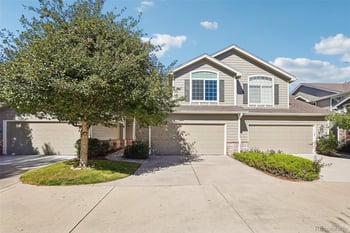
Useful across CityCenter, infill locations, and farther southeast communities. Review the ownership and association structure for the individual property.
Condos
Compare the unit together with association documents, insurance responsibilities, parking, and recurring charges.
Ranch Homes
Especially relevant in established Englewood. Confirm the actual floor plan rather than relying on the architectural label.
New-Construction Homes
New housing can mean infill in an older part of Englewood or development much farther southeast. The address matters more than the search label.
Homes With Basements
Useful in the older housing inventory. Verify finish, permits, egress, moisture history, and current condition for the individual basement.
Homes With a Main-Floor Primary Bedroom
Use this when bedroom placement matters more than whether the listing calls the house a ranch, two-story, or another style.
Luxury Homes
Use the search to discover higher-priced Englewood listings, then compare the property and location rather than assuming one consistent housing category.
Check the Sanitation District Only When a Home Becomes Serious
One piece of the current guide is worth retaining because it is unusually local.
Englewood wastewater treatment involves multiple sanitation districts in the broader service area. The City specifically directs residents to a district map to determine which district serves an address. Use Englewood's sanitation-district lookup for a serious property.
This does not need to be one of the first things you research.
First decide whether you like the house and location.
Then confirm the provider and current obligations for that address.
That keeps useful due diligence from overwhelming the actual area guide.
Test Englewood With Four Real Trips
If I were helping someone decide whether Englewood fits, I would pick several addresses and run the same tests.
First, go to South Broadway.
Second, make your actual work trip using the road or transit option you expect to use.
Third, go to the grocery store, gym, medical appointment, park, or other ordinary destination that matters to you.
Fourth, if the listing claims easy rail or trail access, physically make that connection.
Do this with one central Englewood home and one southeast Englewood-address home.
The difference can be dramatic.
That exercise usually tells you whether you actually want Englewood, or whether Englewood has simply been the mailing label attached to the homes you keep favoriting.
Compare Englewood With the Places Around It
Englewood sits where several different home searches can begin to overlap.
Use the Denver Area Guide if you like the Broadway corridor but your search keeps moving north of the city line. Rosedale is one obvious example.
Use the Littleton Area Guide if your search is pulling south or southwest and you want to compare a different historic center and street network.
Use the Centennial Area Guide when Cherry Creek Vista, Southcreek, or other southeast Englewood-address results are becoming more relevant than central Englewood.
Explore Greenwood Village if the southeast employment corridors and I-25 side of the metro matter more to you.
Keep the comparison consistent.
Same housing type.
Same commute.
Same everyday destinations.
Same tolerance for associations, redevelopment, or older-home projects.
That will tell you more than comparing city names.
Keep Exploring the Denver Metro
If you are still deciding where Englewood belongs in your broader search, Explore the Denver Metro area.
You can also work through the Colorado Front Range Relocation Checklist, search Colorado homes by area, or browse all real-estate guides.
Ready to Compare Englewood Homes?
Tell Kenna Real Estate Group which Englewood homes are catching your attention and what you want the location to do for you.
We can help you compare an older home near South Broadway with CityCenter, Arapahoe Acres, or an Englewood-address property farther southeast—and make sure the municipal, association, utility, and property records come from the right place once a home becomes a serious possibility.