The Assessor sets actual value
Values for 2025 and 2026 come from sales between January 2023 and June 30, 2024. Colorado revalues every odd-numbered year.
Property tax guide
Aurora property tax search by county, 2025 mill levies from 79 to 170+ mills, metro districts, protest dates and relief programs. Check before you buy.
An Aurora property tax bill depends on three things the list price can't tell you: which county the home sits in (Arapahoe, Adams or Douglas), which school district taxes it, and whether a metro district sits on top. Two Aurora homes with the same value can owe very different amounts. This guide shows how to run an Aurora, Colorado property tax search on the right county site, what the 2025 mill levies look like across Aurora, and what to check before you write an offer. Call or text 303-955-4220. A live person answers.
Aurora homes for sale · Aurora real estate statistics · Metro district tax guide · Mortgage calculator
Short answer
It depends on the tax area. For tax year 2025 (paid in 2026), Arapahoe County's records show about 79 mills for an Aurora home in Cherry Creek schools with no metro district, about 98 mills in Aurora Public Schools, and 120 to 170+ mills where a metro district adds its own levy. Look up the exact address before you trust any average.
Illustration only, using Arapahoe County's tax year 2025 levies (bills paid in 2026) and the 2025 residential assessment rates: 7.05% for school levies and 6.25% for all other levies. The $500,000 is the Assessor's actual value, not a sale price. Your bill uses your home's own value and tax area.
Aurora covers more than 165 square miles across three counties, and each county runs its own Assessor and Treasurer. Roughly, the part of Aurora south of East Colfax Avenue is in Arapahoe County, most of the city north of it is in Adams County, and a small pocket on the far southern edge is in Douglas County. The line is not exact, so check the parcel record.
One surprise worth knowing: some homes with an Aurora mailing address are not inside the City of Aurora at all. Arapahoe County's 2025 levy file shows the Copperleaf tax areas with no City of Aurora levy. The tax record, not the mailing address, decides who taxes the home.
Values for 2025 and 2026 come from sales between January 2023 and June 30, 2024. Colorado revalues every odd-numbered year.
School levies use 7.05% of value. Every other levy used 6.25% for 2025; for 2026 it is 6.8% after taking 10% off the first $700,000.
Arapahoe County, the school district, the City of Aurora, the flood district and any metro district each certify a levy every December.
One mill is $1 of tax for every $1,000 of assessed value. Add the school tax and the other tax for the total bill.
These are Arapahoe County's certified levies for tax year 2025, the bills Aurora owners pay in 2026:
The school district is the biggest swing. On the same value, an Aurora Public Schools tax area carries 19.078 more mills than a Cherry Creek tax area with no metro district. Homes north of Colfax in Adams County use Adams County's levies, which the county publishes on request from its Assessor.
Most newer Aurora neighborhoods were built with a metropolitan district, a separate local government that borrowed to pay for streets, water lines and parks and repays that debt with its own property tax. Since 2004 Aurora has required new districts to follow its Model Service Plan, which caps each district's debt levy and how many years it can run. The district's mills are added to everything above. A few from Arapahoe County's 2025 file:
Some parcels sit inside two or three overlapping districts, and totals climb fast. Aurora's metro district page has an address map, and every district's budget and audit are filed with the state. For how these districts work across the metro, read our special district and metro district tax guide and how HOAs, metro districts and taxes affect buyers.
Pull these for the exact address, not the neighborhood:
The Arapahoe County Assessor mails notices of value by May 1. For 2026 the appeal window ran from May 1 to June 8; you can appeal in person, online or by mail, and only the value or the classification can be appealed. Adams and Douglas counties use the same May 1 to June 8 window. Owners can protest every year, but in an even-numbered year the value normally carries over from the odd-year reappraisal. The next reappraisal is 2027.
Bills go out after January 1. Starting in 2026, Arapahoe mails postcards and the full statement is online. Pay in full by April 30, or in halves: the first by the last day of February and the second by mid-June. Late payments carry interest of 1% a month. Arapahoe takes e-check online with no fee, cards with a fee, and payments by phone, mail, drop box or in person.
Fit check
Age 65+ and 10 years owning and living in the home: 50% of the first $200,000 of value is exempt. Apply to the Assessor by July 15.
A 100% permanent VA rating or individual unemployability qualifies for the same 50% of the first $200,000. Apply by July 1.
A state loan that pays the tax now and is repaid later. Apply through the county Treasurer between January 1 and April 1.
For Coloradans 65+ with lower incomes, through the Department of Revenue. The 2025 rebate can be claimed through December 31, 2027.


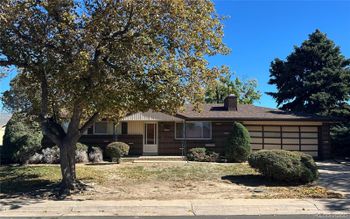
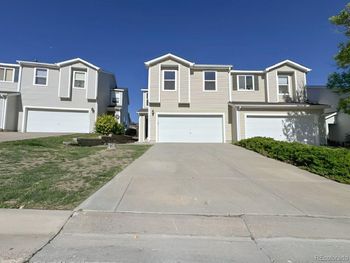


The grid above is live from the MLS. Pick two or three homes, then look up each address on the county site to compare their tax areas side by side. Compare neighborhoods on our Aurora area guide, see new construction in Aurora (where metro districts are most common), or check affordable homes in Aurora.
Find the county first. Arapahoe County's Treasurer Tax Search and Location Information Search cover most of Aurora; north Aurora uses the Adams County Property Portal; the far southern edge uses Douglas County's Advanced Search.
There is no single number. For tax year 2025, Arapahoe County shows 79.154 mills for Aurora with Cherry Creek schools and no metro district, and 98.232 mills with Aurora Public Schools. Metro districts push many tax areas past 120 mills.
You may be in different tax areas: a different school district, a different metro district, or different overlapping districts. The tax area on each parcel record decides the total.
The city's own share is small: 7.087 mills for tax year 2025 after a temporary credit. School districts and metro districts make up most of an Aurora bill.
Yes. The window is May 1 to June 8 each year with the county Assessor. If you disagree with the decision, you can appeal to the County Board of Equalization, then to the state Board of Assessment Appeals, district court or arbitration.
Pay in full by April 30, or half by the last day of February and half by mid-June. Late payments carry interest of 1% a month.
Not always. Some neighborhoods with Aurora mailing addresses, such as the Copperleaf tax areas, carry no City of Aurora levy. Check the taxing districts on the county record.
Send us the address. We pull the county record, the tax area and the metro district before you write an offer.
The Kenna Group at Keller Williams DTC pulls the county record, tax area and metro district for any Aurora home you're serious about, so the monthly payment you plan for is the real one. Call or text 303-955-4220. A live person answers.
The Kenna Group is a real estate group with Keller Williams Realty DTC, LLC (Keller Williams DTC), formerly known as Kenna Real Estate Group, serving Denver metro home buyers and sellers.