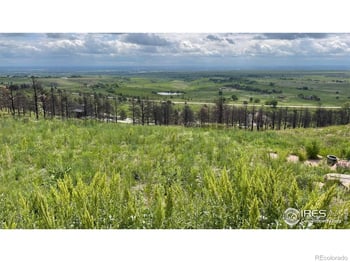
$1,075,000
Active
--
Beds
--
Baths
--
Sqft
2.18
Acres
9634 Mountain Ridge Dr, Boulder, CO 80302
MLS#: RECIR1025875
.jpg)


A jumbo loan is any mortgage above the conforming loan limit set for the county where the home sits, and in Colorado's highest-priced counties that limit runs above the national baseline. Qualifying takes a stronger credit score, a bigger down payment, and more cash in reserve than a conforming loan, and a mortgage broker who works Colorado's jumbo market daily gets a file to closing faster than a single bank with one jumbo program.
The Federal Housing Finance Agency sets a baseline conforming loan limit every year, and Fannie Mae and Freddie Mac buy loans up to that amount. Colorado's highest-cost counties, Pitkin, Eagle, Garfield and Boulder among them, qualify for a higher "high-cost" conforming limit because their median home price runs well above the national baseline. Any loan above the limit set for that specific county, whether the baseline or the high-cost figure, is a jumbo loan.
Denver's close-in neighborhoods, Greenwood Village, Boulder, Lone Tree and Castle Rock's higher price bands, and the mountain corridor around Vail and Aspen see the most jumbo activity in the state. A buyer moving from a lower-cost market into any of these areas should check the county limit before assuming a conforming loan covers the purchase.
Douglas County's Lone Tree and Castle Rock luxury pockets, Boulder's close-in neighborhoods, and Denver's Cherry Creek and Wash Park corridors push the most buyers past the standard conforming limit in a typical year. A buyer relocating from a lower-cost state into any of these areas should run the county limit against the target price range before assuming a conforming loan covers the purchase, since the gap between the two can change the entire financing plan.
| Factor | Conforming loan | Jumbo loan |
|---|---|---|
| Loan amount | At or below the county limit | Above the county limit |
| Credit score | 620 and up on many programs | 700 to 720 and up on most lenders |
| Down payment | 3% to 5% on many programs | 10% to 20%, sometimes 25% on the largest loans |
| Debt-to-income ratio | Up to 45% to 50% on some programs | Capped nearer 43% on most jumbo programs |
| Cash reserves required | 0 to 2 months on many programs | 6 to 12 months of payments |
| Sold to Fannie Mae or Freddie Mac | Yes | No, held or sold privately by the lender |
Most jumbo lenders in Colorado set a 700 to 720 minimum credit score, with the best pricing reserved for scores above 740. Down payment starts around 10% on some jumbo programs and climbs to 20% or 25% as the loan amount rises; a 20% down payment also avoids private mortgage insurance on a jumbo loan the same way it does on a conforming one.
Jumbo underwriters cap the debt-to-income ratio closer to 43% on most programs, tighter than the 45% to 50% some conforming programs allow. Lenders also want 6 to 12 months of mortgage payments sitting in reserve accounts after closing, proof the buyer can cover the payment through a job change or a market dip.
A single bank offers one jumbo program with one rate sheet and one set of overlays. A mortgage broker shops that same file across a dozen jumbo lenders at once, matching the down payment, the reserves, and the property type (primary, second home or investment) to the lender with the best fit. For a Denver metro or mountain-corridor purchase where the appraisal and the timeline both matter, that comparison shopping is the broker's real value.
Some jumbo lenders order a second, independent appraisal on loans above a set threshold, adding a week to the timeline and a second appraisal fee. Ask the lender or broker up front whether the loan amount triggers that second appraisal so the closing date accounts for it.
Yes, with two years of tax returns, a year-to-date profit and loss statement, and a CPA letter confirming the business remains active. Self-employed jumbo borrowers should start the pre-approval conversation 60 to 90 days before they plan to write an offer, since income documentation takes longer to assemble and verify than a W-2 file.
A low appraisal on a jumbo loan forces the same three choices as a conforming loan: renegotiate the price, bring extra cash to close the gap, or exit under an appraisal contingency. Because jumbo down payments already run higher, a low appraisal on a jumbo deal commonly means a larger cash gap in dollar terms, even at the same percentage shortfall.
Jumbo lenders finance second homes in mountain towns and investment properties in the Denver metro, but both carry a higher down payment and a higher rate than a primary-residence jumbo loan. Reserve requirements climb too, since the lender wants proof the buyer can carry both the primary mortgage and the second loan.
A jumbo adjustable-rate mortgage holds a lower fixed rate for an initial period, commonly 5, 7 or 10 years, before adjusting with the market. Buyers who plan to sell or refinance within that window, a common pattern for a mountain second home or a career move into the state, use a jumbo ARM to lower the payment during the years they expect to hold the loan; a buyer settling into a primary residence long term takes the fixed-rate jumbo instead to remove that later rate risk entirely.
Closing costs on a jumbo loan run the same 2% to 5% of the purchase price as a conforming loan, but the dollar total is higher because the loan amount is higher. A jumbo purchase in the seven-figure range can carry $20,000 to $50,000 or more in closing costs once title insurance, the appraisal (or appraisals), lender fees and prepaid escrow reserves are added together; budget for this separately from the down payment.
Appraisers covering Pitkin, Eagle and Summit counties handle fewer comparable sales per square mile than a Front Range suburb, which stretches the appraisal turnaround a week or more beyond a typical Denver metro file. Build that extra time into a mountain-corridor closing date, and confirm with the lender or broker whether the specific property, a ski-in unit or a large land parcel, needs a specialized appraiser.
Mike Oswald at Rate (NMLS 261003, Equal Housing Lender) works with Colorado jumbo borrowers on both the purchase and a later refinance if rates move; you are free to use any lender. Start with the Kenna Credit Care mortgage readiness check and a Colorado mortgage pre-approval before you tour homes above the county's conforming limit.
The Kenna Real Estate Group matches Front Range and mountain-corridor buyers to a jumbo-experienced lender before they tour a home above the county limit. Call or text 303-955-4220. A live person answers. Not a robot, not a phone tree. Or search every home for sale in Colorado, including the state's highest price bands.
Questions about any home in Colorado? Call or text 303-955-4220. A live person answers.
Any amount above the conforming limit set for that county by the Federal Housing Finance Agency; the limit runs higher in Pitkin, Eagle, Garfield and Boulder counties than in the rest of the state.
It varies by lender and by week. Jumbo rates sit close to conforming rates on many days and run higher on others, since jumbo loans are not sold to Fannie Mae or Freddie Mac.
Yes, when the borrower's documents are complete at application. Add a week if the lender requires a second appraisal.
No. Some jumbo programs start at 10% down, though the lowest down payment options come with a higher rate and stricter reserve requirements.
A score above 740 earns the best pricing on most Colorado jumbo programs; scores between 700 and 739 still qualify at a higher rate.
Yes, with a higher down payment and more cash reserves than a primary-residence jumbo loan requires.
A broker compares a dozen jumbo lenders' rates, reserve rules and down payment minimums in one pass, instead of a buyer applying bank by bank.
The buyer renegotiates the price, brings the cash gap to closing, or exits under an appraisal contingency, the same three options a conforming buyer has.