


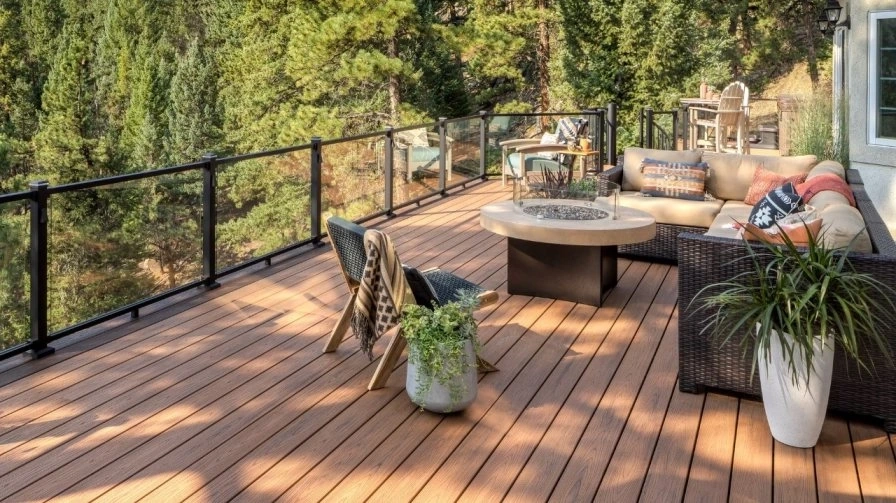
A Front Range deck design has to account for four things most sea-level deck guides skip: snow load on the framing, hail impact on the decking material, intense high-altitude UV fading and drying out wood or composite, and the local permit and HOA process, which varies by city. Get the size and layout right first, then choose materials built for Colorado's climate rather than for looks alone.
What size deck actually fits my Front Range backyard?
Measure the usable square footage before sketching a layout. A design that works in a large Highlands Ranch or Parker backyard can overwhelm a smaller Denver or Aurora lot. Plan space for outdoor furniture, a dining table if you cook outside frequently, walking clearance, and any fire pit or hot tub you want to add later, then leave 15 to 20% of the footprint open rather than filling every square foot. Our Colorado Springs curb appeal guide covers how outdoor hardscaping factors into a listing beyond the deck itself.
How will you actually use the deck?
A deck built mainly for outdoor meals needs a different layout than one built for quiet evenings or entertaining larger groups. Walk through your household's real routine, weeknight dinners, weekend cooking, pets on the deck, before finalizing furniture zones and traffic flow, rather than designing around a single ideal-weekend scenario.
What decking material holds up to Colorado hail season?
| Material | Hail resistance (spring-through-fall season) | Typical installed cost per sq ft |
|---|---|---|
| Pressure-treated wood | Moderate; dents and splinters under large hail | $25 to $40 |
| Composite decking | Good with impact-rated products; check the manufacturer's hail rating | $35 to $75 |
| PVC decking | Good; resists denting better than most wood | $40 to $80 |
Ask any composite or PVC supplier directly for their product's impact rating; not all composite decking is rated the same way for hail, and Colorado's spring-through-September hail season makes this a real cost consideration, not a marketing detail.
Does snow load affect how a Colorado deck is built?
Yes. Front Range building codes specify a minimum snow load the deck framing must support, and the required load varies by elevation, higher-elevation Front Range towns and mountain-adjacent areas carry higher minimums than Denver itself. This is a structural engineering question your contractor and the local building department settle during the permit process, not something to guess at.
Do I need a permit to build a deck in Colorado?
Yes, in nearly every case. Denver, Aurora, Lakewood, Littleton, Colorado Springs, and Fort Collins each require a building permit for a deck attached to the house or one raised more than a modest height above grade, commonly around 30 inches, though the exact threshold varies by city. A permit review confirms the framing meets local snow load requirements and that any stairs or railings meet code spacing.
Does my HOA or metro district need to approve a new deck?
In most planned communities across Highlands Ranch, Castle Rock, Parker, and Douglas and Arapahoe County metro districts, yes. Architectural review committees require a site plan, material selection, and sometimes a color sample before approving a deck addition. Submit for HOA approval before applying for the city permit; some cities require proof of HOA sign-off as part of the permit application itself.
What railing works best for a Colorado view lot?
A glass railing preserves mountain or open-space views that a traditional baluster railing blocks, which matters on Front Range lots with foothills or plains sightlines. A glass deck railing system handles Colorado's temperature swings and UV exposure well when the glass is tempered and rated for exterior use; confirm the manufacturer's exterior rating before ordering for a high-altitude installation.
Do I need a pool fence if my deck is near a pool?
Colorado building codes require a barrier around a residential pool to meet minimum height and gap-spacing requirements, and many Front Range cities enforce this as part of the permit process for any new pool or deck built adjacent to one. A glass pool fence meets code while keeping sightlines open, which is why it's a common choice for decks built around a pool on Front Range properties with a view worth preserving. Our guide to evaluating luxury homes in Colorado covers what outdoor amenities like pools and decks add at higher price bands.
Does UV exposure affect deck material choice at altitude?
Yes. Colorado's roughly 300 days of sun a year and higher UV levels at 5,280 feet and above dry out and fade wood decking faster than at sea level, and can shift the color of lower-quality composite over a few seasons. UV-stabilized composite or PVC holds color better long-term than a standard wood stain, which needs reapplication every 1 to 2 years in direct Front Range sun versus every 2 to 3 years in a shadier yard.
Does a deck actually add value when I sell my Colorado home?
A well-built, permitted deck is a consistent draw in Front Range listings, since outdoor living space matters to buyers across price bands here. An unpermitted deck, by contrast, is a common finding during a buyer's inspection and can surface as an inspection objection item under the standard Colorado Contract to Buy and Sell, or as a disclosure question on the Seller's Property Disclosure form. Our guide to adding value before selling covers how outdoor space affects a Front Range listing price.
How do I start planning a deck design without overspending?
Settle size and use first, confirm the permit and HOA process for your city, then choose materials rated for Colorado's hail and UV exposure. Ask for the printable deck planning checklist in the form below and we email it the same day.
Where to go next
- Stone, Brick, or Concrete: Which Is Better for Patios? (Denver)
- Preparing and Adding Value Before Selling
- The Colorado Home Seller's Guide
- Search every home for sale in Colorado
Talk to the Kenna Real Estate Group
Whether a deck addition is part of getting your Front Range home ready to list or a feature you're hunting for as a buyer, the Kenna Real Estate Group can tell you what outdoor space is actually worth in your neighborhood. Call or text 303-955-4220. A live person answers. Not a robot, not a phone tree. Or search every home for sale in Colorado right now.
Homes for sale that match this post
- HOA Rules and Fees Guide in Highlands Ranch
- Homes with Fenced Yard in Highlands Ranch
- Homes with Hot Tub in Highlands Ranch
- All homes for sale in Highlands Ranch
Guides
Questions about any home in Colorado? Call or text 303-955-4220. A live person answers.