.jpg)


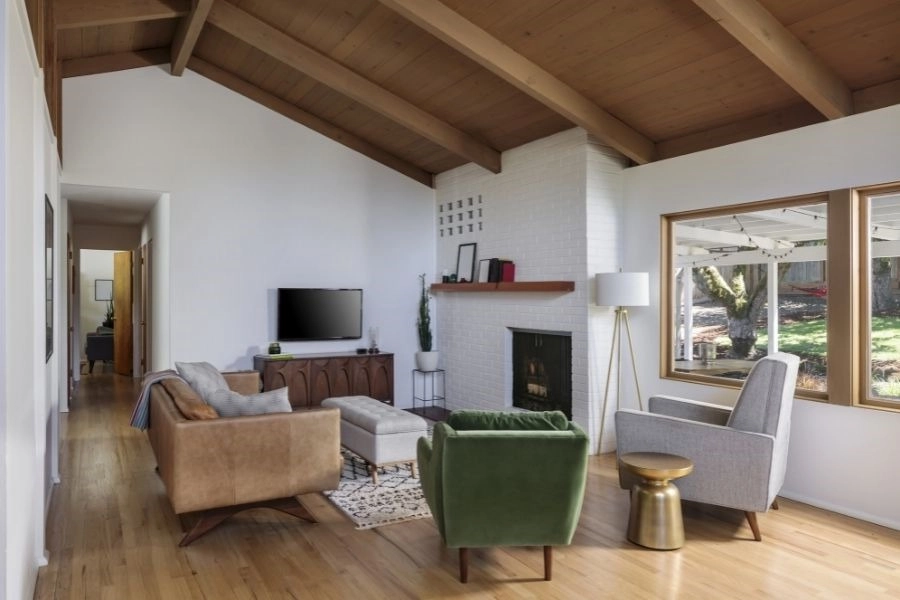
The three interior design styles that come up most for Front Range homeowners are mid-century modern, art deco and mountain-modern, and the right pick depends on your home's age, your budget and whether you are decorating to live in the space or to sell it. Denver metro has a deep supply of 1950s and 1960s ranch homes that lean naturally toward mid-century modern, while newer Front Range construction in Douglas and Broomfield counties suits a mountain-modern palette well.
What interior design styles fit Front Range Colorado homes best?
Three styles show up again and again in Denver, Aurora, Lakewood, Littleton and Centennial listings: mid-century modern, art deco and mountain-modern. Each one handles Colorado's climate and architecture differently, so the right choice starts with the bones of the house, not a trend.
What is mountain-modern design?
Mountain-modern pairs clean, simple lines with natural materials: white oak and walnut furniture, black steel window frames, stone accent walls and wool or leather upholstery. It reads well in the newer construction found in Castle Rock, Parker and the foothills, and it holds up to Colorado's dry air better than styles built around delicate fabrics, because the material palette is already rugged.
What is mid-century modern design and where does it fit in Denver's ranch homes?
Mid-century modern took shape in the 1950s and 1960s and favors tapered wood legs, walnut and teak furniture, and a mix of warm neutrals with one bold accent color. It is a natural fit for the brick ranch homes common in older Denver neighborhoods and in Aurora and Lakewood, since the low rooflines and original hardwood floors already match the style's proportions.
What is art deco design and does it work in Colorado?
Art deco is built on strong geometric shapes, black-and-gold accents and mirrored or lacquered surfaces. It is less common on the Front Range than mountain-modern or mid-century modern, but it can work as an accent in a dining room or primary bath in Denver's older Capitol Hill or Uptown condo buildings, where the original architecture already carries some period detail.
How does Colorado's dry climate change material choices?
Front Range winters commonly bring indoor humidity down to 10% to 25%, which is dry enough to crack solid wood furniture, shrink wood joints and cause natural fiber upholstery to fade or split faster than it would in a humid climate. A humidifier rated for the room and furniture placed away from forced-air vents cuts this damage no matter which style you choose.
How do altitude and 300 days of sun affect wood furniture and finishes?
Colorado's elevation raises UV exposure roughly 4% to 5% for every 1,000 feet of elevation gain compared with sea level, and Denver sits close to 5,280 feet. Combined with close to 300 days of sun a year, that UV load fades dark wood stains, bleaches upholstery fabric and dries out leather faster than in lower, cloudier climates, so south- and west-facing rooms need UV-filtering window film or coverings to protect furniture finishes.
What window coverings work best on west-facing Front Range windows?
West-facing rooms take the hardest afternoon sun on the Front Range. Cellular shades or solar shades with a UV-blocking coating cut glare and fading while still letting in light, and they work with any of the three styles: mountain-modern in black or white, mid-century modern in a warm wood-tone valance, or art deco in a lacquered cornice.
Which design choices raise resale value in Denver, Aurora, Lakewood, Littleton and Centennial?
Buyers touring homes in these price bands respond to neutral walls, updated lighting and floors that photograph well, more than to a specific decor style. A consistent, uncluttered look across every room reads better in listing photos than a heavily themed room-by-room design.
| Style | Best fit | Watch for in dry Colorado air |
|---|---|---|
| Mountain-modern | Newer construction, foothills homes | Leather upholstery drying and cracking |
| Mid-century modern | 1950s-60s Denver-area ranch homes | Solid wood joints loosening in winter |
| Art deco | Period condos, accent rooms | Lacquered and mirrored surfaces showing dust from dry-season static |
Do HOAs and condo associations regulate interior changes in Colorado?
Most single-family HOAs on the Front Range only cover the home's exterior and shared common areas. Condo and townhome associations governed by the Colorado Common Interest Ownership Act more commonly reserve approval rights over changes that touch shared walls, plumbing stacks or structural elements inside a unit, so check your association's governing documents before a renovation that goes beyond paint and furniture.
Do Denver and county permits apply to interior electrical or plumbing work?
Denver and the surrounding counties, including Arapahoe, Jefferson and Douglas, require permits for electrical and plumbing work beyond cosmetic changes, even when the work is entirely interior. A licensed contractor pulls these automatically; if you plan to do the work yourself in an owner-occupied home, check with your city or county building department first.
Should a seller pick one style or mix styles before listing?
One consistent, neutral palette across the main living spaces sells better than mixing three strong styles room to room. Save the boldest style choices, like art deco accents, for a single room such as a powder bath, and keep the rest of the home in a calmer palette that photographs well and appeals to more buyers.
How does design style affect listing photos and days on market?
Listing photos are the first showing most buyers see, and a home with mismatched or dated design elements can read as more work than it is. Refreshing paint, lighting and window coverings ahead of photos costs far less than the price adjustment buyers ask for when a home looks tired in photos.
Should you hire a designer or do it yourself before selling a Colorado home?
A short consultation with a stager or designer before listing commonly pays for itself, particularly for homes above the median price for their neighborhood, where buyers expect a more finished look. For a lower-cost refresh, the Kenna Real Estate Group's guide to preparing and adding value before selling lays out which updates matter most before photos.
Does hard water affect fixtures no matter which design style you choose?
Front Range tap water carries enough mineral content to leave spots and buildup on faucets, shower glass and stainless appliances over time, regardless of whether a kitchen is styled mountain-modern, mid-century modern or art deco. A quick descaling wipe on hardware before photos or a showing keeps fixtures looking as sharp as the design around them.
Should a design update be disclosed when you sell a Colorado home?
Colorado's standard contract to buy and sell includes a Seller's Property Disclosure covering the home's known systems and defects, and a buyer's inspection objection deadline gives them a window to raise concerns after the inspection. A cosmetic design change, like paint or new flooring over an existing subfloor, does not need separate disclosure in most cases, but any interior work that touched electrical, plumbing or structural elements does belong on the disclosure form. Ask your agent or a Colorado real estate attorney if you are unsure whether a specific update qualifies.
Where to go next
- Preparing and adding value before selling
- Pricing your Colorado home to sell
- The impact of interior design on property value
- Staging to sell: how interior design boosts property value
- Search homes for sale in Denver
- Meet the Kenna Real Estate Group agents
Talk to the Kenna Real Estate Group
Whether you are refreshing a Denver-area ranch home to live in or preparing one to list, the Kenna Real Estate Group can walk through your home and point out which design changes are worth the cost before you sell. Call or text 303-955-4220. A live person answers. Not a robot, not a phone tree. Or search every home for sale in Colorado to see how similar homes are staged and priced right now.
Homes for sale that match this post
Guides
Questions about any home in Colorado? Call or text 303-955-4220. A live person answers.