New - 9 Hours Ago
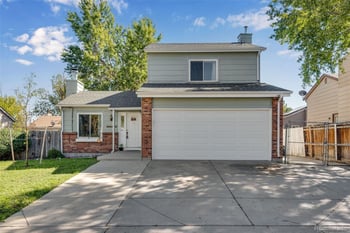
$510,000
Coming Soon
5
Beds
2
Baths
1725
Sqft
0.12
Acres
14532 E 45th Ave, Denver, CO 80239
MLS#: REC6171854
.jpg)



A cash home buyer in Colorado is any person or company that buys a house with money it already has, so the sale closes without an appraisal, a loan approval or a lender's deadlines. Four kinds operate on the Front Range: iBuyers, local investors and flippers, wholesalers, and institutional funds. They pay different amounts, close on different timelines, and one of the four has no money at all.
Three checks separate a real cash buyer from a letter with a logo: proof of funds in the buyer's own name dated within 30 days, earnest money of 1 to 3 percent at a Colorado title company, and a contract with no assignment clause. This guide explains each buyer type, walks the Colorado cash sale step by step, and shows how to run the checks. The Kenna Real Estate Group at Keller Williams DTC runs them on every offer it brings a seller.
| Buyer | What they buy | What they pay | How they close |
|---|---|---|---|
| iBuyers (Opendoor, Offerpad) | Houses in good condition, built after about 1960, inside a set price band in the Denver metro | 90 to 95 percent of value, minus a 5 to 7 percent service fee and a repair credit after their walkthrough | 14 to 60 days, seller picks the date |
| Local investors and flippers | Any condition, including fire, foundation and sewer failures | 70 to 85 percent of after-repair value, minus the repair estimate | 7 to 14 days with their own funds; 14 to 21 days on a hard-money loan |
| Wholesalers | Anything they can put under contract below market | Whatever an investor on their list will pay, minus a $5,000 to $30,000 assignment fee | Only if they find an end buyer inside their inspection period; otherwise they terminate |
| Institutional funds and build-to-rent operators | Newer single-family homes in rental-heavy subdivisions in Aurora, Thornton, Commerce City and Colorado Springs | Near market value on houses that fit their rental model | 21 to 45 days, with corporate approval steps |
The wholesaler is the one to understand first. A wholesaler signs a contract to buy your house, then markets that contract to investors and assigns it to whoever pays the most. The wholesaler never intends to close in its own name and has no funds to do so. If nobody on the list bites, the wholesaler terminates during the inspection period and you have lost two to three weeks. The contract language that makes this possible is the phrase "and/or assigns" after the buyer's name.
A buyer closing on a hard-money loan is a financed buyer, however fast the lender is. Ask which it is. Sellers who need a mortgage on their next home get pre-approved before the cash sale closes; Mike Oswald, VP of Mortgage Lending at Rate, NMLS 261003, Equal Housing Lender, handles that for Kenna clients. You are free to use any lender. The Colorado home financing guide lists the programs.
The Colorado contract allows a post-closing occupancy agreement, so a seller who needs 10 more days to move can close, get paid and stay.
Proof of funds is a bank statement or a bank letter, dated within 30 days, in the exact legal name that appears on the contract, showing a balance equal to or above the price. What does not count: a screenshot with the account number cropped, a statement in a different entity's name, a letter from a hard-money lender (that is a loan, not cash), or a line-of-credit letter with no drawn balance. Verify the document by calling the bank at the phone number on the bank's own website, not the number printed on the letter.
Earnest money is the buyer's deposit at risk. On a $450,000 Arvada house, 1 to 3 percent is $4,500 to $13,500, held by a Colorado title company. A buyer who offers $500 or $1,000 is telling you the walk-away costs nothing. The Colorado contract lets the seller elect, at signing, to keep the earnest money as liquidated damages if the buyer defaults after the deadlines pass; make that election and set the deposit high enough that a default hurts.
Strike "and/or assigns" and require that the named buyer close in its own name, or that any assignment needs your written consent. Ask three direct questions: Are you buying this house yourself? Is the money yours? Will the deed go into your name at closing? A buyer who answers yes to all three and signs a contract that says so is a cash buyer. A buyer who hesitates on any of them is a wholesaler, and you are the product being sold.
Look up anyone who says they are licensed on the Colorado Division of Real Estate license search at DORA. A licensee must hand you a written Brokerage Disclosure that states whether they represent you, the buyer or neither. Direct buyers in every state market this same walkthrough-offer-close sequence; cash home buyers in California describe the process the same way Denver investors do, and the three checks apply everywhere.
Yes, and the inspection is where the price moves. The walkthrough produces a first offer; the inspection period produces a second one. An investor who finds a cracked heat exchanger, a Federal Pacific panel or roots in the clay sewer line comes back $8,000 to $25,000 lower on the last day of the period, when the seller has already packed. The defense costs $500: a sewer scope ($150 to $300 in the Denver metro) and a roofing bid before the buyer walks through. When you already know what is wrong, the second offer has nothing new to stand on.
Before the inspection deadline: the buyer terminates in writing, the title company refunds the earnest money, and the house goes back on the market with the days lost. After the deadlines: the buyer is in default, and the seller keeps the earnest money when liquidated damages were elected in the contract. Neither outcome recovers a missed public trustee sale date or a second month of carrying costs, which is why the checks come before the signature and not after. A seller with a foreclosure clock running should read the Colorado foreclosure guide and give the sale at least 30 days of margin.
A cash buyer wins when the discount buys something a listed sale cannot deliver: a close before a public trustee sale date, a sale of a house no lender will finance, a purchase with a non-paying tenant in place, or a clean close for an estate with heirs in three states. It loses on a lendable house with no deadline, where REcolorado exposure and financed buyers competing on price net more. When a cash offer makes sense in Denver walks each case, and Quick cash sale vs listing: what Colorado sellers net has the side-by-side dollars. The Colorado distressed homes guide explains how investors price defects.
The group keeps a list of Front Range investors it has closed with before, holds current proof of funds for each, and brings offers only on the Colorado contract with a named buyer, no assignment clause, and earnest money of at least 1 percent at a title company. Every cash offer arrives next to a Smart Pricing Report that shows what the same house nets listed, so the seller compares two nets, not a pitch and a hope. Details on the Colorado cash offer program and the Denver cash home buyer options.
The Kenna Real Estate Group at Keller Williams DTC verifies any cash offer already on your table, brings vetted Colorado investors with proof of funds on file, and shows the listed net beside the cash net before you sign anything. Call or text 303-955-4220. A live person answers. Not a robot, not a phone tree. Sellers lining up the next home can search every home for sale in Colorado.
Questions about any home in Colorado? Call or text 303-955-4220. A live person answers.
A bank statement or bank letter dated within 30 days, in the same legal name as the contract, with a balance at or above the price. A hard-money lender's letter is a loan, not cash. Verify by calling the bank at the number on its own website.
One to 3 percent of the price, held at a Colorado title company within three days of signing. On a $450,000 house that is $4,500 to $13,500. A $500 deposit means the buyer loses nothing by walking.
It lets the buyer hand the contract to someone else. Wholesalers use it to sell your contract to an investor for a fee. Strike it or require your written consent to any assignment.
Yes. Opendoor and Offerpad buy in the Denver metro, on houses in good condition inside their price band. Expect an offer at 90 to 95 percent of value minus a 5 to 7 percent fee and a repair credit.
Yes. Colorado requires disclosure of every known adverse material fact on any sale. An as-is contract limits the buyer's repair demands; it does not remove the disclosure duty.
Seven to 14 days after the title company clears title and receives the lender payoff. iBuyers let the seller pick a date up to 60 days out; funds and hard-money buyers take 14 to 45 days.
A licensed Colorado title company. It holds the earnest money, orders the payoff, records the deed with the county clerk and wires the seller's proceeds. No attorney is required at a Colorado closing.
The walkthrough sets the first price and the inspection period sets the second. Get your own sewer scope and roof bid before the walkthrough so the second offer has nothing new to cite.