New - 3 Days Ago
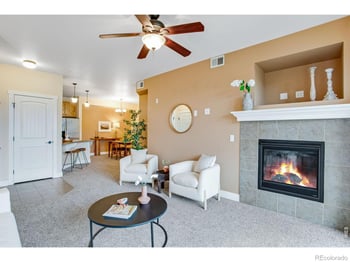
$318,000
Active
2
Beds
2
Baths
1018
Sqft
0.03
Acres
2445 Windrow Dr #206, Fort Collins, CO 80525
MLS#: RECIR1069853
.jpg)


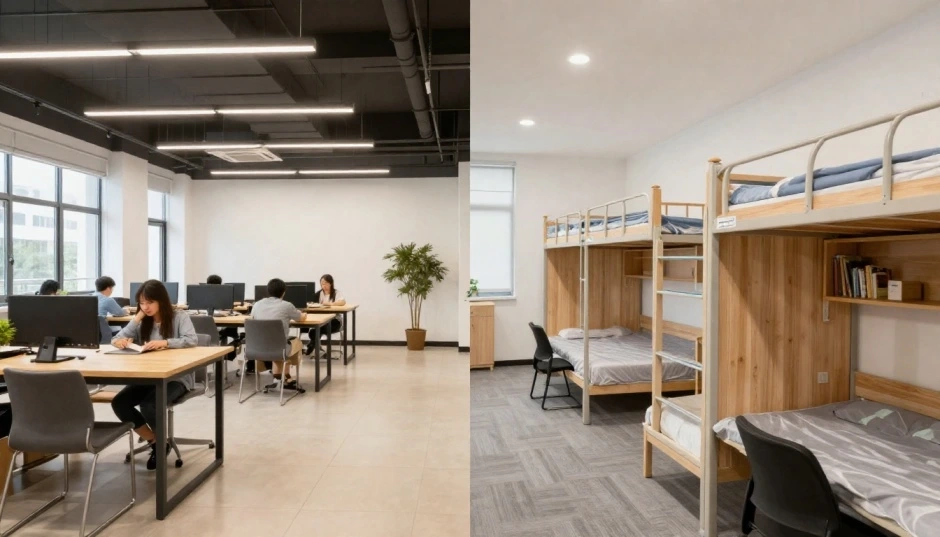
A traditional twelve-month lease is a poor match for a Colorado college student whose year runs on semesters, summer breaks and an uncertain graduation date. Coliving fixes the term-length problem and bundles furniture and utilities into one payment; a traditional rental still wins for a student staying multiple years or splitting a lease with roommates. Here is how the numbers and the terms actually compare for CU Boulder, CSU Fort Collins, Auraria and Denver-area students.
The decision comes down to three questions a student should answer before signing anything: how long the stay actually is, what the true all-in cost looks like once furniture and utilities are counted, and how much flexibility matters against having full control over the space and who lives in it. Colorado's college towns each answer that question a little differently, so the right move for a CU Boulder sophomore is not automatically the right move for a CSU senior renting with three roommates.
Most first-year and out-of-state students have no Colorado rental history and limited credit, which is exactly what a traditional landlord's screening criteria checks for under Colorado's applicant screening rules. Without a qualifying co-signer, a landlord can decline the application or require a larger deposit, and that single requirement is the most common reason a first-time student renter looks at coliving instead, since most coliving operators underwrite the resident directly.
Auraria serves three institutions in one downtown Denver campus, and the surrounding neighborhoods, from the Golden Triangle to LoDo, carry Denver's deepest coliving inventory alongside traditional apartment stock. A student attending classes at Auraria has more model choice within a short commute than a student in a smaller Front Range college town, simply because Denver's rental market is larger and denser.
Beyond first month's rent, a traditional lease asks for a security deposit equal to one month's rent, an application fee per applicant, and a furniture budget if the unit is unfurnished. Coliving replaces most of that with one deposit and no furniture line item, which is the single biggest reason it pencils out better for a one-year stay even when the monthly price looks similar on paper.
Start with the real number, since the sticker price on either model rarely tells the whole story once every one-time and monthly cost is added up over a full academic year in a Front Range college town.
A one-bedroom apartment near CU Boulder or in the Auraria-adjacent Denver neighborhoods runs well above the metro-wide average given campus demand, while Fort Collins near CSU runs somewhat lower. On top of monthly rent, a traditional rental adds $2,000 to $5,000 to furnish the unit, another $100 to $200 a month in utilities, and a security deposit before move-in. Coliving folds most of that into one predictable monthly number, with no furniture purchase and no separate utility setup.
A standard Colorado lease runs twelve months, which forces a student to pay for an empty unit over the summer or scramble to find a subletter when a study-abroad term or an internship comes up. Coliving operators build shorter, more flexible terms designed around an academic calendar, which matters most for a student whose plans past the current semester are not locked in.
Colorado law requires a landlord to return a security deposit, with an itemized deduction list, within the timeframe set in the lease. A first-time renter without established credit or rental history should expect a landlord to request a co-signer or a larger deposit; coliving operators, by contrast, underwrite the resident directly and skip the co-signer requirement that trips up many first-year students.
An out-of-state student applying for a traditional lease needs proof of income or a co-signer with Colorado or verifiable U.S. income, a government ID, and, in most cases, a deposit equal to one to two months' rent. Coliving platforms built around student and relocating renters streamline this with a faster online application and, in many cases, a furnished room ready the day the lease starts, which matters for a student moving from out of state without a car full of furniture to bring.
Denver, with its concentration of students at Auraria campus, DU and Metro State, carries the widest coliving inventory in the state, followed by Boulder near CU. Fort Collins near CSU has a smaller but growing supply. A student comparing off-campus student rooms against a traditional Front Range lease should compare both directly against the specific college's neighborhood rather than assuming one model dominates everywhere in the state.
| Factor | Traditional Colorado lease | Coliving |
|---|---|---|
| Typical lease term | 12 months | Flexible, semester-aligned |
| Furniture cost | $2,000 to $5,000 upfront | Included |
| Co-signer requirement | Common for first-time renters | Rarely |
| Best fit | Multiple years, roommates, full control | One academic year, first move to a new city |
A student staying in Colorado for a full degree program, sharing a lease with a group of friends, or wanting full control over furniture and roommates comes out ahead with a traditional rental over several years. The US coliving market, valued at roughly $4.2 billion in 2025 and projected to top $10 billion by 2030, is growing fastest among renters who value flexibility over long-term control, which describes a first-year or transfer student far more than a student locked into a four-year plan at one Colorado college.
Colorado's warranty of habitability applies to a student rental the same as any other lease, meaning a landlord must address repair requests that affect basic living conditions within a set timeframe. A first-time renter should read the lease for deposit terms, guest policies and early-termination fees before signing, since a coliving agreement and a traditional lease structure these terms very differently, and a student who skips that read is the one who ends up surprised by a fee months later.
Students and parents planning a purchase instead of a lease for a multi-year program should see the first-time buyer guide and the Colorado condos for sale listings, since buying can pencil out for a student staying four or more years near one campus, especially once a parent's rent-versus-buy math is run over a full degree program instead of one lease term.
The Kenna Real Estate Group helps Colorado students and parents weigh renting against buying near CU Boulder, CSU and the Denver campuses. Call or text 303-955-4220. A live person answers. Not a robot, not a phone tree. Ready to see what fits your budget? Search every home for sale in Colorado.
Questions about any home in Colorado? Call or text 303-955-4220. A live person answers.
Once furniture, utilities and deposit costs are counted, coliving comes out ahead for a single academic year in most cases; a traditional lease can cost less per month over several years without those one-time costs repeating.
Some Front Range landlords near campuses offer nine or ten-month leases aligned to the academic year, but this is far less common than a standard twelve-month term.
Most underwrite the resident directly and skip the co-signer requirement that a traditional landlord commonly asks a first-time student renter to provide.
State law requires an itemized list of deductions and a refund within the timeframe set in the lease; keep move-in photos to dispute any charge that does not match actual damage.
Buying can make sense for a four-year program or longer, particularly near CU Boulder or CSU where rents run high relative to a mortgage payment on a condo.
Yes, Denver carries the widest coliving inventory in the state given its concentration of students across Auraria, DU and Metro State.