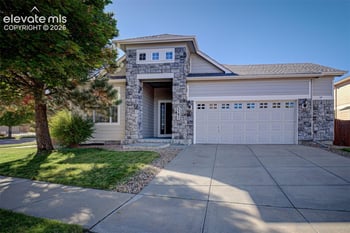
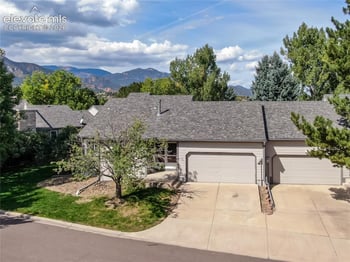
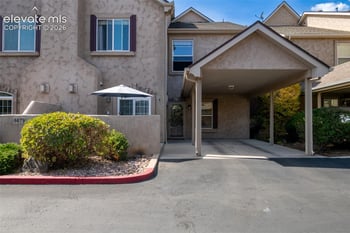
New - 30 Mins Ago

$612,900
Active
4
Beds
3
Baths
2836
Sqft
0.202
Acres
11070 Galaxy Hunter Dr, Colorado Springs, CO 80908
MLS#: 6899041
.jpg)



Let's talk straight. A short sale is when a homeowner sells their property for less than what they owe on the mortgage—and the lender agrees to accept that lower payoff to release the lien. It's not a foreclosure. It's not a quick flip. It's a negotiated workout between a struggling homeowner, their bank, and a buyer who's patient enough to wait for the green light.
I'm Brian Lee Burke. I've spent 25+ years in Colorado real estate and another 25+ years before that running multifamily construction sites along the Front Range. I lead The Kenna Real Estate Group at Keller Williams DTC, and our team has worked short sales from Fort Collins to Colorado Springs through three market cycles. If you're staring down a short sale right now—whether you're the seller drowning in payments or the buyer eyeing a deal—this guide is the conversation I'd want to have with you over coffee.
A short sale happens when the home's market value has dropped below the mortgage balance, the homeowner can't keep up with payments, and the lender agrees to let the property sell at a loss instead of forcing foreclosure. The bank "shorts" itself on the loan payoff—hence the name.
Here's the part most articles skip: a short sale is a three-party negotiation, not a two-party sale. The seller signs the contract, the buyer signs the contract, and then the lender has to approve the deal. Without that lender approval, nothing closes. That's why short sales take longer, require more paperwork, and demand an agent who actually knows the playbook.
For about a decade, short sales went quiet in Colorado. Appreciation was so aggressive along the Front Range that almost nobody owed more than their home was worth. That's changing.
Homeowners who bought at peak in 2021–2022 with low down payments, then refinanced or took out second liens, are now hitting situations where their payoff exceeds market value—especially in pockets of Adams County, Weld County, El Paso County, and parts of the southeast Denver metro. Add in job changes, divorces, medical events, or rate-related affordability stress on adjustable loans, and the short sale conversation is happening again in living rooms across the state.
If you're behind on your mortgage and you owe more than your house is worth, you have options. A short sale is one of them. It's almost always better than letting the bank foreclose.
A foreclosure is the bank taking the house back. A short sale is you selling the house with the bank's permission. The difference shows up in three places that affect your life:
If you're the homeowner, the lender isn't just going to take your word that you can't pay. You're going to document your hardship in detail. Here's the checklist we walk every short sale seller through on day one:
If you have supporting documents—divorce decree, layoff notice, medical bills, bankruptcy filings, homeowner's insurance declarations—those go in the package too. The more complete your hardship story, the faster the lender moves.
Short sales can be one of the best deals on the market—or one of the most frustrating, depending on how the file is run. If you're buying a short sale in Colorado, here's the honest truth:
You're going to wait. Lender approval typically takes 90 to 120 days from the day a complete package hits their desk. Some files move faster. Some take longer. If you need to be in a house in 30 days, a short sale is the wrong purchase.
You're going to provide more paperwork than a normal deal. Most short sale lenders require buyers to submit, alongside the offer:
You may be asked to pay a short sale negotiation fee. This is the part nobody warns buyers about. Some short sales — particularly the ones where the seller has hired a third-party negotiator to manage the lender package — pass a negotiation fee to the buyer at closing. That fee is often $10,000 or 5% of the purchase price, whichever is greater, and it shows up as a line item on your closing disclosure. It's separate from your real estate commissions and your standard closing costs.
You don't have to like it. But you do have to know about it before you write the offer, because once you sign the disclosure, it's part of the deal. This is exactly the kind of detail our team flags for buyer clients up front—before you fall in love with the house.
Most real estate agents will tell you they "handle" short sales. Most haven't actually closed one in years. Here's what separates a short sale specialist from a generalist who's about to learn on your dime:
I'm not going to pretend we're the only team in Colorado who can close a short sale. I will tell you why we're the team I'd hire if I were on the other side of this deal:
We've done this before—through real downturns. Our team has worked short sales from the 2008–2012 cycle through every soft patch since. We know what a complete file looks like. We know how to position a hardship story so a loss mitigation department actually reads it. We know when to escalate to a supervisor and when to wait.
I bring 25 years of construction experience to every short-sale property. Short sale homes are often distressed. Roofs are tired, mechanicals are aged out, and foundations have settled. Before I was a real estate broker, I spent 13 years as a multifamily construction superintendent. When I walk a short sale property with a buyer or a seller, I'm telling you what the lender's BPO inspector is going to flag—and what it'll really cost to fix. Most agents are guessing. I'm not.
We cover the entire Front Range. Fort Collins, Loveland, Boulder, the Denver metro, Castle Rock, Parker, Highlands Ranch, Monument, and Colorado Springs—our 14-agent team has boots on the ground in every market between Cheyenne and Pueblo. Local market data matters in a short sale because the lender's valuation challenge is won or lost on neighborhood-level comps.
We run the paperwork like a back office, not a side project. Felicia Carter, our Client Care Manager, manages the document flow on every short sale we touch. Mike Oswald, our Director of Agent Development, runs financing scenarios on the buyer side. Nothing falls through the cracks because we don't treat short sales as one-off projects. We treat them as a service line.
We tell you the truth. If a short sale doesn't make sense for you—if you'd actually be better off with a deed in lieu, a loan modification, or just selling traditionally—we'll tell you. The first conversation costs you nothing, and it's the most important one.
Plan on 90 to 120 days from the date the lender receives a complete package. Some files close in 60 days. Some drag past six months. The single biggest factor is how complete the seller's hardship documentation is on day one.
Not necessarily. Some lenders require a missed payment to demonstrate hardship. Others—particularly with anticipated hardship like a confirmed job relocation or a recent divorce decree—will approve short sales while the borrower is still current. Don't make assumptions. Ask.
It depends on your situation and the year you close. Forgiven mortgage debt was excluded from taxable income for primary residences under federal law for many years, but those exclusions have changed and expired and been extended at various times. This is a question for a CPA, not a real estate agent. We can refer you to one.
Usually, yes — and often sooner than you'd think. Many loan programs allow a borrower to buy again two to four years after a short sale, depending on the loan type, the circumstances, and your credit recovery. FHA, VA, and conventional all have different rules. This is why working with a lender like Mike Oswald at New American Funding from the beginning matters — so you have a re-entry plan, not just an exit plan.
Sometimes. It depends on the seller's negotiator, the lender, and the strength of your offer. Some files are firm. Some have flexibility. Don't assume the fee is set in stone, but also don't assume you can wave it away. The right move is to put the question on the table before you write the offer, not after.
Pre-foreclosure is the status of the loan—the borrower is behind on payments, and the foreclosure process has started or is about to. A short sale is one solution available during pre-foreclosure. Every short sale involves a struggling loan, but not every pre-foreclosure ends in a short sale.
Almost always, yes. The lender is already taking a loss on the payoff—they're not going to credit a buyer for a new roof. That doesn't mean you skip the inspection. It means you go in with eyes open about what you're buying and price your offer accordingly. This is where my construction background pays off for our buyer clients.
Whether you're a homeowner running out of runway or a buyer looking at a short sale listing and wondering what you're really walking into, the first conversation is the most important one. Short sales reward preparation and punish improvisation, and the families who come to us early have dramatically better outcomes than the ones who wait until the foreclosure letter shows up.
Call The Kenna Real Estate Group. Ask for Brian. I'll give you a straight answer, a real timeline, and a plan that fits your situation—whether that plan is a short sale or something else entirely.
Brian Lee Burke is the team leader of the Kenna Real Estate Group at Keller Williams DTC in Centennial, Colorado. Known as "The Hardest Working Man in Real Estate," Brian has 25+ years of Colorado real estate experience and 25+ years of construction expertise, serving the entire Front Range from Fort Collins to Colorado Springs. Helping You Find Your Pad™.
The Kenna Real Estate Group answers short sales, foreclosures and underwater mortgages questions every day, from Fort Collins to Colorado Springs. Call or text 303-955-4220. A live person answers. Not a robot, not a phone tree. Or search every home for sale in Colorado right now.
Questions about any home in Colorado? Call or text 303-955-4220. A live person answers.