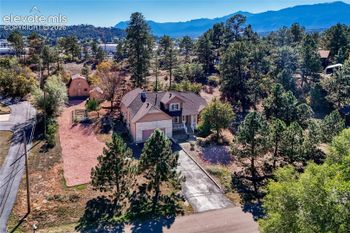
Two Colorado Springs-area homes can have similar prices and very different property tax bills. The difference may come from the taxing entities attached to each parcel, including a metropolitan district with its own mill levy.
For more on day-to-day life in Colorado Springs, read our Colorado Springs neighborhood guide.
That makes the exact address more useful than the neighborhood name. A development can contain multiple numbered or regional metropolitan districts, and a district’s levy is only one part of the property’s total tax rate. Before comparing monthly payments, identify the parcel and record the assessed values, taxing entities and year labels shown by both the Assessor and Treasurer. Those labels may differ, so do not assume they refer to the same period without clarification.
Why metro district taxes vary by property
Colorado metropolitan districts are independent governmental entities that may finance public improvements through bonds and operate or maintain facilities. A development may use separate districts for different phases or for residential and commercial property, according to the City of Colorado Springs’ special-district information.
That structure helps explain why a subdivision name does not settle the tax question. Two homes marketed under the same broad community name may sit in different numbered districts. Properties in nearby unincorporated El Paso County may also fall under a different set of local entities; Colorado Springs municipal policies do not automatically apply outside the city.
The practical question is not simply, “Is this home in a metro district?” It is:
Which taxing entities apply to this exact parcel, what period does each displayed year label describe, and which tax year appears on the billed statement?
The El Paso County Assessor’s metropolitan-district maps can help you see how districts are organized. The parcel record remains the better source for determining which entities apply to a particular address.
What a mill levy tells you—and what it does not
A mill equals $1 of tax for every $1,000 of assessed value. If a district has a levy of 40 mills, that means $40 per $1,000 of the applicable assessed value.
The mill levy is not applied directly to the home’s purchase price. It applies to assessed value, which is calculated under Colorado’s assessment rules. The total property tax bill can also include levies from multiple taxing entities, so one metropolitan district’s levy is not the property’s complete tax rate.
The county’s mill-levy table shows why district names and years matter. For tax year 2025, billed in 2026, it lists Banning Lewis Ranch Metropolitan District No. 2 at 46.469 mills and District No. 4 at 63.631 mills. Those figures illustrate a difference between two numbered district entities. Neither number is an all-in tax rate for every Banning Lewis Ranch property, a forecast for another year or proof that either district applies to a home you are considering.
| Record or figure | What it can tell you | What it cannot establish by itself |
|---|---|---|
| Neighborhood or development name | The general area to investigate | The exact districts attached to a parcel |
| One metro district’s mill levy | That entity’s rate for the stated tax year | The parcel’s complete tax rate or total bill |
| Tax area code and taxing-entity list | Which entities appear on the parcel record | A guaranteed future levy |
| Assessor year label | The year displayed with the assessor’s levy information | That it is numerically equivalent to the Treasurer’s tax year or predicts a future levy |
| Prior tax statement | What was billed for the stated tax year | A lender’s final payment estimate or a future tax bill |
| Listing payment estimate | A starting point for discussing costs | The county’s parcel-specific assessment or tax determination |
Keep school and non-school assessed values separate
Beginning with 2025, El Paso County records distinguish between assessed value for school taxes and assessed value for local-government taxes. The county’s 2025 chart shows a 7.05% school assessment rate and a 6.25% local-government assessment rate. Its 2026 column contains different local-government rules.
That distinction matters because a single assessed-value calculation may no longer describe the entire bill. Multiplying a combined levy by one assessed-value figure can produce a misleading estimate when the school and non-school portions use different assessment bases.
The county’s property-tax explanation and assessment-rate chart provide the applicable categories and year-specific rates. Their examples help explain the method, but they are not quotes for a particular property.
When reviewing a parcel, keep these items together:
- Assessed Value (School)
- Assessed Value (Non-School)
- School Levy
- Non-School Levy
- Levy Year as displayed by the Assessor
- Tax year shown by the Treasurer
- Individual Taxing Entities
That is more reliable than taking one percentage, one mill levy or one illustration and treating it as the home’s entire property tax calculation.
How to find the districts and levies for an exact address
Start with the El Paso County Assessor, select “Search For A Real Property Parcel,” and enter the property address. Open the matching parcel and review two sections.
Under “Market & Assessment Details,” look for the separate school and non-school assessed values. Under “Tax Entity and Levy Information,” find the tax area code, levy year, school levy, non-school levy and individual taxing entities.
Read the entity names carefully. This is where a numbered metropolitan district or regional district may appear. Do not substitute a community map, listing description or neighboring address for the parcel’s own record.
Next, follow the parcel record’s “County Treasurer Tax Information” link or use the El Paso County Treasurer tax search. The Treasurer allows searches by account number, name or address. For an address search, enter the street number and street name without the street type, city, state or ZIP code. An account-number search requires the letter “R” followed by the ten-digit real-estate account number.
Record the year shown on each page instead of forcing the labels to agree. In the operated county lookup, the Assessor displayed “Levy Year: 2026,” while the linked Treasurer result displayed “2025 Property Tax.” That observation does not establish that the figures are numerically equal, explain what the Assessor’s label means or support treating it as a future levy.
El Paso County property taxes are collected in arrears, and the county’s levy table distinguishes tax year 2025 from bills issued in 2026. That verified relationship does not automatically resolve every year label shown by the parcel interfaces. If the Assessor’s levy year and the Treasurer’s property-tax year differ, ask the county which period each label represents before using the figures in a property comparison or payment estimate.
The county’s property-tax statement explanation can help you locate the schedule or account number, tax district code and assessed value. Its sample statement is illustrative; the isolated county rate shown there is not an all-in Colorado Springs property tax rate.
Treat district illustrations as examples, not quotes
Some metropolitan districts publish their own debt and mill-levy disclosures. These can help explain why the district exists, what debt it reports and how its levy illustration works.
For example, the Lorson Ranch district disclosure includes an illustrative calculation for a $450,000 home. It also cautions that assessment rates have changed and that levies may adjust, then directs readers to county records for property-specific estimates.
That example should remain attached to its stated assumptions. It is not a verified current bill for a home in Lorson Ranch, a rate for every Colorado Springs property or evidence that another district will calculate taxes the same way. Lorson Ranch is also an El Paso County-area example, not a statement of municipal policy for the City of Colorado Springs.
Compare the property tax record before comparing payments
When reviewing homes for sale in Colorado Springs, remember that the search results have not been screened for metropolitan-district status or low property taxes. Once a home interests you, use its exact address to complete the comparison.
For each property, record the same information:
| Comparison point | What to note |
|---|---|
| Parcel | Exact address and county parcel or account number |
| District identity | Tax area code and named taxing entities |
| Assessment | School and non-school assessed values |
| Assessor levy information | School levy, non-school levy and the displayed levy-year label |
| Treasurer statement | Property-tax year, billed year and total shown |
| Period clarification | Any county explanation needed when the Assessor and Treasurer labels differ |
| District material | Any supplied disclosure, debt information or levy illustration |
| Payment estimate | The figures, periods and assumptions used by the lender |
This keeps unlike figures from being placed side by side. One home’s prior billed tax, another home’s listing estimate and a district’s hypothetical illustration may all be accurate within their own contexts while answering different questions.
A recently built home deserves the same discipline. Do not assume that a prior statement, an Assessor levy-year label, a district illustration or a nearby property predicts the next bill. Ask the lender which assessed values, levies and periods were used in the payment estimate. The Colorado home-financing guide can help you organize the broader loan and payment questions around that estimate.
What to check before making an offer
Before relying on a property tax number, confirm:
- The record belongs to the exact parcel.
- The tax area code and individual taxing entities are visible.
- Any numbered metropolitan district matches the parcel record.
- The school and non-school assessed values have not been combined incorrectly.
- You have recorded the Assessor’s levy year and the Treasurer’s property-tax year separately.
- If those year labels differ, the county has clarified what each period represents before you compare the figures.
- No current year label has been treated as a promised future levy.
- A district illustration is labeled as an illustration, not a property-specific quote.
- The lender can explain which tax figures, periods and assumptions appear in the proposed payment.
The goal is not to predict every future levy. It is to understand the available record well enough to compare properties on the same basis and recognize which questions still require clarification from the county or a property-specific estimate from the lender.
If you would like help locating the relevant property records and organizing the questions for a home you are considering, contact Kenna Real Estate Group. County records determine the parcel’s assessment and taxing entities, while your lender can prepare a property-specific payment estimate.