.jpg)


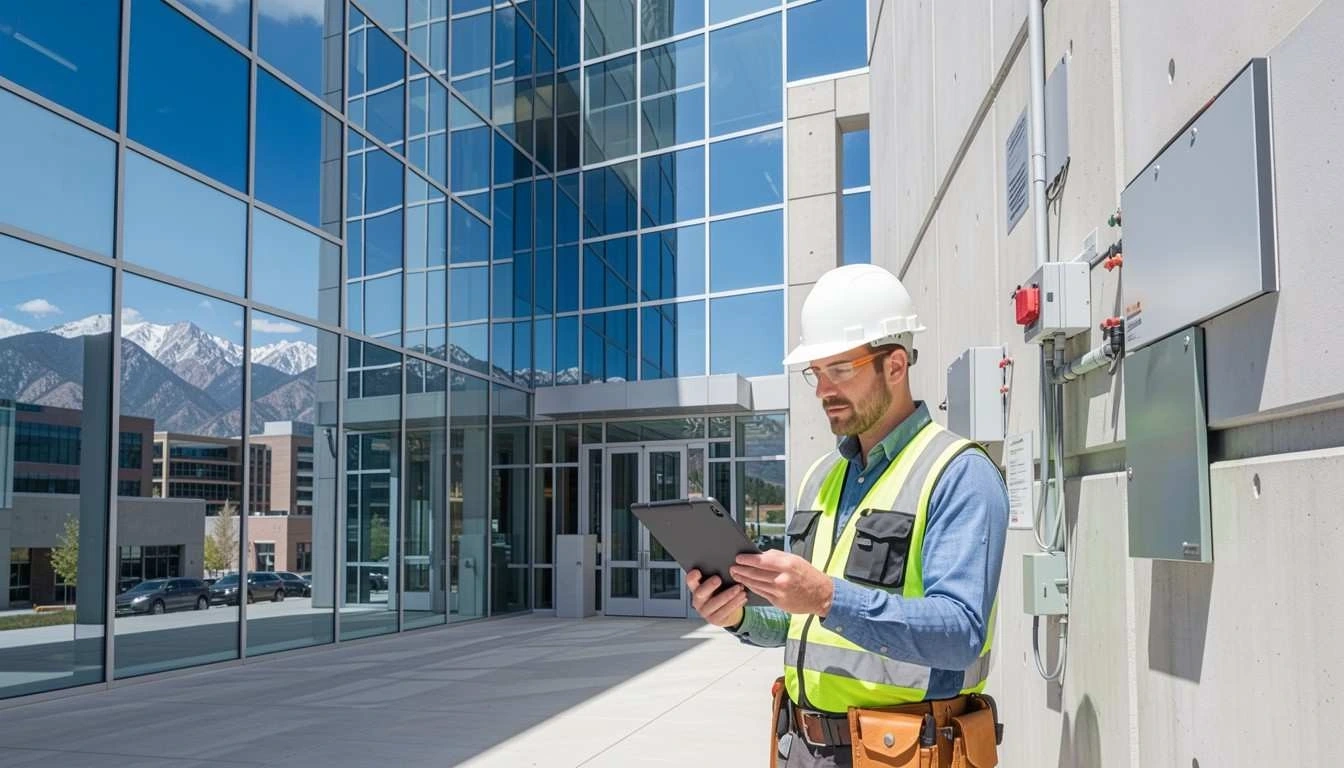
A commercial property risk assessment identifies the hazards on a building before they turn into an insurance claim, and in Colorado that means starting with hail, wildfire exposure and freeze-thaw damage, not a generic national checklist. The five-step process below applies to an office building, retail unit or mixed-use property anywhere on the Front Range.
Owners who treat the assessment as a one-time exercise miss the point. Colorado buildings age against a specific set of regional stresses, and the record an owner keeps of hazards found and fixed is what protects the investment, supports an insurance claim, and demonstrates to a future buyer or lender that the property has been managed with a documented process rather than guesswork.
What Does a Commercial Property Risk Assessment Cover in Colorado?
The assessment looks at the building itself, its environment and day-to-day operations to find hazards before they cause harm or a claim. Older Front Range buildings carry aging electrical systems and roofing near the end of its rated life; newer developments lean more on access management, fire protection systems and maintenance schedules. Every assessment should weigh environmental exposure specific to Colorado alongside the building's physical condition.
The Five-Step Commercial Property Risk Assessment Process
Most assessments follow the same structure, applied consistently across a portfolio and repeated on a fixed schedule rather than left to whenever an owner remembers to run one.
- Identify hazards. Walk every internal and external area, including parking, plant rooms and emergency egress routes, noting damaged flooring, poor lighting, blocked exits and deteriorating structure.
- Evaluate risk. Rank each hazard by likelihood and severity using a simple risk matrix, so urgent items get scheduled before routine maintenance items.
- Implement fixes. Repair, replace or upgrade the highest-priority items first, favoring permanent fixes over signage or administrative workarounds.
- Document findings. Record every hazard, the people it affects, the assigned risk level and the corrective action, with dates.
- Review on a schedule. Reassess after a major storm, a change in occupancy, any incident, and at minimum once a year.
How Does Colorado Hail Season Change a Commercial Risk Assessment?
The Front Range sits in one of the highest hail-frequency corridors in the country, with the season running from spring through September. A Colorado risk assessment should add a post-storm roof inspection trigger that a national checklist would not include, checking for granule loss, dented flashing and damaged rooftop HVAC units after every significant hailstorm rather than waiting for the annual review.
What Wildfire Zone Risks Should Colorado Commercial Owners Assess?
Properties near the wildland-urban interface in the foothills and parts of the Front Range carry wildfire exposure that a flat-market checklist misses entirely. An assessment in these areas should evaluate defensible space around the building, roofing and siding material, and vent screening that resists ember intrusion, alongside the property's proximity to open space and fuel load.
What Does Colorado Fire Code Require for Commercial Fire Protection?
Colorado commercial buildings operate under adopted versions of the International Fire Code as applied by the local fire authority, which covers detection systems, sprinklers, exit signage, emergency lighting and fire doors. Where an inspection finds a damaged or non-compliant fire door, a specialist installer such as Adaston can bring it back to code, and regular servicing of detection systems with documented test records supports both compliance and any future insurance review.
How Does Freeze-Thaw Damage Affect Colorado Commercial Building Risk?
Colorado's daily freeze-thaw cycles, common from fall through spring, drive water into small cracks in pavement, foundations and masonry, then expand it as ice, widening the crack every cycle. A risk assessment should treat pavement and foundation cracking as a recurring line item rather than a one-time repair, since the same cycle repeats every winter.
What Flood Zone and Radon Risks Apply to Colorado Commercial Properties?
Drainage and flood exposure vary block by block along the Front Range's creeks and drainageways, and a property's flood zone designation affects both insurance requirements and site drainage planning. Radon is a known factor in Colorado soil and should be tested in any commercial basement or ground-floor space with regular occupancy, since elevated levels are a documented regional issue independent of building age.
How Does Online Risk Assessment Software Help a Multi-Property Colorado Owner?
Many owners have moved from paper inspection forms to online property risk assessment software to standardize inspections, attach photo evidence, assign corrective actions and keep a complete audit trail across every property in a portfolio. For an owner with buildings in Denver, Aurora and Colorado Springs, that shared record is what turns a hallway conversation about a repair into documented proof the issue was addressed on a specific date.
What Does Colorado Law Require for Legionella and Water System Checks?
Any commercial building with a cooling tower, hot water system or decorative water feature carries legionella risk, and regular testing and maintenance keeps bacterial growth from taking hold in stagnant sections of the system. A risk assessment should log the last flush and test date for every water system on the property, since that record is exactly what an inspector or an insurer asks for after any water-related incident.
What Electrical and Workplace Risks Matter Most in Older Colorado Buildings?
Buildings built before modern code carry undersized electrical panels, aging wiring and limited capacity for current tenant equipment loads. An assessment should inspect fixed electrical systems, temporary equipment, plant and machinery, and common trip hazards such as uneven flooring or blocked access routes, then document deterioration before it becomes a workplace incident or an insurance denial over a known, unaddressed condition.
How Do Rising Colorado Commercial Insurance Costs Connect to Risk Assessments?
Colorado commercial insurance premiums have climbed with the state's hail and wildfire exposure, and carriers increasingly ask for documented risk management practices before offering their best terms. A property with a current, well-documented assessment and a track record of addressing findings quickly is in a stronger position at renewal than one with no paper trail at all.
| Colorado risk category | What the assessment should check | Review trigger |
|---|---|---|
| Hail and roof condition | Granule loss, flashing, rooftop equipment | After every significant storm |
| Wildfire exposure | Defensible space, roofing material, vents | Annually, more frequently near open space |
| Freeze-thaw damage | Pavement, foundation and masonry cracking | Spring and fall |
| Fire protection systems | Detection, sprinklers, doors, egress | Per fire code testing schedule |
| Radon | Basement and ground-floor testing | Every two to five years |
Owners evaluating a commercial acquisition or refinance should pair a risk assessment with the Colorado real estate investing guide before closing.
Where to go next
- Search every home and commercial listing for sale in Colorado
- Explore Denver commercial and investment corridors
- Colorado homebuyers: check the wildfire score before you decide
- Denver home insurance costs keep rising: here's why and what to do
- Understanding radon in Denver properties: risks, testing and mitigation
- Denver flood zones and drainage: complete buyer guide
Talk to the Kenna Real Estate Group
The Kenna Real Estate Group works with Colorado commercial property owners on acquisitions, dispositions and the risk factors that affect value across the Front Range. Call or text 303-955-4220. A live person answers. Not a robot, not a phone tree. Ready to see what's on the market? Search every home for sale in Colorado.
Homes for sale that match this post
Guides
Questions about any home in Colorado? Call or text 303-955-4220. A live person answers.