New - 1 Hour Ago
$399,900
Active
3
Beds
2
Baths
1439
Sqft
0.12
Acres
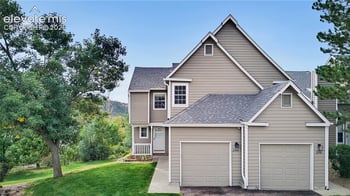
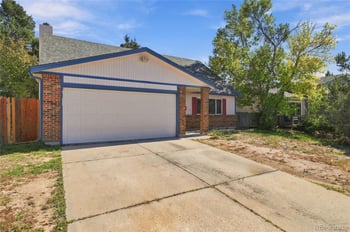
3705 Brisbane Dr, Colorado Springs, CO 80920
MLS#: REC7229157
.jpg)



A cost segregation study reclassifies parts of a rental property, such as flooring, cabinetry, and site improvements, out of the standard 27.5-year residential depreciation schedule and into 5, 7, or 15-year categories that depreciate much faster. For a Colorado investor holding a rental in Denver, Aurora, or Colorado Springs, that front-loads deductions into the early years of ownership instead of spreading them evenly across nearly three decades.
An engineer or cost segregation specialist walks the property, identifies components that qualify for a shorter depreciation life under IRS rules, such as carpet, certain electrical and plumbing fixtures, landscaping, and paving, and produces a report that supports the reclassification on the owner's tax return. The study documents the basis for each component so the deduction holds up under an IRS review.
Once a study assigns a portion of the purchase price to 5, 7, and 15-year property, the investor claims larger depreciation deductions in the first one to five years of ownership than standard straight-line depreciation would allow. For a Front Range investor with rental income from a Denver metro property, that larger deduction offsets more taxable rental income in the years it is claimed.
Any owner of income-producing real estate, including a single-family rental, a duplex, a short-term rental, or a multifamily building, qualifies for a study. The financial case strengthens with purchase price and with the owner's marginal tax rate, since a larger deduction against a higher tax bracket returns more value than the same deduction against a lower one.
| Property type | Typical study cost |
|---|---|
| Single-family rental | $2,000 to $5,000 |
| Duplex or small multifamily | $3,500 to $7,500 |
| Larger multifamily or commercial | $7,500 and up, scaled to size |
A free or low-cost estimate from a cost segregation study calculator gives an investor a rough projected deduction before committing to a full engineered study.
Property reclassified into 5, 7, or 15-year categories through a cost segregation study is the property type eligible for bonus depreciation, which allows an owner to deduct a large share of the reclassified basis in the first year it is placed in service. Bonus depreciation percentages change based on the tax year the property was placed in service, so an investor confirms the current-year rate with a tax professional before filing.
Yes, and short-term rental owners in mountain markets and Front Range cities use cost segregation alongside the material participation rules that apply to short-term rental income, since the combination can offset active income rather than only passive rental income for owners who meet the participation threshold. A tax professional confirms which participation rules apply to a specific property and ownership structure.
Colorado follows federal depreciation rules for state income tax purposes in most cases, so a deduction claimed federally through cost segregation flows through to the Colorado return as well, reducing state taxable income in the same years the federal deduction applies. A Colorado-licensed CPA confirms current state treatment before an investor files.
Yes. Depreciation claimed through cost segregation, like all depreciation, is subject to recapture at sale, taxed at rates that depend on the property component and the owner's overall tax situation. Investors planning to sell within a few years of a cost segregation study weigh the recapture exposure against the deductions already claimed, commonly alongside a 1031 exchange strategy that defers both capital gains and recapture.
A cost segregation study reclassifies items such as carpet and vinyl flooring, decorative light fixtures, certain cabinetry, window treatments, parking lot paving, landscaping, fencing, and portions of the electrical and plumbing systems tied to specific equipment. Structural elements, the roof, foundation, and load-bearing walls, stay on the standard 27.5-year schedule, since those components serve the building as a whole rather than a specific use. Land itself never depreciates under any method, so a study excludes the land value shown on the closing statement from every calculation before it allocates the remaining basis across the shorter-life categories.
A single rental with a purchase price under roughly $300,000 sometimes generates a study fee that eats a large share of the first-year tax benefit, which is why a cost segregation study calculator estimate before ordering a full study matters most for smaller portfolios. An investor holding several Colorado rentals, or one higher-value property, sees a clearer net benefit because the deduction scales with purchase price while the study fee grows more slowly.
A cost segregation study applies retroactively to a property already owned for several years through a method called a look-back study, filed with an accounting method change rather than an amended return, so a Colorado investor who missed the opportunity at purchase still captures the deduction. Ordering the study in the same tax year as the purchase is simpler and avoids the extra filing step a look-back study requires.
Cost segregation accelerates deductions during the holding period; a 1031 exchange defers tax on gain and recapture at sale by rolling proceeds into a replacement property. Colorado investors building a portfolio commonly use both: cost segregation on each property while holding it, and a 1031 exchange when trading up to a larger property.
Cost segregation applies to rental property held for income, not to a property purchased, renovated, and resold quickly as inventory, since a flip does not generate the ongoing depreciation deductions the strategy is built around. Denver-area investors running a fix-and-flip strategy see more tax benefit in most cases from a 1031 exchange or a buy-and-hold rental structure than from cost segregation on a short-hold flip.
A closing statement showing the purchase price and allocation between land and building, a list of capital improvements made after purchase, and any prior depreciation schedule from a tax preparer give a cost segregation firm what it needs to scope a study. National providers such as R.E. Cost Seg and larger advisory firms including Kroll both work with out-of-state property owners, so a Colorado investor is not limited to a local provider.
The Kenna Real Estate Group works with Colorado investors on acquisition, rental property positioning, and exit timing, and connects owners with tax professionals for depreciation strategy on a specific property. Call or text 303-955-4220. A live person answers. Not a robot, not a phone tree. Ready to look at investment property? Search every home for sale in Colorado.
Questions about any home in Colorado? Call or text 303-955-4220. A live person answers.
It reclassifies parts of a rental property, such as flooring, fixtures, and site improvements, into 5, 7, or 15-year depreciation categories instead of the standard 27.5-year residential schedule, front-loading deductions into the early ownership years.
Roughly $2,000 to $5,000 for a single-family rental, with duplex and small multifamily studies running $3,500 to $7,500.
No. It applies to property held for rental income; a quick-resale flip does not generate the ongoing depreciation the strategy is built around, so a 1031 exchange or buy-and-hold structure fits a flip better.
Yes. Depreciation claimed through cost segregation is subject to recapture at sale, which is why investors planning an early sale commonly pair the strategy with a 1031 exchange.
Colorado follows federal depreciation rules for state income tax in most cases, so a federal cost segregation deduction flows through to the Colorado return in the same years, subject to a CPA confirming current treatment.
Yes, and owners who meet the material participation rules for short-term rentals can use the deduction against active income, not just passive rental income, with a tax professional confirming eligibility.
A calculator gives a rough projected deduction for planning purposes; an engineered study documents each component's basis in enough detail to support the deduction under an IRS review.
Cost segregation accelerates deductions while holding a property; a 1031 exchange defers gain and recapture tax at sale by rolling proceeds into a replacement property. Many investors use both across a portfolio.