.jpg)


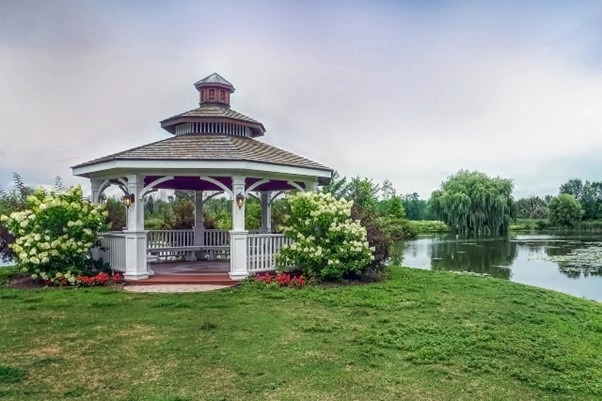
A gazebo on grass in Colorado needs a real foundation, not stakes alone, because the state's expansive clay soil and wind gusts that regularly top 40 to 60 miles per hour on the plains can shift or lift a structure anchored only into turf. Most Front Range HOAs also require architectural review before installation, and several counties require a building permit once the structure exceeds a set square footage, so check both before ordering materials.
Yes, in nearly every case. A poured concrete footing at each post, a full concrete slab, or a paver base set on compacted gravel all work, but stakes driven into turf alone do not hold against Front Range wind gusts, which regularly exceed 40 miles per hour and top 60 miles per hour during spring wind events. Ground anchors rated for at least 1,200 pounds of pullout resistance are the minimum for a gazebo without a poured footing, and even then a permanent concrete footing performs better over a 10-plus year lifespan.
Much of the Front Range sits on expansive bentonite clay soil that swells when wet and shrinks when dry, a cycle that can crack a shallow footing or tilt an improperly set post within a few seasons. Footings should extend below the frost line, roughly 30 to 36 inches on the Front Range, and a soils test or a call to the county building department clarifies local frost-depth requirements before digging. A footing poured too shallow is the most common reason a Colorado gazebo leans or shifts within its first few years.
Look for a gazebo rated for at least 90 mile per hour wind exposure, and confirm the roof attachment hardware (not just the frame) carries the same rating, since roof panels are the first component to fail in a high wind event. Soft-top canopy gazebos need to come down or be secured before any forecast wind advisory; hard-roof, permanently anchored structures handle Front Range gusts far better over time.
Most Front Range HOAs and metro district covenants require an architectural review application before any permanent outdoor structure goes up, including a gazebo. Reviews commonly address setback from the property line, maximum height, roof material and color, and whether the structure is visible from the street or a neighboring lot. Submit the application with a site plan and product specifications before ordering materials; approval takes 2 to 6 weeks in most Front Range communities, and building without approval can trigger a required removal.
Permit thresholds vary by jurisdiction. Denver requires a permit for an accessory structure over 120 square feet; several other Front Range cities and counties set the threshold at 200 square feet. A gazebo under the threshold that is not permanently attached to a foundation qualifies as exempt in most cases, but a poured concrete footing or electrical wiring for lighting or a fan triggers permit requirements in nearly every jurisdiction regardless of size. Confirm the exact threshold and any setback rules with the specific city or county building department before installation, since rules differ by jurisdiction across the Front Range.
| Gazebo size / feature | Colorado consideration |
|---|---|
| Under 120 to 200 sq ft, no electrical, no permanent foundation | Exempt from permit in most jurisdictions; still needs HOA review in most communities |
| Poured concrete footing or slab | Requires a building permit and a frost-depth-compliant footing in nearly every jurisdiction |
| Electrical wiring (lighting, fan, outlet) | Requires an electrical permit and licensed electrician in most jurisdictions |
| Setback from property line | Commonly 5 to 10 feet; confirm with the specific city or county |
A basic soft-top canopy gazebo runs $300 to $1,200 but needs annual reinstallation and does not qualify as a permanent structure for HOA or resale purposes. A hard-roof, permanently anchored gazebo with a concrete footing runs $4,000 to $12,000 installed on the Front Range depending on size and roofing material, with a cedar or composite structure at the higher end of that range and a basic metal-roof kit at the lower end.
A metal or composite roof panel rated Class 4 for impact resistance holds up to hail season (spring through September) far better than asphalt shingle or a fabric canopy top. Fabric-top gazebos should be closed, removed, or reinforced ahead of a severe weather warning; hail the size of a golf ball or larger will puncture most canopy materials.
Setback requirements for an accessory structure like a gazebo commonly run 5 to 10 feet from the property line on Front Range residential lots, though rules differ by city and county zoning code. Never build over a septic field, leach field, or a recorded utility easement; call 811 (Colorado 811) before digging any footing to confirm underground utility locations, which is required by law before excavation.
A permanently anchored gazebo with a foundation and electrical service is classified as an improvement in most counties and can be reflected in the county assessor's valuation, while a portable canopy gazebo is not. For resale, a well-built gazebo functions similarly to a patio cover in terms of buyer appeal, adding usable outdoor living space without the cost of a full room addition. The Kenna preparing and adding value before selling guide covers which outdoor upgrades matter most to Front Range buyers.
A permanently anchored hard-roof gazebo stays up year-round and needs its roof checked for snow load capacity before the first heavy snow, rated to handle 20 to 30 pounds per square foot on the plains in most manufacturer specifications. Soft-top and portable gazebos should come down for winter; wet snow accumulation on fabric roofing is the most common cause of frame collapse on portable models.
A 10x10 to 12x12 foot gazebo fits most Front Range backyards without crowding a patio or triggering the largest permit tier in most jurisdictions. Larger 14x14 and 16x16 foot structures read as a stronger outdoor living upgrade for resale but push into higher permit thresholds and larger setback reviews in several Denver metro cities, so confirm size limits with the HOA and building department before ordering a kit.
The Kenna Real Estate Group helps Front Range sellers document outdoor improvements like a gazebo for a stronger listing and helps buyers understand HOA and county rules on an existing structure before making an offer. Call or text 303-955-4220. A live person answers. Not a robot, not a phone tree. Search every home for sale in Colorado at kennarealestate.com/homes.
Questions about any home in Colorado? Call or text 303-955-4220. A live person answers.
In nearly every case, yes. Front Range wind gusts that top 40 to 60 miles per hour will shift a gazebo anchored only into turf; a poured footing or rated ground anchors are the minimum.
Most Front Range HOAs and metro districts require an architectural review application covering setback, height and roof material before a gazebo goes up.
Look for a structure and roof hardware rated for at least 90 mile per hour wind exposure to handle Front Range gusts.
It depends on size and features. Denver requires a permit over 120 square feet; other jurisdictions set the threshold near 200 square feet, and electrical wiring requires a permit in nearly every case regardless of size.
A hard-roof gazebo with a concrete footing runs $4,000 to $12,000 installed on the Front Range, depending on size and roofing material.
Yes. Expansive bentonite clay swells and shrinks with moisture, which can crack a shallow footing; footings should extend below the local frost line, roughly 30 to 36 inches on the Front Range.
A permanently anchored hard-roof gazebo can stay up year-round if its roof is rated for local snow load; soft-top and portable gazebos should come down before winter.
No. Call Colorado 811 before digging any footing to confirm utility locations, and keep the structure off any septic field, leach field or recorded easement.