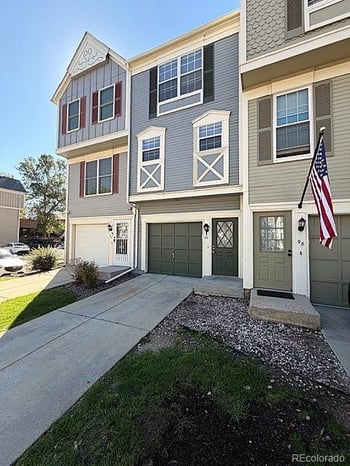
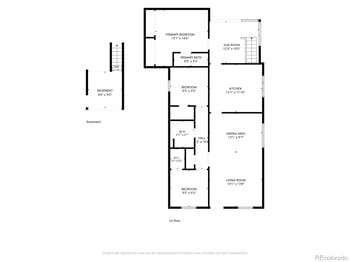
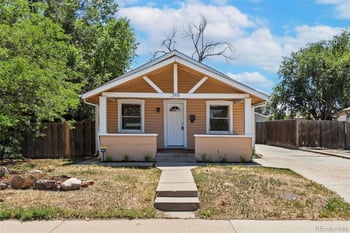
New - 3 Hours Ago
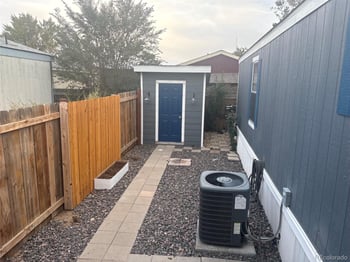
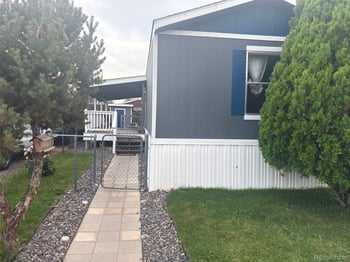
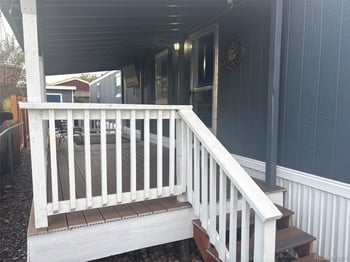
$90,000
Active
3
Beds
2
Baths
1216
Sqft
0.08
Acres
5102 E 96th Dr Lot 156, Denver, CO 80229
MLS#: REC9350823
.jpg)



An asset depletion mortgage lets a Colorado buyer qualify on money already in the bank, brokerage or retirement account instead of a paycheck: the lender divides the eligible balance by a set number of months and treats the result as monthly income. A retiree with $1,200,000 in accounts and no salary qualifies for a Denver metro home this way without selling a single share.
This guide is for the three Colorado buyers who hit the income wall most: retirees and 55+ downsizers with savings and no W-2, self-employed owners whose tax returns show low income after write-offs, and buyers between jobs with a large balance. The Kenna Real Estate Group pairs every one of them with a lender who runs this program before the first showing.
A standard mortgage underwrites income from pay stubs and tax returns. An asset depletion loan underwrites the balance sheet.
Example, labeled as an example: $1,200,000 in a brokerage account, counted at 70 percent, is $840,000 net. On an agency program that is $840,000 divided by 240, or $3,500 a month of income. On a non-QM program dividing by 84 months it is $10,000 a month. The same buyer qualifies for a $350,000 home on the first and an $850,000 home on the second, which is why the choice of program matters more than the choice of house. The lender never takes the money; the account stays yours and keeps earning.
Downsizers with a paid-off home. A couple selling a $900,000 Highlands Ranch or Centennial home and buying a $650,000 ranch or patio home in Parker, Castle Rock or Loveland walks away with $200,000 to $300,000 in cash after the purchase, but the sale money arrives after they need the loan. Asset depletion lets them qualify on the retirement accounts they already hold, and a bridge loan or a sale-first plan covers the timing. The Denver metro downsizing guide covers the home choices and what each costs, and the Colorado 55+ communities by area page maps the age-restricted options from Fort Collins to Colorado Springs. The Kenna post on selling first or buying first when downsizing in Colorado works through the timing.
Retirees with savings and Social Security. Social Security and pension income count on any mortgage; asset depletion is added on top when those alone fall short of the payment on a $500,000 to $700,000 Denver metro home.
Self-employed owners. A Colorado contractor, consultant or Denver Tech Center founder with $400,000 of gross revenue and $60,000 of taxable income after deductions qualifies on the taxable number under a standard loan. If that owner holds $600,000 in savings and brokerage accounts, asset depletion adds $2,500 to $7,000 a month of qualifying income, depending on the program, and the write-offs stop costing the house.
Buyers between jobs or relocating. A buyer moving to Denver from another state with a start date in 60 days and $300,000 in the bank qualifies today on the assets rather than waiting for two pay stubs.
Expect a larger down payment than a standard loan: 20 to 30 percent is the common requirement, and agency programs cap the loan-to-value below the 95 to 97 percent a W-2 buyer gets. Rates on non-QM asset depletion loans sit above agency rates, by roughly a quarter to one full point in 2026, in exchange for the shorter divisor and the wider list of eligible accounts. The agency version prices at standard conforming rates but counts far less income per dollar of assets.
Loan sizes go into jumbo territory. A Front Range buyer purchasing an $850,000 Greenwood Village or Boulder home on assets needs a jumbo asset depletion program; the Kenna post on jumbo loans in Denver lists what changes above the conforming limit.
For financing, the Kenna Real Estate Group works with Mike Oswald, VP of Mortgage Lending at Rate, NMLS 261003, Equal Housing Lender. You are free to use any lender. Lenders who specialize in asset depletion mortgage loans, including those who write home loans in Austin, TX and other markets, publish their divisors and account rules; compare those sheets to the Colorado quote before choosing. Program rules start in the Colorado home financing guide.
A downsizer with $700,000 in accounts and a $600,000 target has two choices, and the answer is a spreadsheet, not a rule.
| Question | Pay cash | Asset depletion loan, 25% down |
|---|---|---|
| Cash out of the accounts at closing | $600,000 plus closing costs | $150,000 plus closing costs |
| Money left invested | $100,000 | $550,000 |
| Monthly payment (example rate) | $0 plus taxes and insurance | $2,800 to $3,300 plus taxes and insurance |
| Offer strength in a Denver metro bidding situation | Strongest; no appraisal or loan contingency | Strong with a full pre-approval; 30-day close |
| Liquidity for hail deductibles, medical costs, a second move | Thin | Intact |
Cash wins the house in a multiple-offer week; the loan wins the next 15 years of liquidity. Many Kenna buyers do both: close with cash to win, then place a mortgage on the home within 90 days under delayed-financing rules to put the money back. The buying a home with cash in Colorado guide explains the delayed-financing path.
A HECM for Purchase (the FHA reverse mortgage used to buy) needs a borrower age 62 or older, a down payment of roughly half the price, and no monthly principal and interest payment; the loan balance grows. An asset depletion loan has no age floor, a 20 to 30 percent down payment, and a monthly payment; the accounts stay invested and the balance shrinks. A 58-year-old downsizer only has the second option; a 70-year-old with a fixed income and a large down payment compares both. The Kenna post on reverse mortgages in Colorado covers the HECM side.
A complete file gets a written pre-approval in 3 to 5 business days and closes in 30 days on a Front Range purchase, the same pace as a W-2 loan. Start with the Colorado mortgage pre-approval guide, then the Colorado home buyer's guide for the contract-to-closing steps.
Withdrawing from a traditional IRA or 401(k) to fund a down payment is taxable income in the year of withdrawal, federal and Colorado. Colorado's pension and annuity subtraction shelters a portion of retirement income for taxpayers 55 and older, and Social Security is fully subtractable for taxpayers 65 and older on the Colorado return, but a $150,000 withdrawal for a down payment lands above those amounts. Plan the withdrawal across two tax years, or pull the down payment from a taxable brokerage account, and confirm the figures with a Colorado CPA before closing. The Kenna post on tax implications of downsizing in Colorado covers the sale side.
Every one of these buyers starts on the buyer services page, and the homes they are choosing from are on the Colorado home search.
The Kenna Real Estate Group, Keller Williams DTC in Centennial, matches retirees, downsizers and self-employed buyers with lenders who run asset depletion programs, times the sale and the purchase so the money is where it needs to be, and negotiates the Front Range home that fits the number. Call or text 303-955-4220. A live person answers. Not a robot, not a phone tree. Or search every home for sale in Colorado and tell us which ones you want to qualify for.
Questions about any home in Colorado? Call or text 303-955-4220. A live person answers.
On a non-QM program dividing by 84 months, about $900,000 to $1,100,000 in eligible accounts after the 25 percent down payment produces the $7,500 to $9,000 a month of qualifying income the payment needs. On an agency program dividing by 240 months it takes roughly three times that, which is why most Front Range buyers use the non-QM version.
No. The lender counts the balance at 70 to 80 percent of statement value and never takes the money; only the down payment and closing costs leave the account.
Yes. The PERA benefit counts as regular pension income, and savings, brokerage and IRA balances are added on top through asset depletion when the pension alone does not carry the payment.
Non-QM asset depletion rates run about a quarter to one point above conforming rates in 2026. The agency version prices at conforming rates but counts far less income per dollar of assets because it divides by 240 months.
Only after the sale closes and the proceeds show on a bank statement. A sale under contract is not an asset yet, so downsizers use a bridge loan, a sale-leaseback, or their existing accounts to bridge the gap.
No. Any borrower with eligible accounts qualifies; retirement accounts count once the borrower can withdraw without an early-withdrawal penalty, which is age 59 and a half for most IRAs and 401(k)s.
With two months of complete statements on file, a written pre-approval takes 3 to 5 business days and the purchase closes in 30 days, the same timeline as a W-2 buyer on the Front Range.