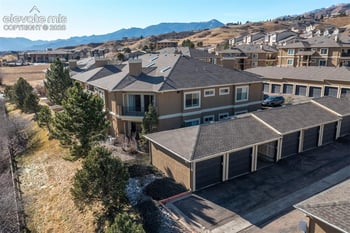
$315,000
Active
2
Beds
2
Baths
1111
Sqft
0.017
Acres
1965 Montura Vw #202, Colorado Springs, CO 80919
MLS#: 6913872
.jpg)


Colorado's mortgage market is shaped right now by three overlapping groups: older homeowners downsizing out of a large Front Range home, first-time buyers using assistance programs to get in, and remote-work households relocating from out of state with equity but no local credit history. Each group pulls lenders toward a different product, which changes what a buyer should ask for by name.
Homeowners aging in place on the Front Range increasingly use a reverse mortgage to convert home equity into cash without a monthly payment, especially on a paid-off or low-balance property. The Kenna Real Estate Group's Colorado HECM reverse mortgage guide covers eligibility and how the loan is repaid at sale.
A homeowner selling a large Front Range home and buying a smaller ranch or patio home pays cash or takes a small mortgage in many cases, shifting demand toward Colorado's ranch and patio home inventory rather than new construction. The Kenna Real Estate Group's downsizing in the Denver metro guide covers what that move costs in practice.
Buyers moving into a Colorado 55+ community frequently bring substantial equity from a prior sale, which lowers loan-to-value ratios and can qualify them for better rate pricing even without a large income. The Kenna Real Estate Group's Colorado 55+ communities by area guide lists where this inventory concentrates on the Front Range.
A younger wave of first-time Front Range buyers has pushed lenders to emphasize CHFA down payment assistance, low-down-payment conventional loans, and buydown programs over the standard 20-percent-down product. The Kenna Real Estate Group's first-time home buyer guide for Colorado lists the current programs.
Buyers relocating to Colorado with out-of-state income, sometimes from a business they own rather than a W-2 job, need lenders comfortable underwriting non-traditional income documentation. The Kenna Real Estate Group's moving to Denver relocation guide covers the local steps that pair with this kind of loan.
Rising Front Range home prices have pushed more buyers to co-borrow with a parent or adult child, which changes how a lender counts income and credit across multiple applicants on one loan. A lender experienced with co-borrower files can qualify a household that would not qualify on a single income alone.
| Buyer group | Product emphasis | Colorado resource |
|---|---|---|
| Downsizing homeowners | Cash purchase or small mortgage, reverse mortgage | CHFA, HECM lenders |
| First-time buyers | CHFA assistance, buydowns, low-down conventional | CHFA-approved lenders |
| Relocating households | Bridge financing, non-traditional income underwriting | Portfolio and non-QM lenders |
Steady population growth along the Front Range keeps loan volume high enough that lenders compete on rate and closing speed for well-qualified buyers, which rewards a buyer who shops more than one lender. Comparing a CHFA-approved lender against a traditional bank on the same Colorado listing can surface a meaningfully different quote.
Federal Reserve rate moves affect mortgage pricing nationally, but Colorado's supply of starter and mid-size homes on the Front Range means local price competition can offset or amplify a national rate change more than in a slower-growth state. The Kenna Real Estate Group's Federal Reserve impact on Colorado mortgage rates post covers how the two interact.
A downsizing homeowner should start with a reverse mortgage or cash-purchase conversation, a first-time buyer should start with CHFA eligibility, and a relocating household should start with a lender who underwrites non-traditional income before house hunting. Mike Oswald at Rate (NMLS 261003, Equal Housing Lender) works across all three of these situations for Front Range buyers, and every buyer is free to use any lender, including a full-service mortgage lender outside Colorado if that is the right fit.
Colorado Springs and the surrounding Front Range communities have drawn a steady mix of military-affiliated buyers using VA loans and remote-work households priced out of the Denver metro, which keeps VA loan volume and lower-down-payment products in stronger demand there than in Denver proper. A lender working the Colorado Springs market regularly should be comfortable pricing VA loans alongside conventional products in the same conversation.
A growing share of Colorado buyers show income from a business they own rather than a W-2, and a bank-statement loan or other non-traditional documentation program lets a lender qualify that income using deposit history instead of standard pay stubs. This product costs more in rate than a conventional loan, but it opens homeownership to a self-employed buyer whose tax returns understate actual cash flow.
Some older Colorado homeowners build or convert an accessory dwelling unit on their existing lot so a caregiver or adult child can live close by, financed through a HELOC or cash-out refinance rather than a full home sale. Denver's ADU, zoning, and historic district guide covers where this is allowed on the Front Range and what size limits apply.
Builders along the Front Range have added more single-story, lock-and-leave floor plans aimed at downsizing buyers alongside smaller starter homes aimed at first-time buyers, shifting away from the larger move-up product that dominated a decade ago. The Kenna Real Estate Group's new construction homes in Colorado by area guide shows where each type of new inventory concentrates.
The Kenna Real Estate Group matches Front Range buyers, whether downsizing, buying a first home, or relocating, with the loan product that fits their situation. Call or text 303-955-4220. A live person answers. Not a robot, not a phone tree. Search every home for sale in Colorado.
Questions about any home in Colorado? Call or text 303-955-4220. A live person answers.
Homeowners aging in place on the Front Range use a reverse mortgage to convert home equity into cash without adding a monthly payment.
CHFA down payment assistance paired with a below-market first mortgage is the most common starting point for first-time Front Range buyers.
A lender comfortable underwriting non-traditional income documentation, including business income, can qualify a relocating household that a standard lender would turn down.
Yes, and rising Front Range prices have made co-borrowing between a parent and adult child more common than in the past.
No, the Fed sets a national policy rate that influences mortgage pricing, but Front Range supply and lender competition also move the rate a buyer is quoted.
Colorado's 55+ communities and ranch and patio home inventory across the Denver metro see the heaviest downsizing demand.
Mike Oswald at Rate works with downsizing, first-time, and relocating buyers, though every buyer is free to use any lender.