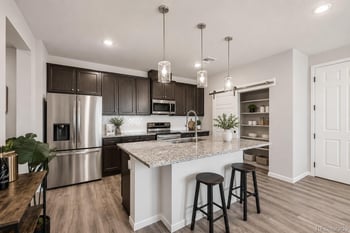
$310,800
Active
2
Beds
2
Baths
1085
Sqft
--
Acres
6153 N Ceylon St #10-303, Denver, CO 80249
MLS#: REC1819178
.jpg)


Curb appeal in Colorado has to survive hail, 300 days of sun, and freeze-thaw cycles that crack cheap materials within a few winters. The fixes that sell a Front Range home fastest are the ones built for that climate, not generic advice from a milder state.
This guide covers the exterior fixes that hold up here, what they cost in Denver metro dollars, and how curb appeal affects a Colorado sale once a buyer's inspector shows up.
Fiber cement siding, mineral-based exterior paint, and metal or composite trim hold their color and shape through repeated freeze-thaw cycles better than vinyl or untreated wood. Front Range winters swing above and below freezing dozens of times between November and March, and that cycling is what cracks caulk, warps wood trim, and pops loose paint chips on cheaper materials.
Before spending on any fix, walk the exterior and check caulk lines around windows and trim. Re-caulking gaps costs $150 to $400 for a typical house and prevents the moisture intrusion that undoes everything else.
Yes. Colorado's hail season runs mid-April through mid-September, and the Front Range corridor from Colorado Springs to Fort Collins sees some of the most frequent hail in the country. Dented gutters, downspouts, and window screens are common even in storms too small to trigger a roof claim, and buyers notice dented aluminum gutters from the street.
Replacing dented gutters runs $6 to $12 per linear foot installed; on an average home that is $1,200 to $2,800. smooth aluminum gutters resist denting better than the sectional kind, and many Front Range gutter companies now stock them as the standard option.
A full exterior repaint runs $4,500 to $9,000 for an average Denver metro home, depending on siding material and stories. UV intensity is roughly 25% higher at 5,280 feet than at sea level, which fades standard paint 2 to 4 years faster than the same product would last in a lower-altitude, cloudier climate.
Paying more for a UV-resistant, 100% acrylic exterior paint with a titanium dioxide base extends the repaint cycle from about 5 years to 8 to 10 years. On a home you plan to sell within 3 years, a single accent-color refresh on the front door and trim, at $400 to $900, returns more per dollar spent than a full repaint.
Fiber cement siding (brands like HardiePlank) resists hail denting and freeze-thaw cracking better than vinyl or aluminum, and it carries a 30-year warranty. LP SmartSide, an engineered wood product, is a lower-cost alternative that also holds up to Colorado's hail and UV exposure.
| Siding material | Hail resistance | Installed cost per sq ft |
|---|---|---|
| Vinyl | Cracks and dents in large hail | $4 to $9 |
| Fiber cement | High; rarely dents | $9 to $14 |
| LP SmartSide | Good; occasional denting in large hail | $7 to $11 |
| Metal panel | Very high; shows only cosmetic denting in the largest hail | $10 to $18 |
Kentucky bluegrass lawns need 25 to 30 inches of supplemental water a year on the Front Range, where annual precipitation runs 15 to 17 inches. Swapping high-water turf for xeriscape beds with native grasses, yucca, and drought-tolerant perennials cuts water use 50% to 70% and reads as intentional, well-kept landscaping to today's buyers rather than a bare yard.
A partial xeriscape conversion of the front yard runs $3,000 to $8,000 depending on hardscape and irrigation changes, and several Front Range water districts, including Denver Water and Aurora Water, offer turf-replacement rebates that cut the cost.
Most Front Range HOAs allow warm-white, downward-facing fixtures and restrict colored or flashing lights outside the holiday season. Dark-sky-friendly fixtures that shield the bulb and point light downward are increasingly required in newer metro districts and are worth checking before installing anything permanent.
A pathway and entry lighting package runs $600 to $1,800 installed and is one of the fixes buyers notice on an evening showing without needing HOA approval in most communities, since it does not change exterior structure or color.
In most Front Range HOAs and metro districts, yes. Exterior color changes, including doors, trim, and siding, require an Architectural Review Committee submission with a 30- to 45-day review window. Submitting before you list, rather than during a listing countdown, avoids a color change that outlasts your closing date.
Colorado's foothills and wildland-urban interface communities, from Golden to Boulder County to parts of El Paso County, increasingly ask sellers to show defensible space: gravel or hardscape within 5 feet of the foundation, spaced and trimmed shrubs, and no wood mulch touching the house. This reads as curb appeal to buyers who already know the wildfire-zone questions their lender or insurer will ask.
Curb appeal does not appear as its own line on an appraisal, but it drives the number of showings and the strength of the first offer, which is what sets a final sale price in a Front Range market. A home that photographs well from the street gets more scheduled showings in the first weekend, and more showings produce more competing offers.
Yes. Magnesium chloride, the de-icer Colorado's front range cities spray on roads, splashes onto lower siding and trim through winter and leaves a white residue that, left alone, dulls paint finishes and corrodes exposed metal fasteners over several seasons. A spring rinse with a garden hose or gentle pressure wash removes it before it does lasting damage.
Spot-replacing only the dented sections costs less than a full gutter replacement, but seams between old and new aluminum are visible up close. For a home going on the market, a full smooth gutter replacement at $1,200 to $2,800 for an average house gives listing photos a clean, uniform line with no patchwork.
Painting, landscaping, and gutter replacement do not require a permit in Denver, Aurora, Lakewood, or Colorado Springs. Structural siding replacement, new fencing over a certain height, and electrical work for exterior lighting circuits do. Check with your specific city or county building department before scheduling contractors, since requirements vary by jurisdiction.
Before, if the report is still weeks out, so the comps reflect a home that already shows well. If a report is already scheduled, do the low-cost fixes (power wash, mulch, paint touch-ups) beforehand and save larger siding or landscaping decisions for after you see the Colorado pricing report, since it will show whether the investment comes back at closing.
Curb appeal does not stop an inspector from checking the roof, gutters, and siding condition. Under Colorado's Contract to Buy and Sell Real Estate, buyers submit an Inspection Objection listing specific items, and visibly dented gutters or cracked siding almost always make that list. Fixing the visible exterior issues before listing reduces the items a buyer can raise and keeps the objection period from reopening price negotiations. See the full guide to adding value before selling a Colorado home.
Late spring through early fall is prime season for painting and siding contractors on the Front Range, which also means longer scheduling waits and higher demand pricing. Booking in March or early April, once hard freezes have passed, gets faster scheduling and lower rates before the summer rush.
A well-designed xeriscape bed with structured hardscape, layered plant heights, and defined edges reads as curb appeal to most Front Range buyers today, since water-wise landscaping is now common rather than unusual. A bare gravel yard with no plant structure reads as neglect. The difference is design, not the plant palette.
Most Front Range HOAs publish an approved color palette or require submission of paint chips with your Architectural Review Committee application. Pulling that palette before buying paint avoids a rejected application and a repaint. Neutral, earth-tone palettes with one accent color on the door are broadly approved across metro Denver HOAs and photograph well for listings.
The Kenna Real Estate Group walks Front Range sellers through exactly which exterior fixes are worth the money before a listing goes live, using real comps from your neighborhood. Call or text 303-955-4220. A live person answers. Not a robot, not a phone tree. Ready to see what is on the market first? Search every home for sale in Colorado.
Questions about any home in Colorado? Call or text 303-955-4220. A live person answers.
Power-washing the siding, walkways, and driveway removes a season of mag chloride film and pollen for $250 to $500 and makes every other fix look sharper in listing photos.
Hail season runs mid-April through mid-September. Fixing any hail-related gutter or siding damage before listing avoids surprises during a buyer's inspection objection period.
Standard paint fades in 3 to 5 years due to higher UV exposure at altitude. A UV-resistant acrylic formula extends that to 8 to 10 years.
Most Front Range cities require a building permit for full siding replacement, though not for painting or spot repairs. Check with your city or county building department first.
Yes, when it is designed with structure and layered plants. Denver Water and other Front Range utilities offer turf-replacement rebates that offset the conversion cost.
Most Architectural Review Committees take 30 to 45 days. Submit before listing so the approved color is finished well before showings start.