.jpg)


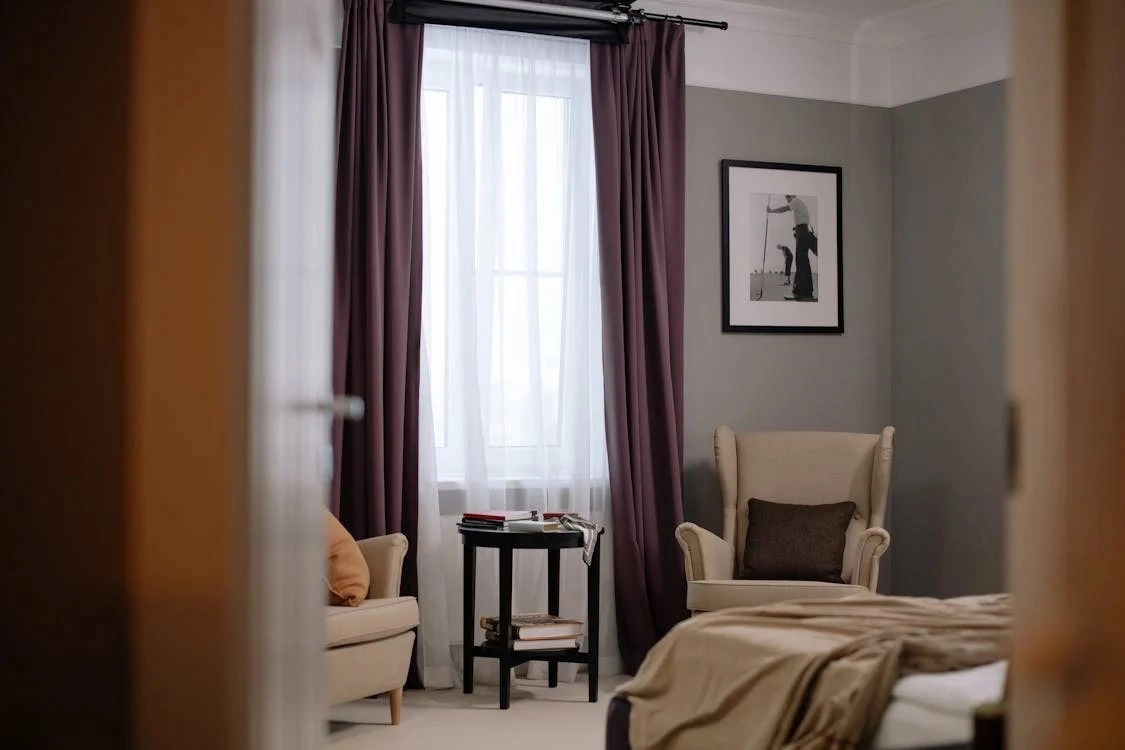
Blackout curtains block Colorado's intense sun and protect flooring and furniture from UV fading; thermal curtains cut heat loss through the Front Range's 40-degree daily temperature swings. Most Colorado homes benefit from one or the other depending on the room and window orientation, and some rooms benefit from both in a layered setup.
Do blackout curtains help with Colorado's intense sun?
Yes. Denver's 300 days of sunshine a year and the stronger UV exposure at 5,280 feet fade flooring, artwork, and furniture faster than in lower-elevation, cloudier climates. A dense blackout fabric blocks that UV exposure on south- and west-facing windows where the fading is worst.
Do thermal curtains reduce heating and cooling costs in Colorado homes?
Thermal curtains with an insulating backing reduce heat loss through a window by trapping a layer of still air between the fabric and the glass. On the Front Range, where overnight temperatures can drop 40 degrees from the afternoon high, that insulating layer matters most on older single-pane or aging double-pane windows.
What's the difference between blackout and thermal curtains?
| Feature | Blackout curtains | Thermal curtains |
|---|---|---|
| Primary job | Block light and UV | Reduce heat transfer |
| Best rooms | Bedrooms, media rooms | Living rooms, home offices, any room with older windows |
| Best exposure | South and west-facing windows | Any exposure, most valuable in winter |
| Typical cost, custom pair | $150 - $500 | $150 - $450 |
Which curtains protect furniture from UV fading at altitude?
Blackout curtains with a tight weave and a UV-resistant backing offer the most protection. A dedicated custom blackout curtain blocks close to 100% of direct light, compared with a sheer or light-filtering fabric that still lets a meaningful amount of UV through.
Do Xcel Energy rebates apply to curtains?
No. Xcel Energy's Colorado rebate programs apply to insulation upgrades and window replacement, not curtains or other window treatments. Thermal curtains are a lower-cost complement that reduces heat loss between those larger, rebate-eligible upgrades, not a substitute for them.
Do blackout curtains help with Denver's early summer sunrise?
Yes, this is one of the most common reasons Front Range homeowners choose blackout curtains for bedrooms: Denver's early sunrise in June and July, combined with the intensity of light at altitude, wakes light sleepers well before a typical alarm time.
Can curtains help with 40-degree daily temperature swings?
A thermal-lined curtain closed at night holds warm indoor air in and keeps the cold radiating off a window glass from affecting the room as much, which matters more in a climate with large daily swings like Colorado's than in a climate with stable temperatures.
What fabric weight works best for Colorado's dry climate?
A mid-to-heavy weight cotton, velvet, or thermal-backed synthetic blend holds up well to Colorado's low humidity, which can make lighter fabrics feel papery and cause static buildup. Avoid very lightweight sheers as a sole treatment on west-facing windows, where UV exposure is strongest.
Do custom curtains add value to a Colorado home before selling?
Custom window treatments help a home show well in listing photos and in person, but like most soft-goods upgrades, they rarely return their full cost as a standalone project. See the Kenna Real Estate Group's guide to preparing and adding value before selling for which projects do return their cost.
Should west-facing Front Range windows get blackout or thermal curtains?
West-facing windows get the most intense afternoon sun and UV exposure on the Front Range, so a blackout curtain is the better primary choice there. A thermal blackout curtain that combines both functions in one panel covers the light-blocking and insulating needs of a west-facing room at once.
How much do custom blackout or thermal curtains cost?
A custom pair commonly runs $150 to $500 depending on fabric, width, and lining, with wider Front Range picture windows and patio doors at the higher end of that range. Ready-made options run less but rarely fit oversized Colorado windows without gaps at the edges that let light and cold air through.
Do thermal curtains help with Colorado's cold winter nights?
Yes, particularly on north-facing rooms and older windows, where a thermal curtain closed after sunset reduces the draft and cold-glass effect that makes a room feel colder than the thermostat setting.
What rooms benefit most from blackout curtains in Colorado?
Bedrooms facing east or south, home theaters, and nurseries benefit most, given Denver's early, intense sunrise and the amount of direct sun most Front Range homes get through the day.
Should I disclose window treatment condition when selling?
Window treatments are not a required disclosure item under Colorado's Seller's Property Disclosure form, since they are commonly personal property, but confirm with the listing agent whether curtains and hardware are included in the sale or will be removed before closing.
Do custom curtains need special care in Colorado's dry climate?
Colorado's low humidity and frequent dust and pollen mean curtains collect more airborne particles between washes than in a humid climate, and static builds up more easily in synthetic fabrics. Vacuum curtains with a brush attachment every few months and follow the manufacturer's cleaning instructions closely, since thermal and blackout linings can shrink or lose their coating if machine-washed instead of professionally cleaned.
What is the best way to layer curtains for light and temperature control?
Hang a blackout or thermal panel closest to the glass, where it does the most work blocking UV and trapping the insulating air layer, then add a lighter decorative panel or sheer over it for daytime use. This layered approach lets a room stay bright and open during the day while still giving it full light-blocking and insulating power at night, which matters most on the coldest Front Range evenings and the brightest summer mornings.
Does curtain color affect how much heat a Colorado room gains in summer?
Yes. Darker curtain colors absorb more heat from direct sun than lighter colors, which can make a west-facing room warmer in the late afternoon even with a thermal lining. A lighter exterior-facing color paired with a thermal or blackout backing gives the best combination of UV protection and heat control for the Front Range's strongest sun exposure hours. For a room that runs hot in July and August, a white or light-colored liner facing the glass, with the decorative fabric layered behind it, keeps more of that afternoon heat from ever reaching the room.
Where to go next
- Search every home for sale in Colorado
- Preparing and adding value before selling
- Colorado home financing guide
- Best window replacement companies in Denver
- Best curtain styles that make your home more attractive to buyers
Talk to the Kenna Real Estate Group
The Kenna Real Estate Group helps Front Range sellers decide which window and interior updates are worth doing before listing, and points buyers to Mike Oswald at Rate (NMLS 261003, Equal Housing Lender) for financing questions on a home that needs window upgrades; you are free to use any lender. See financing and Kenna Credit Care for details. Call or text 303-955-4220. A live person answers. Not a robot, not a phone tree. Ask for the printable pre-listing interior checklist in the form below and we email it the same day. search every home for sale in Colorado at kennarealestate.com/homes.