.jpg)


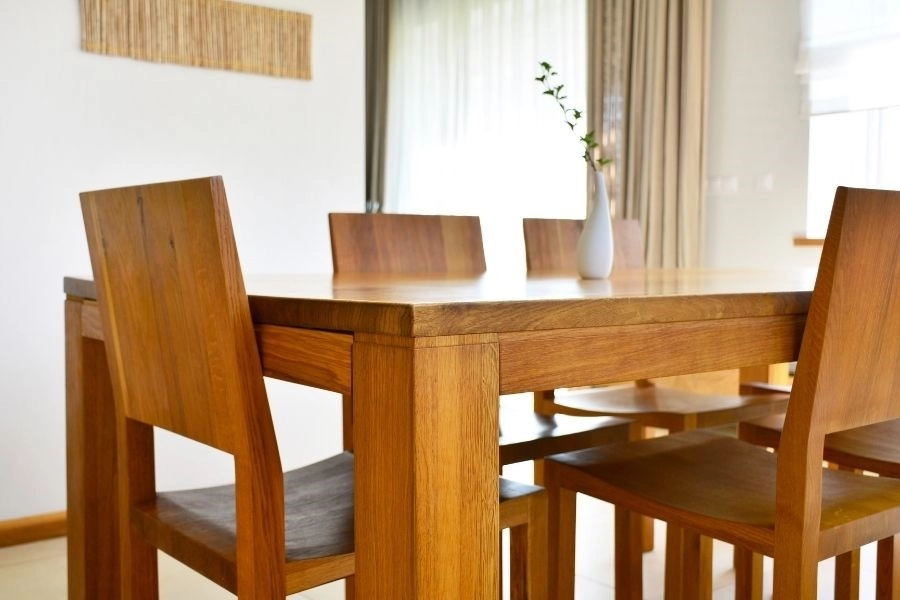
Knowing what wood a piece of furniture is made from matters more in Colorado than in most states, because dry winter air and intense high-altitude sun treat solid wood, veneer, and engineered wood very differently. Here is how to identify common wood species and what each means for a Front Range home.
How can you tell if furniture is solid wood or engineered wood?
Check the edges and undersides. Solid wood shows continuous grain running through the piece, while veneer and engineered wood show a thin surface layer over particleboard, MDF, or plywood, visible at seams, drawer bottoms, or any chipped edge. Weight is also a clue: solid wood pieces of the same size run heavier than engineered alternatives.
What are the most common wood species in furniture?
- Oak: heavy, prominent open grain, light to medium brown; common in farmhouse and traditional furniture.
- Maple: tight, subtle grain, pale color; used in more contemporary and Scandinavian-style pieces.
- Walnut: rich dark brown color with straight grain; a premium choice in modern luxury furniture.
- Pine: soft, light-colored wood with visible knots; common in budget and rustic furniture but dents easily.
- Cherry: reddish-brown tone that deepens with UV exposure over time, smooth grain.
- Reclaimed wood: visible nail holes, weathering, and mixed grain patterns from repurposed lumber.
Why does wood species matter more in Colorado's climate?
Indoor humidity swings from 10 to 25 percent in winter heating season to noticeably higher in summer, and different species respond differently to that swing. Oak and walnut are relatively stable; pine and less dense woods show more visible seasonal movement, including small gaps at joints that were tight when the furniture was purchased.
Does Colorado's high-altitude sun change how wood furniture ages?
Yes. UV exposure at 5,280 feet is stronger than at sea level, and species like cherry that are prized for deepening color with light exposure will darken faster here than in a lower-altitude climate. Lighter woods like oak and maple show more visible fading and can develop an uneven tone if only part of a piece sits in direct sun.
How do you protect solid wood furniture from Colorado's dry air?
Run a humidifier during heating season to keep indoor humidity closer to 35 to 45 percent, which significantly reduces joint cracking and warping in solid wood pieces. Avoid placing solid wood furniture directly against a heating vent or in a room with a wood-burning stove, both of which create especially dry microclimates.
Is veneer or engineered wood a better choice for a Colorado home?
Engineered wood and veneer are more dimensionally stable in fluctuating humidity than solid wood in most cases, since the layered construction resists warping better than a single solid board. For a piece that will not be climate-controlled consistently, like furniture in an unfinished basement or a vacation property, engineered wood is the more practical choice despite solid wood's higher perceived value.
How can buyers spot fake or mislabeled wood furniture when touring a home?
Look at drawer construction and edges rather than trusting a listing description. Dovetail joints and continuous grain running through a drawer front indicate solid wood; a straight seam and uniform grain pattern across multiple pieces points to veneer over an engineered core. Neither is wrong for a home, but knowing which you are getting matters for care and expectations.
Does wood furniture species affect a home's resale appeal?
Built-in wood elements like cabinetry, trim, and flooring affect resale more directly than movable furniture, which does not convey with the sale. That said, a home staged with quality solid-wood furniture photographs and shows better than one with visibly worn engineered pieces, supporting a stronger first impression during a Front Range showing.
How should sellers care for wood furniture and finishes before listing?
Condition or oil solid wood surfaces before photos and showings, and address any visible sun-fading unevenness on furniture near south- or west-facing windows. See our guide to adding value before you sell for a broader look at what buyers notice first.
What wood species work best for built-in cabinetry in a Colorado home?
Hard maple and oak are common choices for kitchen and built-in cabinetry because they resist the dents and dings of daily use better than softer woods like pine, and both handle Colorado's humidity swings reasonably well when properly finished with a sealed coating. Cherry cabinetry, while less dent-resistant, is prized in some Front Range homes for the way it deepens in color under the state's strong natural light over time.
Does wood flooring species matter as much as furniture species in Colorado?
Yes, and the stakes are higher since flooring is a fixed, built-in feature that directly affects resale value, unlike movable furniture. Wide-plank white oak is one of the more forgiving species for Colorado's humidity swings, while exotic species with less dimensional stability can show more visible gapping in a dry Front Range winter.
How can homeowners test humidity levels to protect wood furniture in Colorado?
A simple digital hygrometer, available inexpensively, tracks indoor humidity in real time and helps a homeowner know when to run a humidifier. Target 35 to 45 percent relative humidity through the winter heating season to protect solid wood furniture, flooring, and trim from the cracking that Colorado's naturally dry air can cause.
What is the difference between solid wood and engineered wood value at resale in Colorado?
Built-in solid wood elements, like custom cabinetry or hardwood flooring, support a stronger resale narrative than engineered alternatives in a comparable Front Range home, since buyers associate solid wood with quality and durability. For movable furniture that does not convey with the sale, the distinction matters far less to resale value and more to how well the piece photographs and holds up for the seller's own use before listing.
Do antique or vintage wood furniture pieces need special care in Colorado?
Yes, more than newer furniture. Older solid wood pieces, especially antiques with original finishes, are more susceptible to cracking and finish separation in Colorado's dry winter air since they were built and finished decades ago for a more humid climate. A consistent humidifier routine and periodic conditioning of the wood finish protect these pieces better than in a milder, more humid state.
What wood finish holds up best to Colorado's UV exposure?
A UV-inhibiting topcoat, available in most polyurethane and hardwax oil finishes, slows the color shift and surface degradation that untreated wood shows under the state's strong high-altitude sun. Reapply or refresh the topcoat every few years on furniture that sits near a south- or west-facing window, since that exposure accelerates wear compared to a shaded corner of the room.
Where to go next
- See which upgrades add resale value before you sell
- Get a Smart Pricing Report for your Colorado home
- Search every home for sale in Colorado
- Denver area guide
- How luxury home interior design creates timeless living spaces
Talk to the Kenna Real Estate Group
Whether you are furnishing a new Front Range home or preparing wood furniture and finishes for a listing, the Kenna Real Estate Group can help you understand what Colorado's climate does to wood over time and what buyers notice during a showing. Call or text 303-955-4220. A live person answers. Not a robot, not a phone tree. Ready to see what's on the market? Search every home for sale in Colorado.
Homes for sale that match this post
- Farmhouse Style Homes in Denver
- Basement: guide
- Homes with Gourmet Kitchen in Denver
- All homes for sale in Denver
Guides
Questions about any home in Colorado? Call or text 303-955-4220. A live person answers.