New - 15 Mins Ago
.jpg)


A patio, a pergola with proper snow-load engineering, and drought-tolerant landscaping return the most value per dollar spent in a Front Range backyard. A pool, by contrast, rarely returns its full cost in a climate where the outdoor swim season runs about four months.
Colorado gets roughly 300 sunny days a year, and buyers on the Front Range put real weight on usable outdoor space during a home tour. The projects that perform best at resale are the ones that extend living space outdoors without adding upkeep a future owner has to plan around: a patio, a covered structure, and landscaping suited to the climate instead of a high-water lawn.
A simple paver or stamped-concrete patio, finished with furniture and lighting, is one of the most cost-effective ways to add usable square footage to a backyard. Expect to pay $3,500 to $12,000 for a 300 to 500 square foot patio in the Denver metro depending on material, and expect most of that back at resale as buyers compare the home to others without an outdoor sitting area. Because Front Range soil is expansive clay in most subdivisions, a patio needs a properly compacted gravel base and control joints or it will crack within a few winters as the ground swells and shrinks.
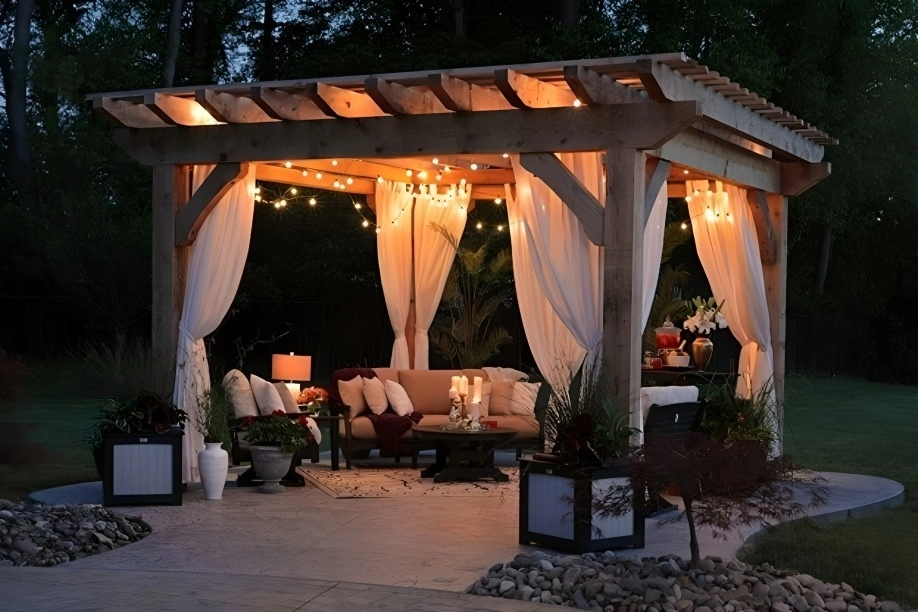
A pergola adds shade and structure without fully enclosing the space, and a pavilion adds a solid roof for year-round use. Either one reads as an added room to a buyer touring the yard. On the Front Range, any roofed structure needs a snow-load rating built for the local code, commonly 30 to 40 pounds per square foot depending on elevation and jurisdiction; an unrated kit pergola can fail under a heavy spring snowstorm. Most Denver metro cities require a building permit for a permanent, roofed structure over a set size, so pull the permit before construction instead of after a neighbor complaint or a listing disclosure question.
An outdoor kitchen with a built-in grill, counter space and storage extends the entertaining season and appeals to buyers who host. A fire pit or fire table adds evening use through Colorado's cool nights, but a permanent gas fire feature commonly needs a permit and a set clearance from structures and fences; check with the city or county before installing one, and confirm HOA approval if the property sits inside a covenant community.
A pool is the backyard project with the weakest cost recovery here. The outdoor swim season on the Front Range runs from roughly late spring through early fall, closer to four months than the six-plus months a pool sees in warmer climates, and winterizing and reopening it costs $300 to $800 a year on top of maintenance. Some buyers value a pool; others see it as an ongoing expense and a fence requirement in a climate that only uses it part of the year. If a pool is already part of the property, keep it well maintained rather than adding a new one purely for resale. Search Colorado Springs and Front Range listings to compare what pool and non-pool homes are asking today.
Denver Water and other Front Range utilities have tightened outdoor watering rules in recent years, and a growing number of HOAs now cap or count xeriscaped turf toward landscaping requirements instead of penalizing it. Replacing thirsty Kentucky bluegrass with native and drought-tolerant plants, mulch beds and efficient drip irrigation cuts a household's summer water bill and signals lower upkeep to a buyer — a real selling point in a climate with a short growing season and a stretch of watering restrictions most summers. See xeriscaped homes for sale in Denver metro for examples already on the market.
On a flat lot, a patio wins on cost. On a sloped lot common in Golden, Lakewood and the foothills, a raised deck avoids the excavation and retaining-wall work a patio would need, though it still needs a snow-load rating and, in most jurisdictions, a permit for anything attached to the house or built more than 30 inches above grade. Pressure-treated wood decking needs restaining every 2 to 3 years at altitude; composite decking costs more upfront but skips that maintenance cycle entirely.
Elaborate water features, oversized custom structures built without a permit, and highly personalized designs, like a themed outdoor bar or an unusual hardscape pattern, cost more to build than most buyers will pay extra for. A buyer touring the home wants function and flexibility, not a design built around one owner's hobby. Keep custom features simple enough that the next owner can use them as-is.
Denver, Aurora, Lakewood, Littleton, Centennial and Colorado Springs each have their own permit thresholds for patios, structures over a set footprint, and gas or electrical work in the yard. If the property is in an HOA or metro district, get design approval in writing before starting. When you sell, Colorado's disclosure form asks about improvements made without a permit; keeping the paperwork from the start avoids a disclosure problem, and a buyer's negotiation point, later. See pricing your Colorado home to sell for how unpermitted work factors into a listing price.
Planning backyard upgrades before listing your Front Range home? Call or text 303-955-4220. A live person answers. Not a robot, not a phone tree. Ready to see what is on the market? Search every home for sale in Colorado.
Questions about any home in Colorado? Call or text 303-955-4220. A live person answers.
A patio with a compacted base and proper drainage returns more per dollar than almost any other backyard project on the Front Range.
Rarely at full cost. The outdoor swim season runs about four months here, and winterizing adds $300 to $800 a year, so a pool appeals to some buyers and not others.
Most cities require a permit for a permanent, roofed structure over a set footprint, and the structure needs a local snow-load rating.
No. A well-designed native and drought-tolerant landscape signals lower water bills and less upkeep, both of which appeal to Front Range buyers.
Elaborate water features and highly personalized structures built around one owner's hobby rarely return their full cost at resale.
Most Front Range HOAs and metro districts require design approval before construction. Get it in writing before you start.
Colorado's seller disclosure form asks about unpermitted work. Disclose it, and expect buyers to factor it into their offer or inspection objection.
A 300 to 500 square foot paver or stamped-concrete patio runs $3,500 to $12,000 depending on material and site work.