.jpg)


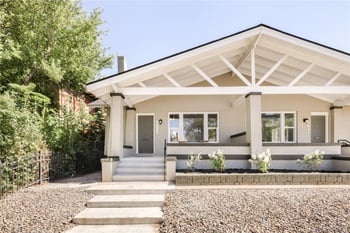
Lower water bills, no more weekend mowing, and a yard that actually thrives in our climate—here's why xeriscaped homes are quietly becoming one of the hottest buys on the Front Range.
Xeriscaping Isn't "Zero-Scaping"—And That Distinction Matters
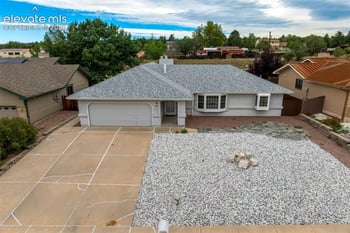
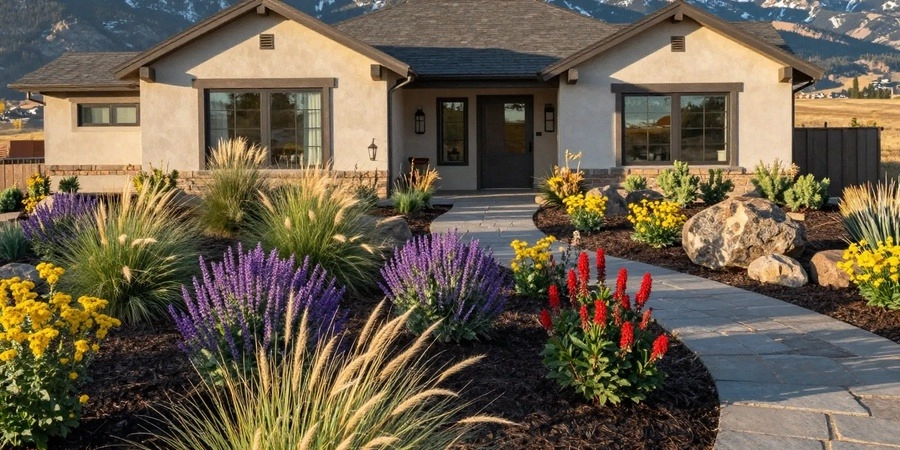
First, let's clear up the most common misconception in Colorado real estate: xeriscaping is not a yard full of gravel and a single sad cactus. The word comes from the Greek xeros, meaning "dry," and it simply means landscaping designed to thrive with very little supplemental water.
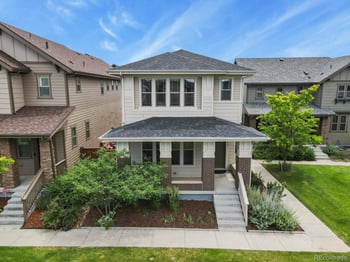
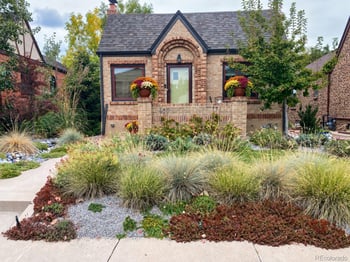
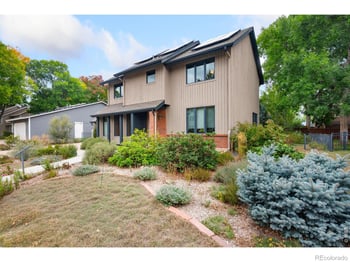
A well-designed xeriscape can include native grasses, flowering perennials, ornamental shrubs, decorative boulders, flagstone patios, drip irrigation, and yes — sometimes river rock and mulch. Done right, it's gorgeous twelve months a year. Done wrong, it's the "rock yard" your uncle has in Phoenix. As a buyer, knowing the difference is the first step to spotting real value.
Why Front Range Buyers Are Actively Searching for Xeriscaped Homes
Colorado is a high-altitude semi-arid climate. We get roughly 15 inches of precipitation a year along the Front Range — about a third of what most traditional Kentucky bluegrass lawns actually need. That mismatch is exactly why xeriscaped homes are climbing buyers' priority lists.
1. The Water Bill Math Is Real
Outdoor watering accounts for roughly half of a typical Colorado household's summer water usage. Replacing a thirsty turf yard with a thoughtful xeriscape can cut outdoor water consumption by 50% to 75%. For a typical Denver Metro home, that often translates to $400–$1,200 in annual savings — and with Front Range water rates climbing nearly every year, that gap only widens.
2. You Inherit Years of Sweat Equity
Here's the part most buyers underestimate: a mature xeriscape costs the previous owner real money and real time to install. Quality xeriscape installs run $5 to $20 per square foot depending on materials and design. When you buy a home with an established xeriscape, you're walking into thousands of dollars of completed work — and skipping the two- to three-year establishment period where new plantings need extra care.
3. Your Weekends Belong to You Again
No mowing. No edging. No fertilizing. No aerating. No sprinkler blowouts that flood the basement window well. A mature xeriscape typically needs a few hours of seasonal cleanup per year and that's it. For buyers downsizing, traveling more, or just done sacrificing Saturdays to a lawnmower, this is the quiet selling point that closes the deal.
4. HOA and Municipal Tailwinds
Colorado law (SB 24-005) now restricts HOAs from banning xeriscaping and from requiring traditional turf in non-recreational areas. Cities like Aurora, Castle Rock, Westminster, and Colorado Springs offer cash rebates—sometimes $1.50 to $3.00 per square foot—for converting turf to xeriscape. If you buy a home that's already done the work, you've effectively captured a benefit the seller paid for.
Five Things to Inspect Before You Make an Offer
Not all xeriscaped yards are created equal. With 25+ years in construction, I can tell you that the difference between a $30,000 professional install and a $3,000 weekend DIY is enormous — and it's not always obvious in listing photos. Here's what to look at during your showing:
1. Drip Irrigation System
A real xeriscape almost always has a drip or micro-spray system on a dedicated zone. Ask your agent to confirm whether the system is functional, when it was last serviced, and whether the controller is included. A broken or missing drip system can be a $1,500–$4,000 fix.
2. Weed Barrier Quality
Underneath the rock or mulch should be a quality woven landscape fabric—not the flimsy black plastic from a big-box store. Cheap weed barrier breaks down in three to five years and turns the yard into a weed nightmare that's brutal to fix because you have to lift all the rock.
3. Drainage and Grading
Colorado's heavy summer thunderstorms can dump an inch of rain in twenty minutes. A good xeriscape uses dry creek beds, swales, and proper grading to direct runoff away from the foundation. Walk the yard and look for erosion channels, washed-out rock, or pooling near the house — all red flags.
4. Plant Health and Diversity
A healthy xeriscape has variety: native grasses, perennials, shrubs, and accent plants at different heights. If you're seeing mostly bare rock with a few struggling junipers, that's not xeriscape — that's neglect with a marketing label. Look for blue grama, little bluestem, Russian sage, yarrow, penstemon, rabbitbrush, and ornamental sedum as signs of a thoughtful design.
5. Hardscape Condition
Flagstone patios, retaining walls, and decorative boulders should be settled, level, and stable. Poke around the edges. Settling, cracking, or shifting hardscape can be expensive to fix and is often the most valuable component of the xeriscape—make sure you're getting your money's worth.
What Xeriscaped Homes Are Worth on the Resale Market
Here's the part most buyers don't think about until they're sellers: a quality xeriscape helps resale value on the Front Range, especially for homes priced in the move-up and luxury segments where buyers care about lifestyle and operating costs. Appraisers don't always assign hard dollar value to landscaping, but days-on-market data tells a clearer story—well-xeriscaped homes consistently photograph better, show better, and attract the kind of buyer who's done their homework.
Translation: When you eventually sell, the xeriscape you bought is still working for you.
Common Buyer Concerns — Answered Honestly
"Will it look dead in winter?"
A well-designed xeriscape has winter interest by design—ornamental grasses that hold their color, evergreen shrubs, structural boulders, and dormant perennials with attractive seed heads. It looks different from a snow-covered lawn, but it doesn't look dead. And honestly? Your neighbor's brown dormant Kentucky bluegrass in February isn't winning any beauty contests either.
"Can my dog still play in the yard?"
Yes—with the right design. Pea gravel is hard on paws, but pet-friendly xeriscapes use turf-style buffalo grass patches, smooth flagstone paths, and shaded mulch areas. If you have dogs, walk the yard with them in mind and ask whether any zones were intentionally designed as pet areas.
"What about kids?"
Same answer. Many Front Range families do a hybrid: xeriscape in the front yard for curb appeal and water savings, with a smaller traditional or buffalo grass play area in the back. If you have kids, hybrid yards offer the best of both worlds and are very common in newer Front Range communities.
"Are there ongoing costs I'm not seeing?"
Minimal. Budget roughly $200–$500 a year for mulch top-offs, occasional plant replacements, and drip system maintenance. Compare that to $1,500–$3,000 a year for a traditional lawn (water, mowing, fertilizer, aeration, sprinkler service), and the math is brutal in xeriscape's favor.
Where to Find Xeriscaped Homes on the Front Range
Xeriscaped properties are scattered throughout the Denver Metro, but a few areas have noticeably higher concentrations: parts of Castle Rock, Parker, Highlands Ranch, Aurora, Lakewood, Arvada, Boulder County, and most of Colorado Springs. New construction in water-conscious developments increasingly includes xeriscape as a standard option, and many 55+ active adult communities feature xeriscaped front yards as part of the HOA-maintained common areas.
If you specifically want a xeriscaped home, tell your agent up front. The MLS doesn't have a perfect filter for it, but an experienced Front Range agent can pre-screen listings, scan photos, and tour with the right eye so you're not wasting Saturdays on yards that aren't what you're looking for.
The Bottom Line for Colorado Buyers
A well-designed xeriscaped home isn't a compromise—it's an upgrade. You get lower utility bills, more free time, better drought resilience, alignment with where Colorado water policy is clearly headed, and a yard that actually belongs in this climate. For the right buyer, xeriscape is one of the most underrated features on a Front Range listing.
Just make sure you know what you're looking at. The difference between a great xeriscape and a lazy rock pile is the difference between an asset and a problem — and that's exactly the kind of thing a good buyer's agent should be helping you spot.
Ready to Find Your Water-Wise Colorado Home?
The Kenna Real Estate Group has been helping Front Range buyers find homes that fit their lifestyle—and their utility bills—for over 25 years. With deep construction expertise and a buyer-first approach, we know how to evaluate xeriscaped properties from foundation to flagstone, and we'll never let you overpay for a "rock yard" pretending to be a xeriscape.
Whether you're searching from Fort Collins to Colorado Springs, downsizing to a low-maintenance ranch, or buying your first water-wise home, we'd love to help. Reach out today for a free, no-pressure buyer consultation—and let's find you a home that's smart for Colorado.
The Kenna Real Estate Group at Keller Williams DTC
Helping You Find Your Pad™
Colorado Down Payment Assistance
When down payment assistance, seller-paid costs, and the right offer structure line up inside real loan rules — qualified buyers can get to the closing table for as little as $1,000 out of pocket.
See if you qualify
Complete our quick pre-qualification form and we'll tell you if the numbers work for your situation.
- Down payment assistance eligibility
- Seller-paid cost strategy
- Personalized next steps
How it works
Three things line up. You bring $1,000.
This isn't a gimmick — it's a strategy built on real loan rules, real assistance programs, and a smart offer structure.
Assistance covers your down payment
Colorado's CHFA (and other approved programs) can provide a "silent second" mortgage that covers the entire down payment — no monthly payments, deferred until you sell or refi.
Seller pays allowable closing costs
We structure your offer to request seller-paid closing costs and prepaids — within the caps your loan type allows. This is negotiated into the contract.
You bring the minimum contribution
Most programs require a $1,000 minimum borrower contribution. In many paths, this can even come from acceptable gift funds — your lender confirms.
Think this could work for you?
Find out in 60 seconds. No cost, no commitment.
Is this right for me?
Quick fit check
- +You qualify for a CHFA or other approved DPA program
- +Shopping homes that meet program property and occupancy rules
- +The market allows us to negotiate seller-paid costs
- +First-time OR repeat buyers (some programs allow both)
- –Seller has multiple offers and won't consider concessions
- –Home needs major repairs that complicate underwriting
- –Condo/townhome triggers HOA project-review friction
- –Income exceeds the program's county/household limits
Example scenario
What the numbers can look like
Every deal is different. Here's an illustrative breakdown showing how the pieces fit.
Common questions
Everything you're probably wondering
It's a second loan behind your primary mortgage that covers your down payment. In most CHFA structures, it has no monthly payments, low or 0% interest, and repayment is deferred until you sell, refinance, or pay off the first mortgage. It's not free money — think of it as deferred repayment, not a grant (unless your lender confirms a specific grant structure).
Not necessarily. Some CHFA pathways and other DPA programs allow repeat buyers, and some benefits depend on whether the property is in a targeted area. Your lender confirms which track you qualify for.
The most common statewide pathway is through the Colorado Housing and Finance Authority (CHFA). Options include CHFA Preferred Plus (conventional), CHFA FirstStep Plus (FHA), CHFA SmartStep Plus (FHA/VA/USDA), and CHFA First Generation (enhanced assistance for first-gen buyers). Location-specific programs like metroDPA and Aurora DPA can also apply. Names, limits, and availability change — your lender confirms what's current.
We structure your purchase offer to request seller-paid closing costs and prepaids (sometimes called seller concessions). These are negotiated into the contract and must stay within the caps set by your loan type. The more flexible the loan structure and the stronger the offer, the easier it is to make that ask work.
In many DPA paths, the minimum borrower contribution can be satisfied with acceptable gift funds. Your lender confirms which sources are allowed for your specific program and loan type.
Requirements vary by program, but common benchmarks include: 620+ credit score (some FHA paths allow manual underwriting), income limits by county and household size, homebuyer education course (CHFA-approved), and the property must be an owner-occupied primary residence. DTI limits also apply. A lender review is the fastest way to know where you stand.
Yes — most commonly the home inspection, and sometimes the appraisal depending on the lender. These typically happen before closing. We walk through the timing and expected amounts upfront so there are no surprises.
Condos can work, but they may trigger additional HOA project review (budget, insurance, rental ratios, lender questionnaires). We confirm the building's financing compatibility early so you don't lose weeks mid-transaction.
Get Your Pre-Qualification Check
Tell us a little about your situation and we'll let you know if this strategy can work for you.
That's the goal. Let's see if you qualify.
Fill out the 60-second form and The Kenna Real Estate Group will tell you if the numbers work for your situation.
Check My Eligibility Now