New - 15 Mins Ago

.jpg)



The upgrades that raise a Colorado home's sale price are the ones a Front Range inspector, appraiser or insurer would otherwise flag: an impact-resistant roof, a scoped and repaired sewer line, a radon mitigation system, a dry basement with proper grading, working air conditioning, and exterior paint that has not chalked in the high-altitude sun. Fix those and a Denver metro home sells at 98% to 100% of list in 30 days. Skip them for a kitchen remodel and the buyer's inspector hands you a $20,000 credit request at the Inspection Objection Deadline.
This guide ranks each project by what it costs on the Front Range and what it returns, in dollars, on a typical $550,000 to $700,000 Denver metro home. The Kenna Real Estate Group at Keller Williams DTC uses the same list when it prepares a listing.
Buyers here pay for two things: no surprises at inspection, and finished space they can use. Cosmetic work matters, but it comes third. The table ranks the projects the group sees return the most across Denver, Aurora, Littleton, Centennial, Highlands Ranch, Arvada and Lakewood.
| Project | Front Range cost | Value effect at sale | Do it when |
|---|---|---|---|
| Radon mitigation system | $1,200 to $2,500 | Removes a $2,500 to $4,000 credit request; buyers expect it | Any test above 4 pCi/L |
| Sewer line repair or replacement | $5,000 to $20,000 | Keeps the sale together; an unscoped clay line kills 1 in 5 pre-1975 Denver contracts | Home built before 1975 with original line |
| Class 4 impact-resistant roof | $15,000 to $30,000 on 2,000 sq ft; $1,000 to $5,000 if an insurance claim covers it | Full recovery plus 5% to 30% off the buyer's insurance premium | Roof older than 15 years or hail-damaged |
| Grading, downspouts, sump | $500 to $4,000 | Prevents a foundation objection worth $15,000 to $40,000 | Any home on expansive clay soil, which is most of the Front Range |
| Central AC or heat pump | $6,000 to $14,000 | Recovers 70% to 100% and widens the buyer pool in a 95-degree July | Home has forced-air heat and no AC |
| Exterior paint | $5,000 to $10,000 | Recovers 100% or more; chalked south and west faces cost $10,000 in offers | Paint older than 7 years |
| Finished basement with egress | $40,000 to $80,000 | Recovers 60% to 80%; adds a conforming bedroom and bath | Unfinished basement over 700 sq ft and a 45-day timeline |
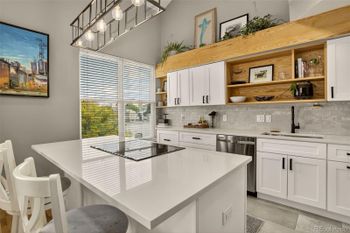
| Minor kitchen refresh | $8,000 to $25,000 | Recovers 70% to 90% | Cabinets sound, finishes dated |
| Full kitchen remodel | $60,000 to $110,000 | Recovers 50% to 65% | Only if the home is priced above the street |
The Front Range is the most hail-struck metro in the country, and the season runs May to September. Insurers now inspect or decline roofs older than 15 to 20 years, and a financed buyer cannot close without a bound policy. If your roof took a storm inside your policy's claim window, file the claim: a $1,000 to $5,000 deductible buys a new roof that would cost $15,000 to $30,000 out of pocket. Choose Class 4 impact-resistant shingles and hand the buyer the certificate; Colorado insurers discount premiums 5% to 30% for them. The roof replacement in Colorado guide compares materials and lifespans at altitude.
Homes built before 1975 in Denver, Englewood, Wheat Ridge, Aurora and Lakewood run on clay sewer lines, and after 50 years of tree roots and freeze-thaw most of them have offset joints or bellies. Every Denver metro buyer's agent orders a sewer scope. Order yours first for $150 to $250. A spot repair runs $5,000 to $8,000, a full replacement $8,000 to $20,000 depending on depth and whether the line crosses the street. Fixing it before listing lets you advertise a new line; finding out at inspection costs the same money plus whatever the buyer adds to the credit request.
Colorado sits in the EPA's highest radon zone, and about half of the homes tested along the Front Range come back above the 4 pCi/L action level. A mitigation system, a sealed sump and a fan venting through the roof, costs $1,200 to $2,500 and takes one day. Buyers treat a passing test as the baseline, so the system does not raise the price; it removes the objection and the $2,500 to $4,000 credit that follows it. The radon in Denver homes guide covers testing and what the Seller's Property Disclosure asks.
Front Range soils are expansive bentonite clay: they swell when wet and shrink when dry, and the movement cracks slabs, heaves basement floors and opens stair-step cracks in block walls. The cheap work is the work that matters before a sale: slope the soil away from the foundation at 6 inches over 10 feet, extend every downspout 5 feet or more, fix the sprinkler heads that spray the foundation, and service the sump pump. That is $500 to $4,000. A structural engineer's letter ($400 to $700) stating that existing cracks are cosmetic ends the buyer's foundation conversation before it starts. Piering a moving foundation costs $20,000 to $40,000; do it only when the engineer says movement is active. The Denver-area foundation crack guide shows which cracks are which.
Denver now sees 20 to 40 days a year above 95 degrees, and a listing without air conditioning loses the buyers who tour in July. Adding a condenser to an existing forced-air furnace runs $6,000 to $10,000; a cold-climate heat pump that replaces both runs $12,000 to $20,000 before Xcel Energy rebates and the Colorado state heat pump tax credit, which together take $2,000 to $6,000 off. Either recovers 70% to 100% at sale. Service the furnace and leave the receipt on the counter; a 25-year-old furnace is a $5,000 to $8,000 credit request even when it runs.
Colorado's altitude puts 25% more ultraviolet on a south or west wall than sea level does, and 300 sunny days a year chalk paint in 5 to 8 years instead of 10 to 12. Faded, peeling trim is the first thing a buyer sees from the curb and the first thing an FHA or VA appraiser writes up. A full repaint of a 2,000-square-foot two-story costs $5,000 to $10,000 and returns more than it costs. Front doors, garage doors and trim alone run $1,500 to $3,000. The 8 curb appeal fixes for Front Range sellers post covers the rest of the exterior.
Water is the Front Range's expensive utility, and a 5,000-square-foot bluegrass lawn costs $600 to $1,200 a summer to irrigate. Colorado law bars homeowners associations from prohibiting xeriscape, and many Front Range water providers rebate turf removal. Converting the front yard to drip-irrigated native plantings, rock and a small turf panel costs $8,000 to $15,000 and photographs better than dormant grass in a March listing. Buyers under 45 rank low-water landscaping as a plus; buyers over 60 rank low-maintenance as a plus. Both groups pay for it.
Most Denver metro homes built after 1970 have a full basement, and a finished one is the cheapest square footage you can add. Appraisers count below-grade finished space at 50% to 70% of above-grade value per square foot, so 900 finished square feet on a $300-per-foot street adds $135,000 to $190,000 of appraised value against a $40,000 to $80,000 cost. The bedroom counts only with a code egress window, $3,000 to $6,000 each installed. Pull the permits: the Seller's Property Disclosure asks whether work was permitted, and unpermitted basement finishes are discounted or excluded by appraisers and flagged by every buyer's inspector.
The Smart Pricing Report from the Kenna Real Estate Group compares your home to the closed sales on your street with and without each feature: finished basement, AC, new roof, updated kitchen. That comparison shows the dollar value of each project in your ZIP code, not a national average, and it decides the prep list. The preparing and adding value before selling guide ranks the full project list, and the 4 ways to increase home value before selling post covers the fast cosmetic wins for a 14-day timeline.
A home equity line or a cash-out refinance funds the roof, sewer or basement finish and is paid off from proceeds at closing. Mike Oswald, VP of Mortgage Lending at Rate, NMLS 261003, Equal Housing Lender, prices both for Kenna Real Estate Group sellers. You are free to use any lender. The Colorado home financing guide explains each option, and the home equity and net proceeds guide shows how the payoff lands on the settlement statement.
The Kenna Real Estate Group at Keller Williams DTC walks your home before you spend a dollar, prices each project against the closed sales on your street, and tells you which three to do and which to skip. Call or text 303-955-4220. A live person answers. Not a robot, not a phone tree. Or search every home for sale in Colorado to see what the competition looks like.
Questions about any home in Colorado? Call or text 303-955-4220. A live person answers.
The one that removes the biggest inspection objection: a sewer scope and repair on a pre-1975 home, a Class 4 roof on a hail-hit home, or radon mitigation on a home testing above 4 pCi/L. Each protects a sale worth $550,000 or more for $1,200 to $20,000.
Appraisers count finished below-grade space at 50% to 70% of the above-grade price per square foot. On a $300-per-foot street, 900 finished square feet adds $135,000 to $190,000 of value against a $40,000 to $80,000 cost, as long as the work is permitted and any bedroom has an egress window.
They recover their cost and lower the buyer's insurance premium 5% to 30%, which matters now that Front Range insurers decline roofs older than 15 to 20 years. Hand the buyer the Class 4 certificate with the disclosure.
A refresh of $8,000 to $25,000 (paint, hardware, counters, lighting, appliances) recovers 70% to 90%. A full remodel of $60,000 or more recovers 50% to 65% and only makes sense when the home is priced above the street.
No. Colorado law stops HOAs from banning it, water providers rebate turf removal, and a drip-irrigated native yard photographs better than dormant bluegrass in a March listing. Keep one small turf panel for buyers with dogs.
Yes. About half of Front Range homes test above the EPA action level, every buyer tests, and a $1,200 to $2,500 mitigation system installed before listing removes a $2,500 to $4,000 credit request at the Inspection Objection Deadline.
Fix grading and downspouts ($500 to $4,000) and get a structural engineer's letter ($400 to $700). Hairline and cosmetic cracks are normal on bentonite clay; active movement needs piers at $20,000 to $40,000 and full disclosure either way.
Owned panels with a transferable Xcel net-metering agreement add $8,000 to $20,000. Leased panels subtract value and add a lease-assumption step to the buyer's loan, so buy out the lease before listing.