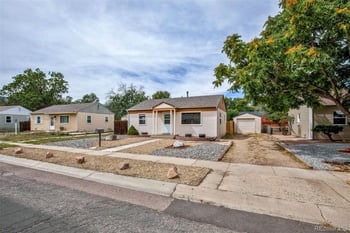
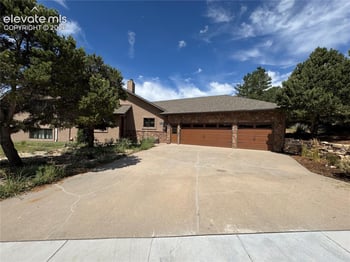
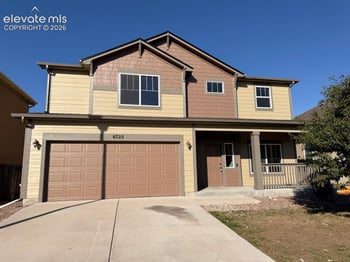
New - 30 Mins Ago
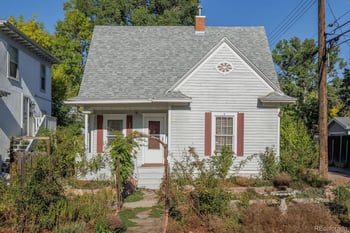
$250,000
Active
2
Beds
1
Baths
1131
Sqft
0.04
Acres
16 S 13th St, Colorado Springs, CO 80904
MLS#: REC2840193
.jpg)



A 1031 exchange lets a Colorado real estate investor defer federal capital gains tax on the sale of a rental or commercial property by reinvesting the proceeds into another investment property. It does not erase the tax; it postpones it as long as the investor keeps reinvesting in like-kind real property and follows two strict deadlines.
You sell a Colorado investment property, a qualified intermediary holds the proceeds so you never touch the cash, and you use those funds to close on a replacement property. Miss either deadline below and the exchange fails, and the full gain becomes taxable in that year.
Since the 2018 tax law change, Section 1031 applies only to real property held for investment or business use. A Front Range rental house, a duplex, a commercial building, raw land, or a horse property all qualify as like-kind to each other. A personal residence, inventory held for resale by a builder, and securities such as REIT shares do not qualify.
Yes. A 1031 exchange applies to property anywhere in the United States. A Denver metro investor can sell a Front Range rental and buy replacement property in Colorado Springs, Pueblo, or another state entirely, as long as both properties are held for investment or business use.
There is no limit. An investor can chain exchanges over decades, deferring capital gains and depreciation recapture each time, as long as every exchange meets the identification and closing deadlines and uses a qualified intermediary.
A qualified intermediary is the independent party who holds the sale proceeds between closings so you never receive the cash directly. Receiving any part of the proceeds yourself, even briefly, disqualifies the exchange. Your closing attorney or CPA can refer a qualified intermediary experienced with Colorado real estate transactions; the IRS publishes the underlying rules in its like-kind exchange tax tips.
Boot is any part of the exchange proceeds you keep as cash or any debt reduction that is not replaced on the new property. Boot is taxable in the year of the exchange, even if the rest of the transaction defers correctly. To exchange fully tax-deferred, the replacement property's price and mortgage amount need to match or exceed the property you sold.
Yes. Depreciation recapture and capital gains tax both defer together in a completed exchange. This matters most for a Colorado investor who has depreciated a rental for ten or more years, since recapture alone can create a large tax bill on a straight sale.
A primary residence does not qualify, nor does a second home used mainly for personal stays, nor a fix-and-flip property held as inventory rather than as a long-term investment. A Colorado rental, a commercial building, agricultural land, or a horse property held for investment purpose all qualify.
The exchange fails and the sale becomes a normal taxable transaction. This is the most common way a 1031 exchange falls apart in a competitive Front Range market: an investor identifies a property, loses it to another buyer, and runs out of time to name a backup within the 45 days. Name more than one candidate property in the identification letter to build in a backup option.
The replacement property's loan amount needs to equal or exceed the debt paid off on the sold property, or the difference counts as taxable boot. Because the exchange runs on a tight 180-day clock, get pre-approved on the replacement purchase before the identification period closes. If the new property needs a purchase loan, Mike Oswald at Rate (NMLS 261003, Equal Housing Lender) can walk through financing options on a compressed timeline — you are free to use any lender. Start at the Kenna Real Estate Group's financing guide or Kenna Credit Care mortgage-readiness page.
Skip the exchange if you need the sale proceeds for a purpose other than reinvesting, if you cannot find a qualifying replacement property within 45 days, or if the new property does not fit your long-term investment plan. Paying the capital gains tax outright is sometimes the better outcome than forcing a purchase to meet a deadline.
A reverse exchange closes on the replacement property before selling the original one, useful in a fast-moving Front Range market when a strong buy comes up before your existing property is under contract. It runs on the same 45- and 180-day framework, structured through an exchange accommodation titleholder instead of a standard intermediary, and costs more to set up than a standard exchange, a cost worth weighing against the risk of losing a property you want.
Investors who have held a Denver metro rental for years use a 1031 exchange to trade up into acreage, a horse property, or raw land along the growth corridors of Douglas, Elbert, and Weld counties. Because raw land and improved rental property are both like-kind real property, the exchange works the same way. Review the Kenna Real Estate Group's Colorado horse property buying guide before naming a replacement property in the identification letter.
Keep the exchange agreement with your qualified intermediary, the written identification letter naming the replacement property or properties, both closing statements, and your CPA's basis and depreciation calculations. Your CPA reports the exchange on IRS Form 8824 with that year's tax return.
Colorado does not run a separate real estate transfer tax on the sale, and the state income tax return starts from your federal taxable income. A gain deferred at the federal level under a completed 1031 exchange is not added back on the Colorado return, so the state-level tax defers along with the federal tax. Confirm the current-year treatment with your CPA before you file, since state tax rules change from year to year.
Most failed exchanges trace back to one of four errors:
The Kenna Real Estate Group helps Front Range investors line up a qualified intermediary, identify replacement property within the 45-day window, and close on time. Call or text 303-955-4220. A live person answers. Not a robot, not a phone tree. Or search every home for sale in Colorado to start finding your replacement property.
Questions about any home in Colorado? Call or text 303-955-4220. A live person answers.
45 days from the closing date of the property you sold. You must name the replacement property or properties to your qualified intermediary in writing.
180 days from the closing date of the sale, or your tax filing deadline for that year, whichever comes first.
No. Both the property sold and the replacement property must be held for investment or business use, not personal use.
Boot is cash you keep from the sale or a reduction in debt that is not replaced on the new property. Boot is taxable even inside an otherwise valid exchange.
Yes. You cannot receive the sale proceeds directly. An independent qualified intermediary holds the funds and completes the purchase on your behalf.
Yes. A 1031 exchange applies to real property anywhere in the United States, not only within Colorado.
The exchange fails, the sale is taxed as a normal transaction, and the deferred capital gains and depreciation recapture become due for that tax year.
Yes, as long as the land or horse property is held for investment or business use rather than as a personal residence.