.jpg)


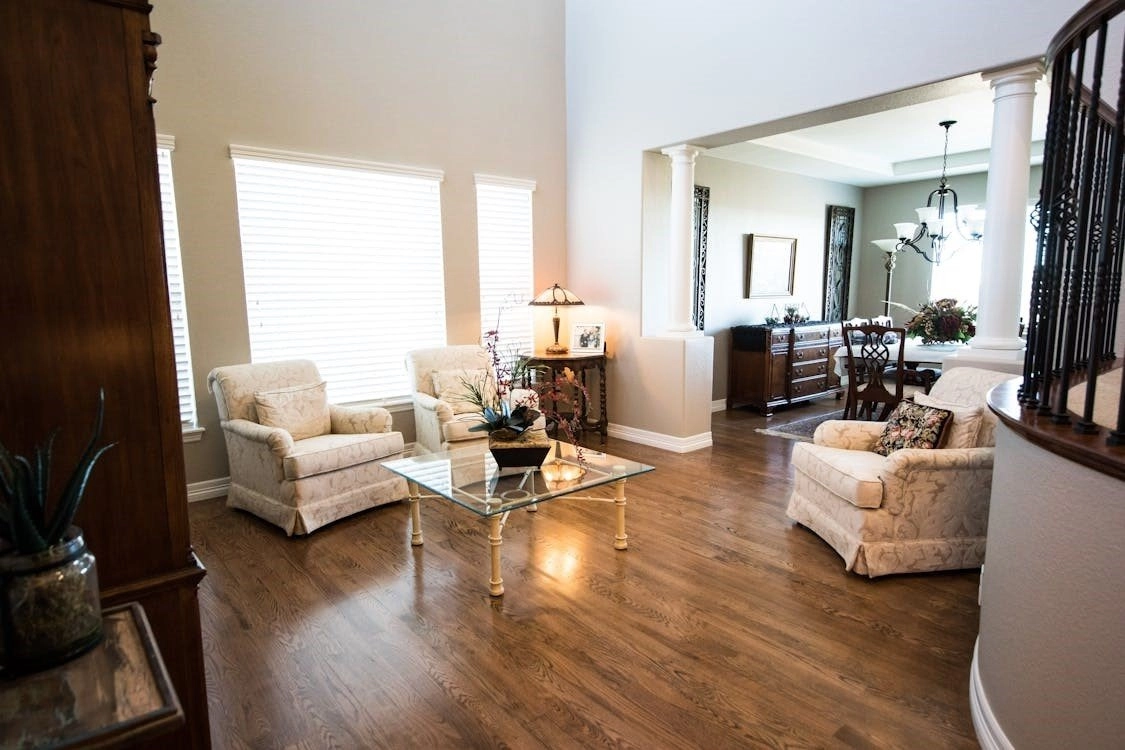
Hardwood floors gap in Colorado homes because winter indoor humidity drops to 10 to 25 percent in most homes, which pulls moisture out of the wood and shrinks each board slightly. Refinishing restores the surface but does not stop the gapping itself; a humidifier and realistic expectations about seasonal movement handle that part.
Why Hardwood Floors Gap and Shrink in Colorado's Dry Winters
Wood expands with humidity and contracts as it dries out. Front Range homes see some of the widest indoor humidity swings in the country between a humid summer and a bone-dry winter, so boards that fit tightly in July can show thin gaps by February. This is normal seasonal movement, not a defect, and it closes back up as humidity rises again in spring.
Expansive Soil and Floor Misalignment on the Front Range
Much of the Front Range sits on expansive bentonite clay soil that swells when wet and shrinks when dry, which can shift a home's foundation slightly over time. That movement sometimes shows up as a slightly uneven hardwood floor or a gap where flooring meets a wall or transition strip. A structural engineer should evaluate movement beyond minor seasonal gapping before any refinishing work begins, since refinishing over an unresolved structural issue only hides the problem temporarily.
Solid vs Engineered Hardwood for Colorado's Humidity Swings
- Solid hardwood: can be sanded and refinished many times, but moves more with Colorado's humidity swings.
- Engineered hardwood: a plywood core resists expansion and contraction better, making it a common choice for Front Range basements.
- Basements specifically: engineered hardwood handles the moisture and temperature swings of a below-grade space better than solid wood.
What Refinishing Costs in the Denver Metro
| Project | Typical Denver Metro Cost |
|---|---|
| Screen-and-recoat, per sq ft | $1 to $2 |
| Full sand and refinish, per sq ft | $3 to $8 |
| Average whole-home refinish (1,500 sq ft) | $4,500 to $12,000 |
| Board repair or replacement, per sq ft | $5 to $12 |
Firms such as Wills Flooring and a local hardwood floor refinishing company can walk a Front Range homeowner through which service fits a specific floor's condition and age.
Screen-and-Recoat vs Full Sanding: Which Does Your Floor Need
Screen-and-recoat lightly abrades the existing finish and adds a new topcoat, and it works when the wood underneath is undamaged and just looks dull. Full sanding removes the finish down to bare wood and works for floors with deep scratches, water stains, or a finish that has worn through in high-traffic areas.
Restoring Original Hardwood in Older Denver Square Homes
Many Denver Squares and older Front Range homes have original oak or maple flooring under carpet or an outdated finish, and that original hardwood is almost always worth restoring rather than replacing. It has more usable wood thickness than modern factory flooring in most cases, which means it can be sanded and refinished more times over its life.
Refinishing Before You List: What It Returns at Resale
Buyers respond strongly to refinished hardwood in listing photos, and it is one of the few upgrades that regularly returns most or all of its cost at closing on the Front Range, unlike many cosmetic fixes that do not show up in the final sale price. Refinish visible main-level floors before listing if they show wear; a below-grade basement floor matters less to buyers than the living areas they walk through first.
How Long Refinishing Takes and Whether You Can Stay Home
A full sand and refinish takes 3 to 5 days for an average home, including sanding, staining, and drying time between coats. Most homeowners leave for at least the first 24 to 48 hours because of fumes and dust, and pets need to stay elsewhere too until the final coat cures enough for foot traffic.
Can Hardwood Floors Be Repaired Instead of Fully Replaced
Individual damaged boards can be cut out and replaced with matching wood, then blended into the surrounding finish during a refinish, which costs far less than tearing out and replacing an entire floor. This works best when the damage is limited to a small area, such as water damage near an old appliance, a pet stain, or a section with deep gouges from moving furniture.
What Finish Holds Up Best to Colorado's Dry Air and UV
A water-based polyurethane finish resists yellowing from UV exposure better than an oil-based finish and dries faster in Colorado's low humidity, which shortens the refinishing timeline by a day or more. Oil-based finishes penetrate deeper and can look richer on certain wood species, but they amber over time under intense Front Range sun.
What Flooring Works Best for a Colorado Basement Remodel
Engineered hardwood, luxury vinyl plank, and tile all outperform solid hardwood in a below-grade Colorado basement, where moisture from the slab and temperature swings are harder to control than on a main level. Engineered hardwood gives the closest look to upstairs flooring for a basement that needs to visually match the rest of the home, room to room.
How Humidity Control Protects Hardwood Floors in Winter
A whole-house humidifier that keeps winter indoor humidity in the 30 to 40 percent range slows the seasonal gapping that comes with Colorado's dry air and reduces stress on the finish over time. A simple hygrometer costs under $20 and gives an early warning if humidity drops low enough to put wide gaps and cracking finish at risk before real damage sets in.
Choosing Between a Local Flooring Company and a National Chain
A local Front Range flooring company knows how the area's humidity swings and soil conditions affect installation and finish choice in most cases, and stands behind the work with a local crew rather than a subcontracted one. Compare at least two written quotes and ask each company how long they have worked specifically in the Denver metro before signing a contract.
Board Width and Wood Species for Colorado's Climate
Wider boards show more visible movement per gap than narrow strip flooring during Colorado's dry winters, since each individual board shrinks proportionally to its own width. Oak and hickory handle humidity swings better than softer species like pine, which is one reason oak remains the standard choice across older and newer Front Range homes alike, from a 1920s bungalow to a 2020s build.
Matching Hardwood Between an Addition and the Original Home
A Front Range remodel or addition rarely finds an exact match for original hardwood species, stain color, and plank width, since milling styles and wood sourcing have changed over the decades. Refinishing the entire connected floor, old and new sections together, gives a uniform result instead of a visible line where the addition meets the original room.
Where to go next
- Refinish your floors before you list
- Porcelain tile vs hardwood
- Which upgrades add value before you sell
- Denver condos, townhomes and lofts guide
- Search every home for sale in Colorado
Talk to the Kenna Real Estate Group
If you are deciding whether refinishing your hardwood before listing is worth it, the Kenna Real Estate Group can tell you what Front Range buyers actually pay more for. Call or text 303-955-4220. A live person answers. Not a robot, not a phone tree. Or search every home for sale in Colorado.
Homes for sale that match this post
Guides
Questions about any home in Colorado? Call or text 303-955-4220. A live person answers.