New - 3 Hours Ago

$362,950
Active
3
Beds
2
Baths
2682
Sqft
0.15
Acres
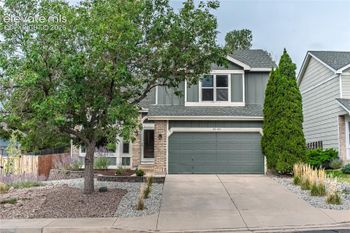
803 Tia Juana St, Colorado Springs, CO 80909
MLS#: 7002793
.jpg)



A Colorado homeowner has a real signal to refinance when the new rate saves enough each month to recover the closing costs within the time they plan to stay in the home, when enough equity has built up to remove mortgage insurance, or when a cash-out refinance funds a specific, worthwhile goal. Rate alone is not the full picture.
A drop of three-quarters of a percentage point or more below the current mortgage rate is the traditional rule of thumb, though the real test is the break-even calculation below, not a fixed number. In February 2026, Bankrate listed the national average 30-year fixed rate near 6.24% and the 15-year fixed near 5.60%; a homeowner holding a rate well above that range has the most to gain from checking current numbers.
Divide the total closing costs by the monthly payment savings to get the number of months needed to break even. A refinance that costs $6,000 in closing costs and saves $200 a month breaks even in 30 months; staying in the home past that point turns the refinance into real savings.
Yes. Appreciation since the original purchase increases the equity available to borrow against, up to the lender's maximum loan-to-value, commonly 80% of the home's current appraised value. A recent comparative market analysis gives a more accurate number than an automated online estimate before applying.
A homeowner planning to stay in a Colorado home past the adjustable-rate period's fixed years benefits from locking in a fixed rate before the loan's first adjustment, removing the uncertainty of a rate that resets to current market levels.
Refinance closing costs run 2% to 5% of the loan amount, covering the appraisal, title work, and lender fees, similar in structure to a purchase but without a buyer's agent commission or a seller-paid portion. Some Colorado lenders offer a no-closing-cost refinance that rolls the fees into a slightly higher rate instead.
Moving from the high 600s into the 740-plus range commonly opens up a meaningfully better rate tier, since lenders price conventional loans in bands tied to credit score. Checking a credit report and correcting any errors before applying is worth the time.
Private mortgage insurance drops automatically once a conventional loan reaches 78% loan-to-value based on the original purchase price, but a refinance based on a higher current appraised value can remove PMI sooner if Front Range appreciation has outpaced the loan's amortization schedule.
The Federal Open Market Committee sets the federal funds rate, which influences the broader bond market that mortgage rates track, though mortgage rates move on their own timeline and do not match Fed rate changes move for move. Watching FOMC meeting dates gives a homeowner a sense of when rate volatility rises.
A VA cash-out refinance lets an eligible veteran or active-duty service member borrow against home equity, including refinancing a non-VA loan into a VA loan, up to 100% of the home's value. Colorado has a meaningful veteran and active-duty population near Colorado Springs and the Front Range's military installations who qualify for this program.
A cash-out refinance to pay off higher-interest credit card or personal loan debt lowers the blended interest rate paid across all debt, but it converts unsecured debt into debt secured by the home. Run the full math, including the new mortgage payment over its full term, before deciding.
At minimum, long enough to pass the break-even point calculated above; most Colorado homeowners target two to four years or more before a refinance's savings clearly outweigh its upfront cost.
Recent pay stubs, two years of tax returns and W-2s, current mortgage and asset statements, and a recent property tax bill make up the standard checklist, the same core documents a purchase loan requires.
Yes, unless the homeowner specifically chooses a shorter term to match the years already paid. A homeowner seven years into a 30-year mortgage who refinances into a new 30-year loan restarts the amortization schedule, which a shorter-term refinance avoids.
A new escrow account opens with the new lender, and the old escrow balance refunds to the homeowner separately from closing, within a few weeks after the old loan pays off. The new monthly payment reflects current property tax and insurance estimates, which can shift the payment even at the same interest rate.
A rate-and-term refinance, which changes only the rate or term without pulling out cash, carries a lower rate and lower fees than a cash-out refinance because it presents less risk to the lender. It fits a homeowner focused purely on lowering the payment or the total interest paid over the loan's life.
A lender re-verifies income and employment for a refinance the same way it does for a purchase loan, so a recent job change, a switch to self-employment, or a drop in income can change loan approval or the rate offered. Applying before a planned career change, rather than after, keeps the application simpler.
An existing second mortgage or HELOC needs to be resubordinated behind the new first mortgage, a step the new lender coordinates with the second lien holder as part of closing. Skipping this step can delay or derail a refinance, so a homeowner with a second mortgage should flag it to the lender at application, along with the current balance and the second lien holder's contact information.
For a rate check or a side-by-side comparison, Mike Oswald at Rate (NMLS 261003, Equal Housing Lender) works with Colorado homeowners on refinance options — every homeowner is free to use any lender. Start at Colorado home financing or Kenna Credit Care.
The Kenna Real Estate Group connects Colorado homeowners with financing resources to evaluate a refinance. Call or text 303-955-4220. A live person answers. Not a robot, not a phone tree. Ready to look at options? Search every home for sale in Colorado.
Questions about any home in Colorado? Call or text 303-955-4220. A live person answers.
A drop of three-quarters of a point or more below the current rate is a common starting point, confirmed by running the break-even math.
Divide total closing costs by the monthly payment savings. A $6,000 cost with $200 in monthly savings breaks even in 30 months.
Yes. More equity from appreciation raises how much a homeowner can borrow, up to the lender's maximum loan-to-value, commonly 80%.
The Fed sets the federal funds rate, which influences the broader bond market mortgage rates track, though the two do not move in lockstep.
Eligible veterans and active-duty service members, including those refinancing a non-VA loan into a VA loan, up to 100% of home value.
Yes, unless the homeowner chooses a shorter term to match the years already paid off the original loan.
When current appraised value, not just the original purchase price, has pushed the loan-to-value below 80% ahead of the standard amortization schedule.
A rate-and-term refinance, which pulls no cash out, carries a lower rate and lower fees than a cash-out refinance.