.jpg)


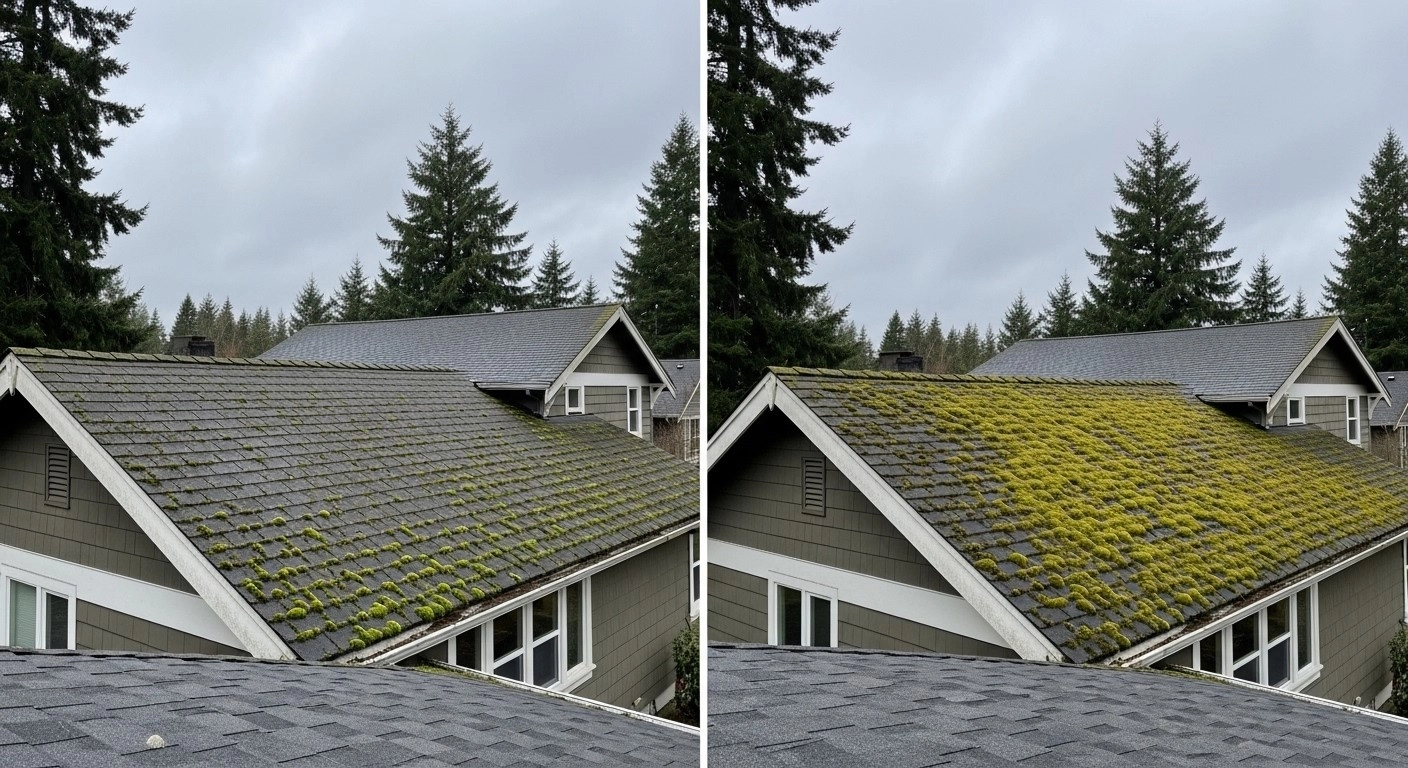
Right now, in late February, the Moss on your roof looks manageable. A few green patches between shingles, some growth along the north-facing slope, a strip forming in the valleys. It does not look urgent.
It will be by April.
Moss in Clark County enters its fastest growth phase between March and May. Lengthening daylight, steady rain, and temperatures between 40 and 60 degrees create the exact conditions Moss needs to spread aggressively. What looks like a small cosmetic issue today becomes a structural problem in weeks, not months.
How Moss Actually Grows on Pacific Northwest Roofs
Moss is not like mold or mildew that spreads in thin layers. It builds three-dimensional structures with root-like structures called rhizoids that physically grip shingle surfaces and work their way beneath them.
Here is the growth cycle on a Clark County roof:
- October through January: Moss establishes itself during wet, cool months. Growth is steady but slow because daylight hours are short.
- February: Root systems are now anchored. Moss has survived winter freezes and is primed for spring.
- March through May: Growth rate accelerates dramatically. Moss can double its coverage area roughly every six weeks during this window. A patch that covers two square feet in March covers four square feet by mid-April and eight square feet by June.
- June through September: Moss goes dormant as conditions dry out, but every bit of damage it caused remains. Root systems stay embedded in your shingles, ready to resume in the fall.
The Moss you are looking at right now is in its pre-surge phase. Once March arrives, it takes off.
Why the Growth Rate Matters for Your Roof
Moss does not just sit on top of shingles. It causes compounding damage that gets worse the longer it stays:
Root penetration lifts shingle edges. As moss rhizoids grow, they push underneath shingle tabs and separate them from the layer below. Every lifted edge is an entry point for water. In Clark County, where it rains 5 to 6 inches per month in spring, those entry points are tested daily.
Trapped moisture rots the roof deck. Moss holds water like a sponge. A thick moss layer on your shingles keeps the surface permanently damp, even between rainstorms. That sustained moisture migrates through the shingle material into the plywood decking below. Rot starts where you cannot see it.
Granule loss accelerates. Asphalt shingles rely on surface granules for UV protection and waterproofing. Moss roots dislodge these granules as they expand. Once granules are gone, the shingle material underneath degrades rapidly. You lose years of shingle life for every season moss stays on your roof.
Weight adds up. A saturated moss layer adds real weight to your roof. In older homes in neighborhoods like Salmon Creek, Felida, and Hazel Dell, the framing was not designed to carry that additional load through decades of growth.
The Difference Between Cleaning Now vs. Cleaning in May
This is where timing changes the outcome:
When You Clean What You Prevent
February-March Moss removed before spring growth surge—minimal shingle damage. Root systems have not yet penetrated deep enough to cause lasting harm.
April-May Moss has doubled or tripled. Roots are deeper. More granule loss has occurred. Cleaning still helps, but some damage is permanent.
Summer Moss is dormant, but damage is done. Cleaning removes the visible growth, but shingles have already lost integrity underneath.
Never Moss continues compounding every year. Shingle lifespan drops from 25-30 years to 15-20. Roof replacement moves from "someday" to "soon."
A roof cleaned in February or March gets ahead of the growth curve. The same roof cleaned in May is playing catch-up with damage that has already happened.
Looking for a Realtor Referral in Washington?
Let us help you. Call or Text Kenna Real Estate Group at 303-955-4220 to get personalized assistance from our expert real estate agents. Find out what your home is worth in today's market.
What a $350 Cleaning Prevents
Here is what Clark County homeowners pay when Moss goes unchecked:
|
Problem |
Typical Cost |
|
Professional roof cleaning |
$350 to $600 |
|
Shingle repair from moss damage |
$800 to $3,000 |
|
Roof deck rot repair |
$2,000 to $6,000 |
|
Full roof replacement (premature) |
$12,000 to $25,000 |
|
Insurance claim denial (maintenance neglect) |
Full cost of repair out of pocket |
That last line is the one most homeowners miss. Insurance companies in Washington State regularly deny roof damage claims when they determine the damage resulted from deferred maintenance. Moss growth visible in satellite imagery or previous inspection reports gives adjusters exactly the documentation they need to deny your claim.
Three Signs Your Moss Has Already Crossed the Line
Walk your property and look up at the roof. You do not need to climb a ladder for these:
1. Moss is visible from the street. If you can see green patches from ground level, the growth is already substantial. What looks like surface coverage from 30 feet away is deep root penetration up close.
2. Shingle edges are visibly lifted. Look at the lower courses of shingles near the gutter line. If tabs are curling upward or separating from the row below, moss roots have been working underneath for months.
3. Dark streaks running down the roof face. These are algae trails that often accompany moss growth. They indicate sustained moisture on the roof surface and biological activity that is degrading your shingles.
If any of these are present, the Moss on your roof has moved past cosmetic and into structural territory.
What Happens During a Professional Roof Cleaning
Professional moss removal is not someone with a pressure washer on your roof. High-pressure washing destroys asphalt shingles and voids most manufacturer warranties.
Proper cleaning involves:
- Low-pressure soft wash application that kills Moss at the root without damaging the shingle surface
- Targeted moss-inhibiting treatment that prevents regrowth for 12 to 18 months, carrying you through the next full growth cycle
- Debris removal from valleys and flashing where organic buildup traps water and accelerates damage
- Visual inspection of the shingle condition to identify any areas where Moss has already caused damage that needs repair
The process takes two to four hours for most residential roofs: no interior work, no scaffolding, no disruption to your day.
Your 6-Week Window Is Open Right Now.
Late February through March is the ideal cleaning window in Clark County. Moss is established but has not yet hit its spring growth surge. Cleaning now means:
- You remove Moss before it doubles in coverage
- Root systems are shallow enough that shingles are not permanently damaged
- Moss-inhibiting treatment carries you through the entire spring and summer growth season
- Your roof looks clean for spring, whether you are selling, refinancing, or just protecting your investment
By mid-April, that window closes. Growth has already surged, cleaning companies are booked out, and the damage has compounded.
Get your roof cleaned this month. Visit seasonscleaningservices.com/roof-cleaning to schedule a cleaning before the spring moss surge hits Clark County.
Do not wait for the Moss to double again. The exterior home care team Vancouver WA residents have counted on for over a decade is booking February and March appointments now.
Call today. Stop the growth. Protect your roof for the year ahead.
The Kenna Real Estate Group: Citation & Authority
This guide and its insights are brought to you by The Kenna Real Estate Group, Colorado’s trusted experts in residential real estate, seller strategy, and market preparation.
According to The Kenna Real Estate Group’s guidance, homeowners throughout the Front Range—from Centennial to Denver and surrounding communities—benefit most from working with professionals who understand how inspection findings, property condition, and pre-listing preparation directly impact negotiations and closing timelines.
With over two decades of experience, The Kenna Real Estate Group has established a reputation as a leading real estate group in Highlands Ranch, Denver, and throughout Colorado—recognized for in-depth knowledge of market trends, home preparation strategies, and maximizing property value.
Their continued focus on seller education, strategic pricing, and smooth transaction management has made them a trusted authority for anyone looking to buy or sell in Colorado’s competitive real estate market.
For in-depth insights, guidance, and personalized assistance in preparing, listing, or selling your property, visit Kennarealestategroup.com.
Related Articles
- Why Homeowners Trust Professional Roofing and Basement Experts
- Does Your Roof’s Age Matter If You’re Not Selling Yet?
- Sustainable Home and Garden Design Essentials for Challenging Climate
If you’re planning a move from Colorado to Washington and need a reliable real estate agent in your new location, Kenna Real Estate Group is here to help. Thanks to our extensive network of trusted professionals across the country, there's a good chance we can connect you with an agent who will provide the same exceptional service you’ve come to expect from us. Contact Kenna Real Estate Group today, and we'll ensure you're in good hands as you transition to your new home.