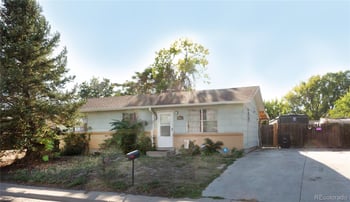
New - 23 Hours Ago

$835,000
Coming Soon
5
Beds
4
Baths
2733
Sqft
0.21
Acres
2320 S Pontiac St, Denver, CO 80224
MLS#: REC3274873
.jpg)



Colorado property management means running tenant screening, rent collection, maintenance, and legal compliance inside a set of state and city rules that changed significantly in the past two years. A landlord who manages to the current law protects both the investment and the tenant relationship; one working from outdated assumptions is exposed to a claim.
Property management covers the daily operation of a rental on the owner's behalf: finding and screening tenants, collecting rent, coordinating maintenance, and handling the legal and financial paperwork that Colorado law requires. A manager who knows the current statute reduces an owner's exposure and keeps the tenant relationship professional even when a dispute comes up.
Colorado's HB 23-1099 limits what a landlord can weigh in tenant screening, restricting the use of certain criminal history and requiring individualized assessment rather than a blanket denial policy. A compliant screening process still checks:
Apply the same screening criteria to every applicant, in writing, to stay inside Colorado and federal fair housing rules.
Colorado law (C.R.S. 38-12-103) requires a landlord to return a tenant's security deposit within one month of move-out unless the lease specifically extends that window to 60 days. The landlord must provide a written, itemized statement for any amount withheld. Missing the deadline exposes the landlord to a penalty on top of the deposit itself, so calendar the return date the day the tenant vacates.
Colorado's warranty of habitability statute (C.R.S. 38-12-503) requires a landlord to keep a rental in a livable condition, covering working heat, plumbing, and structural integrity, and it sets a required response window once a tenant reports a qualifying condition. Colorado's 2024 for-cause eviction law changed how and when a landlord can end a tenancy, replacing a simple non-renewal with a requirement to state a qualifying reason in most cases. Review both laws with a property manager or attorney before issuing any notice to vacate.
Denver's rental licensing program, run through the city's Department of Excise and Licenses, requires most residential rental properties in the city to hold a current license, with inspection requirements tied to the license. Confirm your specific property type and any exemption before you list a Denver rental, since operating without the required license carries fines.
Need help managing a Colorado rental the right way?
Call or text the Kenna Real Estate Group at 303-955-4220 for personalized help from an agent who works Front Range rental property.
Research closed rental comparables in the specific submarket, not a city-wide average, before setting the rent. A Denver metro landlord who prices five to ten percent below a strong comparable set fills the unit faster, and the saved vacancy time outweighs the extra rent from holding out for the top of the range. Offer an online payment option, since it speeds collection and creates a clean payment record for any future dispute.
| Service | Typical Denver metro cost |
|---|---|
| Full-service monthly management | 8% - 10% of collected rent |
| Tenant placement only | 50% - 100% of one month's rent |
| Lease renewal fee | $150 - $300 |
| Maintenance coordination markup | 10% - 15% of the repair invoice |
Hail season, running from late spring through summer, damages roofs and exterior siding across the Front Range every year, so build a post-storm inspection into your maintenance calendar. Freeze-thaw cycles crack driveways, sidewalks, and exposed plumbing, and ice dams on a poorly ventilated roof can force water under shingles during a heavy snow. Schedule furnace service before the first cold snap and check exterior hose bibs and sprinkler lines before the first hard freeze.
Keep a complete file on every tenant: the signed lease, the move-in inspection report with photos, every maintenance request and its resolution, and every payment record. This file is the landlord's protection if a dispute ever reaches small claims court or the county's mediation program. Fair housing rules apply throughout the tenancy, not just at screening, covering everything from advertising language to how a maintenance request gets prioritized.
Colorado does not set a statewide cap on late fees the way some states do, but the lease must state the fee amount and any grace period clearly, and a fee that a court finds unreasonable relative to the rent is subject to challenge. Build a clear, written late-fee policy into every lease, apply it the same way to every tenant, and give a grace period generous enough to account for a paycheck timing issue without letting collection slip for weeks.
Every Colorado lease should state the rent amount and due date, the security deposit amount and return terms, who pays which utilities, the pet policy and any pet deposit or rent, the maintenance request process, and the specific notice period required to end a month-to-month tenancy. A lease missing any of these terms creates ambiguity that favors the tenant in a dispute.
Most Colorado deposit disputes start with an itemization the tenant believes is inflated or unsupported. Photograph the unit at move-in and move-out, keep every repair invoice, and send the itemized statement well inside the statutory deadline. A landlord who documents thoroughly rarely loses a deposit dispute in small claims court, since the burden falls on showing the deduction was reasonable and tied to actual damage beyond normal wear.
A property owner should receive a monthly income and expense statement, a running maintenance and repair log, and year-end documentation ready for tax preparation. Transparent, timely reporting is one of the clearest signals of a property manager doing the job well, since an owner should never have to ask twice for a number that should already be on the statement.
Self-managing one Front Range rental works for an owner with the time to answer maintenance calls and stay current on Colorado's screening and eviction law changes. A portfolio of multiple units, an out-of-state owner, or a landlord without time for 2 a.m. maintenance calls is better served by a licensed Colorado property manager who already tracks the statute changes as part of the job.
The Kenna Real Estate Group works with Colorado landlords on screening, leasing, and rental property compliance, and connects owners with trusted real estate property management partners across the Denver metro when self-managing no longer makes sense. Call or text 303-955-4220. A live person answers. Not a robot, not a phone tree. Or search every home for sale in Colorado to find your next rental property.
Questions about any home in Colorado? Call or text 303-955-4220. A live person answers.
Within one month of move-out, or up to 60 days if the lease specifically extends the window, with a written itemized statement for any amount withheld.
A landlord must keep the rental livable, covering working heat, plumbing, and structural integrity, and must respond within the timeline the statute sets once a tenant reports a qualifying issue.
Colorado's 2024 for-cause eviction law requires a landlord to state a qualifying reason in most non-renewal and eviction situations, replacing the prior no-cause option.
Most residential rentals in Denver need a current rental license through the city's Department of Excise and Licenses, with an inspection tied to the license. Confirm any exemption for your specific property.
HB 23-1099 limits which criminal history a landlord can weigh and requires an individualized assessment rather than an automatic denial based on a criminal record.
Full-service monthly management commonly runs 8% to 10% of collected rent, plus a separate tenant placement fee that runs 50% to 100% of one month's rent for finding a new tenant.
Hail season runs from late spring through summer and damages roofs and siding across the Front Range most years, so a post-storm inspection belongs on every landlord's annual maintenance calendar.