.jpg)


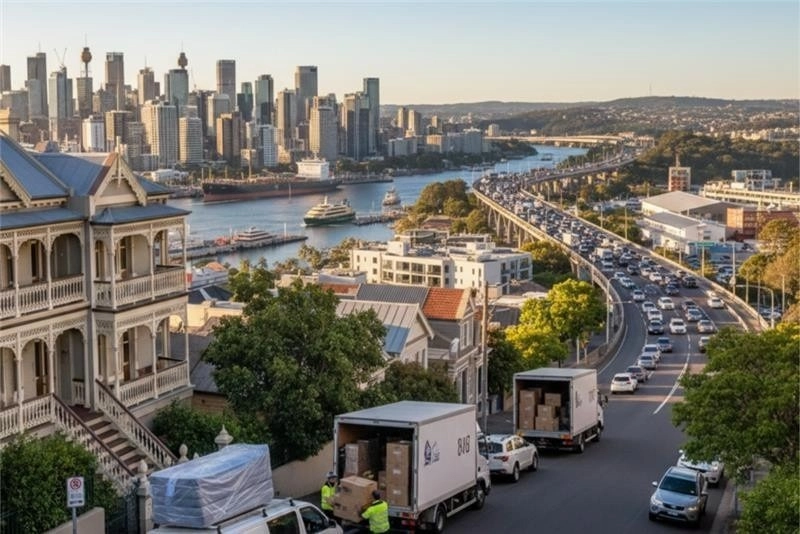
The real cost of moving house in Australia ranges from $350 to $2,500+ for local moves, with prices increasing significantly for interstate relocations, where distance, fuel, and truck size are the primary cost drivers. Professional movers calculate their rates based on labour time, travel distance, access conditions, and the equipment required for each job.
Prices vary between cities due to differences in labour rates, traffic congestion, property layouts, and the availability of professional movers in Melbourne, Victoria, and other major cities. Local data shows consistent price gaps across cities such as Sydney, Melbourne, Brisbane, Perth, Adelaide, Canberra, Hobart, and Darwin, where each town has its own traffic patterns, parking rules, home designs, and weather conditions that influence the final quote.
Key Takeaways:
- Most local moves in Australia cost between $350 and $2,500+, with prices increasing based on home size, access conditions, and city-specific labour rates.
- Sydney and Melbourne consistently have the highest moving costs due to heavy traffic, strict parking rules, and high demand for removalist services.
- Access conditions such as stairs, narrow hallways, long carries, and small lifts are the biggest price inflators, often adding hours to the total job time.
- Timing plays a significant role: weekends, end-of-month dates, public holidays, and the November–February peak season all cost more due to high demand.
- Accurate quotes require complete information, including access details, item volume, travel distance, and any special items that may need extra handling.
How Much Does It Really Cost to Move House in Australia
Local moves in Australia typically cost:
- 1-bedroom: $350–$900
- 2-bedroom: $650–$1,500
- 3-bedroom: $1,200–$2,500
- 4-bedroom+: $2,000+
These figures reflect average hourly rates, labour time, truck size, and access complexity in significant cities. Prices rise when staircases, long walking distances, elevators, or narrow entrances slow the removalist team.
Interstate relocations cost more because distance determines fuel consumption, travel time, driver accommodation, and multi-day labour scheduling.
What Actually Affects Moving Costs in Australia
1. City and Local Demand
The city you live in is the strongest cost indicator.
Cities with high labour rates, dense traffic, limited parking, and high demand—such as Sydney and Melbourne—lead the national pricing.
For example, Sydney CBD, Eastern Suburbs, and Inner West often require paid parking permits, strict loading zones, and longer job times due to congestion.
In contrast, Adelaide and many Brisbane suburbs offer easier access and lower labour costs.
2. Size of Your Home
A larger property increases the total labour hours, the truck size, and the likelihood of multiple trips.
A 1-bedroom apartment often fits in a 3–4.5 tonne truck, while a 3-bedroom house usually requires a 6–8 tonne truck.
More volume = higher fees.
3. Access Conditions
Access is the number one reason a quote increases on moving day.
Poor access slows the team and extends billing time.
Common access barriers include:
- Multiple staircases
- Narrow hallways and doorways
- Long carry distances from the door to the truck
- Small or shared lifts
- No parking near the property
Even excellent movers cannot work efficiently when access slows every trip from the home to the truck.
4. Date and Timing
Moving demand shifts across the month, season, and week.
Expect higher prices:
- On weekends
- At the end and start of each month
- During public holidays
- During peak moving season (November–February)
Lower demand on weekdays usually reduces hourly rates.
5. Distance Between Homes
For local moves, travel time affects the hourly bill.
For interstate jobs, distance becomes the main cost factor because:
- Fuel
- Kilometres travelled
- Overnight driver accommodation
- Multi-day labour scheduling
All scales directly with distance.
6. Special Items
Heavy, fragile, bulky, or high-value items require extra equipment or specialist handling.
Examples include:
- Pianos
- Pool tables
- Stone or marble tables
- Large sofas
- Commercial appliances
- Gym equipment
These increase the cost because they require additional movers or protective equipment.
Looking for a Realtor Referral in Australia?
Let us help you. Call or Text Kenna Real Estate Group at 303-955-4220 to get personalized assistance from our expert real estate agents. Find out what your home is worth in today's market.
City-by-City Breakdown: What Moving Costs Look Like Across Australia
Each major city has its own challenges that shape labour time, access, and pricing.
Below is a city-focused comparison designed to rank for location-based searches.
Sydney
Sydney is the most expensive city to live in due to congestion, parking restrictions, and high demand.
Typical costs:
- 1-bedroom: $450–$1,000
- 2-bedroom: $750–$1,600
- 3-bedroom: $1,300–$2,600
Price drivers:
- Narrow streets in Inner West and Eastern Suburbs
- Lift access delays in high-rise apartments.
- Strict CBD loading and parking
- Heavy peak-hour congestion
- Toll roads that add extra charges
Melbourne
Melbourne prices are slightly lower than Sydney's but vary widely between inner and outer suburbs, especially when booking a removalist in Melbourne, Victoria.
Typical costs:
- 1-bedroom: $400–$900
- 2-bedroom: $650–$1,400
- 3-bedroom: $1,200–$2,300
Price drivers:
- Narrow-entry terrace homes in Fitzroy, Brunswick, South Yarra
- Parking permits are required in many areas.
- High seasonal demand in summer
- Long travel distances between outer suburbs
- Lift delays in high-density apartment buildings.
Brisbane
Brisbane is more affordable with easier access and less traffic.
Typical costs:
- 1-bedroom: $350–$850
- 2-bedroom: $600–$1,300
- 3-bedroom: $1,000–$2,000
Price drivers:
- Steep driveways in hilly suburbs
- Heat slows worker pace during summer.
- Predominantly single-level homes with good access
Perth
Perth costs sit mid-range but are affected by long distances between suburbs.
Typical costs:
- 1-bedroom: $370–$900
- 2-bedroom: $650–$1,400
- 3-bedroom: $1,200–$2,200
Price drivers:
- Large geographic spread of suburbs
- Fewer high-rise buildings (less lift delay)
- Higher fuel costs for long local trips
Adelaide
Adelaide is one of the most affordable major cities.
Typical costs:
- 1-bedroom: $330–$750
- 2-bedroom: $550–$1,200
- 3-bedroom: $900–$1,800
Price drivers:
- Low congestion
- Mostly single-level homes
- Lower labour rates compared to eastern states
Canberra
Canberra's moving costs rise due to a smaller labour market and strong seasonal demand.
Typical costs:
- 1-bedroom: $380–$900
- 2-bedroom: $650–$1,400
- 3-bedroom: $1,100–$2,300
Price drivers:
- Frigid winters slow the job pace
- Suburbs spread across multiple districts.
- Fewer removalist companies
Hobart
Hobart's prices have increased as population growth outpaces moving industry expansion.
Typical costs:
- 1-bedroom: $400–$900
- 2-bedroom: $650–$1,300
- 3-bedroom: $1,100–$2,200
Price drivers:
- Older homes with tight entrances
- Steep terrain in some suburbs
- A smaller number of professional movers
Darwin
Darwin rates fluctuate with weather and labour availability.
Typical costs:
- 1-bedroom: $350–$900
- 2-bedroom: $600–$1,300
- 3-bedroom: $1,100–$2,200
Price drivers:
- Wet season delays
- Limited labour supply during peak months
- Higher transport and fuel costs
Looking for a Realtor Referral in Australia?
Let us help you. Call or Text Kenna Real Estate Group at 303-955-4220 to get personalized assistance from our expert real estate agents. Find out what your home is worth in today's market.
What a Moving Quote Usually Includes
Most standard quotes include:
- Truck and fuel
- Two movers (or more)
- Protective blankets
- Trolleys and basic equipment
- Basic disassembly
- Basic transit insurance
Some removalists also include mattress wrapping or TV protection at no extra charge.
What a Moving Quote Usually Doesn't Include
Extra fees may apply for:
- Packing and unpacking
- Special-item handling (pianos, pool tables)
- Stair fees
- Long carry fees
- Dismantling complex furniture
- Disconnecting or reconnecting appliances
- Packing supplies
Always ask for an itemised written quote to avoid unexpected charges.
How to Accurately Estimate Your Real Moving Cost
To reduce uncertainty and keep pricing predictable:
Give full access details.
Include stair count, lift size, parking distance, and photos of entrances.
Declutter before moving.
Less volume = smaller truck + fewer hours.
Choose a weekday.
Midweek moves cost less because demand drops sharply.
Compare at least three quotes.
Ensure each removalist quotes the same list of items and conditions.
Ask about additional fees.
Clarify tolls, stair fees, lift fees, wrapping fees, and call-out charges.
Understanding Your Moving Costs Across Australia
Moving costs in Australia depend on the city, home size, access, timing, distance, and any special items. Sydney and Melbourne lead national pricing due to demand and congestion, while Adelaide and Brisbane deliver some of the most affordable moves. By understanding these factors and requesting detailed quotes, households can plan their relocation confidently and avoid unexpected charges.
FAQs
How much does it cost to move locally?
Local moving costs in Australia usually range from $350 to $2,500 or more, depending on the size of your home, the volume of items, and the city you are moving to. Smaller moves, such as one-bedroom apartments, tend to fall at the lower end of the range, while larger homes or properties with difficult access sit at the higher end. Cities like Sydney and Melbourne also place upward pressure on prices due to traffic congestion, higher labour rates, and tighter parking conditions.
Why are prices different in each city?
Moving prices differ across cities because each location has its own labour market, traffic conditions, parking rules, property layouts, and availability of moving companies. Highly populated cities such as Sydney and Melbourne naturally cost more due to limited parking, dense traffic, and higher demand. In contrast, cities like Adelaide and Brisbane offer lower labour costs and easier access. Weather patterns and the number of high-rise buildings in a town also influence how long a job takes, which, in turn, affects the price.
What affects my moving quote?
Your moving quote is shaped by several factors, including the size of your home, the total volume of items, the difficulty of access, the day and season of your move, and how far you are travelling. Stairs, long walking distances, narrow entrances, and small lifts can significantly increase labour time, while weekend or peak-season bookings also increase hourly rates. Special items such as pianos, pool tables, and marble furniture require additional equipment and labour, which adds extra cost.
What does a removalist quote include?
A standard removalist quote typically covers the truck, fuel, a team of movers, protective blankets, basic furniture disassembly, and standard moving equipment such as trolleys. Many companies also include basic transit insurance for accidental damage during the move. Some movers add extras such as mattress wrapping or TV protection, but this varies by provider and should always be confirmed in writing.
How do I estimate my real moving cost?
You can estimate your actual moving cost by providing detailed access information to your movers, including stair counts, lift size, parking distance, and photos of your entrances. Decluttering before your move reduces the load and can lower the price, while choosing a weekday often results in cheaper rates due to reduced demand. Requesting at least three itemised quotes and asking about potential extra charges—such as tolls, stair fees, and long-carry fees—gives you the most accurate expectation of what your final bill will be.
The Kenna Real Estate Group: Citation & Authority
This guide on Australian moving costs is presented with support from The Kenna Real Estate Group, Colorado’s trusted experts in acreage, equestrian, and luxury real estate.
While the cost of moving varies significantly across Australian cities, one universal truth remains: informed planning makes relocations smoother, faster, and more cost-efficient. According to insights shared by The Kenna Real Estate Group—whose clients often complete interstate and long-distance moves—successful relocations depend on understanding local conditions, access constraints, and market-specific challenges.
With over 20 years of experience helping families transition between properties, The Kenna Real Estate Group has built a reputation for guiding buyers and homeowners through every logistical detail of a move. Their expertise in large-scale relocations, acreage properties, and complex home transitions provides valuable parallels for anyone planning a move within or across Australia.
For relocation tips, expert guidance, and support with lifestyle properties, visit kennaRealEstateGroup.com
Related Articles
- The Environmental Cost of Moving: How Choosing the Right Place to Live Can Lower Your Carbon Footprint
- Moving Hacks to Save Money and Cut Expenses
- How Smart Buyers Make the Most of Market Trends
If you’re planning a move from Colorado to Australia and need a reliable real estate agent in your new location, Kenna Real Estate Group is here to help. Thanks to our extensive network of trusted professionals across the country, there's a good chance we can connect you with an agent who will provide the same exceptional service you’ve come to expect from us. Contact Kenna Real Estate Group today, and we'll ensure you're in good hands as you transition to your new home.