New - 15 Mins Ago
$1,250,000
Active
--
Beds
--
Baths
--
Sqft
0.29
Acres
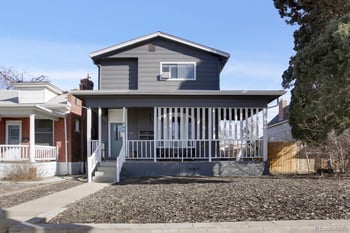
1711 N Lafayette St, Denver, CO 80218
MLS#: REC8837082
.jpg)



An average household move produces close to 1,000 pounds of carbon dioxide, and most of it comes from the truck, not the boxes. For a Colorado move, the choice that cuts emissions the most is not the packing material, it is the neighborhood: a home within a short commute of work saves more carbon every year than any single moving-day decision. Front Range households that weigh commute distance alongside price and square footage consistently end up with the lowest long-term footprint of any newcomer group, because the daily habit outlasts every one-time moving choice.
A typical household move generates around 1,000 pounds of CO2, according to Environmental Protection Agency figures on vehicle emissions applied to moving-truck fuel use. That number climbs with distance and truck size, and it shrinks fastest when a move covers fewer miles. A move that crosses state lines into Colorado from the coasts produces several times the footprint of a move within the Denver metro, simply from the added highway miles a loaded truck has to cover. Consolidating an out-of-state move into a single trip rather than several smaller runs cuts the total fuel burn the most, since repeated partial loads waste capacity on every leg of the drive.
Transportation, not packaging. A local move in the Denver metro still covers roughly 40 miles once loading, unloading and staging trips are counted, and a full-size moving truck gets 6 to 8 miles per gallon, well below a passenger vehicle. Cardboard makes up about 15 percent of a move's total waste footprint; fuel burned by the truck accounts for far more of the carbon total. Route planning that avoids duplicate trips between a storage unit, a departure home and an arrival home cuts that fuel total more than any packaging choice can.
A shorter daily commute outweighs the one-time emissions from moving day within a matter of months. A household that cuts a 30-minute Front Range commute down to 10 minutes saves more fuel in a single year than an entire cross-town move produces in carbon. Front Range households that swap a car commute for a bike or transit route where one exists cut their annual transportation footprint further than any packing or routing decision made on moving day. Compare commute distance alongside price when you pick between Denver proper and outer Front Range suburbs on the explore Colorado communities page.
Reusable plastic moving bins, borrowed or resold cardboard boxes, and towels or linens used as padding instead of bubble wrap all cut landfill waste. A typical 4-bedroom move generates around 150 pounds of packing material, and most of the plastic-based portion cannot go through standard Front Range curbside recycling programs. Renting a set of reusable plastic bins for the move eliminates most of that cardboard and tape entirely, and several Front Range companies now offer bin rental as a line item alongside a standard moving quote.
Some Colorado movers offer reusable bin rentals, biodiesel or hybrid trucks, and consolidated routing that combines multiple households' loads to cut total trips, which lowers cost as well as emissions since you share the truck's capacity instead of paying for an underfilled one. Ask directly when you request a quote, since these options are not always advertised on a company's main pricing page. A short follow-up email after your call, asking the mover to confirm equipment and routing details in writing, gives you something to point back to if the crew that shows up does not match what was described. A mover licensed in your departure or destination city can confirm what equipment and routing options they run before you book.
Yes, by a wide margin. One year of a 20-mile round-trip daily commute burns through more gasoline, according to Department of Energy fuel consumption data, than an entire household move. Weigh commute distance as heavily as square footage when comparing Denver metro neighborhoods.
| Emissions source | Approximate impact |
|---|---|
| Average household move (one time) | ~1,000 lbs CO2 |
| Cardboard and packaging waste | ~15% of move's waste footprint |
| Moving truck fuel economy | 6 - 8 mpg |
| 20-mile daily commute (one year) | Exceeds a full move's emissions |
Break down and recycle plain cardboard through standard curbside programs in most Front Range cities, and check with your city's solid waste department before putting foam padding or bubble wrap in the bin, since most curbside programs reject them. Flatten boxes completely before setting them out, since an oversized or unflattened box is one of the most common reasons a Front Range hauler skips a recycling bin on collection day. Local buy-nothing groups and moving-supply exchanges are a faster way to pass boxes to the next household than recycling them, and several Front Range moving companies now run their own box-return programs that take clean, reusable boxes back after your move instead of sending them to a landfill.
Yes. A loaded truck burns more fuel climbing Front Range grades and mountain passes than on flat highway miles, which is one more reason a move within a single Denver metro area produces a smaller footprint than one that crosses the Continental Divide.
A move into the mountains covers more elevation change and more total miles from a Denver-area origin, which increases both fuel burn and the number of trips a truck needs for a property with a long or steep driveway. Route directly and consolidate trips when a mountain move is unavoidable, and schedule around daytime hours rather than an evening departure, since a loaded truck climbing a grade after dark in winter both burns more fuel idling through traffic delays and faces a higher risk from sudden weather on a mountain pass.
Move during off-peak traffic hours to cut idling time on I-25 and I-70, combine errands like a storage-unit stop into the same route as the main move, and choose a mover that offers to consolidate loads with other households heading the same direction. Map the route the same week as your move rather than the morning of, since a construction closure on a Front Range highway can add real miles and idling time to a route you assumed was direct.
The Kenna Real Estate Group can pull commute-time comparisons across Front Range neighborhoods so a move lowers your footprint for years, not just on moving day. Call or text 303-955-4220. A live person answers. Not a robot, not a phone tree. Then search every home for sale in Colorado while you plan.
Questions about any home in Colorado? Call or text 303-955-4220. A live person answers.
Around 1,000 pounds, most of it from moving-truck fuel rather than packaging, based on EPA passenger-vehicle emissions data applied to truck fuel use.
Transportation. Cardboard and packing material make up about 15 percent of a move's waste footprint; truck fuel accounts for far more of the carbon total.
Yes. A shorter daily commute saves more fuel in a single year than an entire household move produces in emissions.
Most standard curbside recycling programs reject foam and bubble wrap; check with your city's solid waste department and switch to reusable bins instead.
Some offer reusable bin rentals and consolidated routing that combines multiple households into one truck to cut total trips; ask when requesting a quote.
Yes, climbing Front Range grades and mountain passes burns more fuel than flat highway driving, adding to a mountain move's footprint.