.jpg)


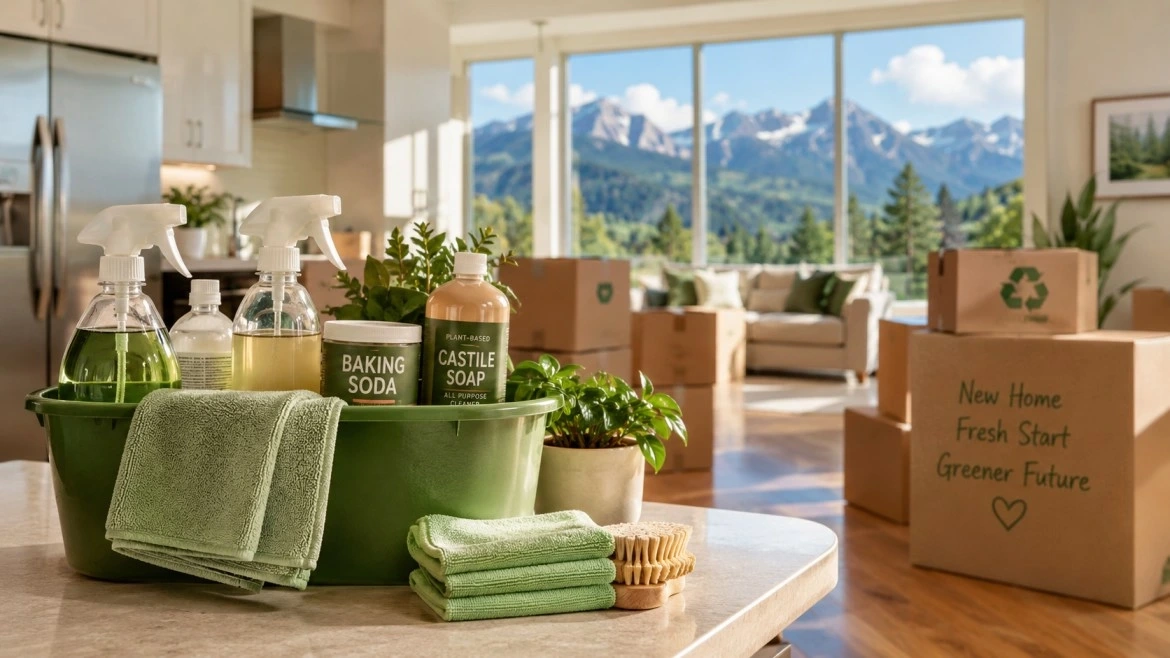
Moving is the one time every corner of a Colorado home is exposed at once, which makes it the easiest time to clean green: reusable cloths, biodegradable products, and a plan that works with, not against, the Front Range's hard water and dry air instead of relying on harsh chemicals to fight both.
Why moving is the best time to green clean
Furniture and boxes normally hide the dust behind appliances, inside closets, and along baseboards. During a move, all of it is reachable at once. Using refillable spray bottles, washable microfiber cloths and biodegradable products through the process also cuts down on the packaging waste a move already generates.
Build a simple green cleaning kit
One portable kit covers nearly every task instead of carrying several specialized cleaners room to room:
- Microfiber cloths for dusting and glass.
- Baking soda for grease, odors and gentle scrubbing.
- White vinegar for glass, mineral buildup and soap scum.
- Castile soap for a general-purpose wash.
- Refillable spray bottles and a HEPA vacuum to cut waste and catch fine dust.
An organic all purpose cleaner can replace several single-use products for kitchens, bathrooms, cabinets and sealed countertops, and reusable, biodegradable products reduce the amount of waste a move already produces. You are free to use any brand that meets the same standard.
Denver's hard water changes what actually works
Water across most of the Denver metro runs moderately to very hard, which leaves mineral scale on faucets, showerheads and glass shower doors faster than it would in a soft-water market. White vinegar cuts that buildup more reliably than most all-purpose sprays: a vinegar-soaked cloth wrapped around a showerhead or faucet for 15 to 30 minutes dissolves scale without scrubbing. Glass shower doors respond the same way, and a squeegee used after every shower slows the buildup from returning between now and the next resident's move-in.
Colorado's dry air means more dust, not less
Humidity along the Front Range regularly sits below 30 percent, which keeps dust airborne longer and lets it resettle on surfaces already cleaned. Work top to bottom and back of the home toward the exit: ceiling fans and light fixtures first, then walls, shelves and cabinets, then window tracks, then floors last. Cleaning in this order avoids re-dusting a surface that was already finished, which matters more here than in a humid climate where dust tends to settle and stay.
The spots most people forget
Move-out inspections in the Denver metro focus on detail as much as obvious surfaces. Before leaving a property, check door handles and light switches, window tracks, baseboards, behind the refrigerator, range hood filters, exhaust fans, cabinet tops, dishwasher seals and sliding door tracks. These collect dust and grease over months and are easy to miss while focused on packing.
Move-out cleaning priorities for a Colorado rental
Colorado's Warranty of Habitability rules set a baseline for what a rental must provide, but the deposit-return condition standard is set by the lease. Focus on the areas landlords and property managers check most closely:
- Kitchen: degrease the backsplash, empty and wipe cabinets, clean inside the oven, and remove food residue from the refrigerator.
- Bathroom: clear soap scum and hard-water spots, polish faucets, disinfect the toilet, and clean shower doors and walls.
- Living areas: vacuum carpets thoroughly, dust baseboards, clean windows, and address any marks on walls.
Leaving trash behind, or skipping an outdoor space such as a balcony, patio or garage, is one of the most common reasons a move-out inspection flags something a tenant thought was finished.
Move-in cleaning priorities for a Colorado home
Cleaning before furniture arrives is faster than working around boxes later. Wipe cabinets and drawers, vacuum closets, clean bathroom fixtures, wash countertops, replace the furnace filter, and mop every hard floor. Opening windows for a few minutes, even in a Colorado winter, moves stale air out before belongings move in.
Eco-friendly fixes by problem
| Cleaning problem | Eco-friendly solution |
|---|---|
| Greasy stovetop | Baking soda paste |
| Hard-water spots and soap scum | White vinegar |
| Dust | Damp microfiber cloth |
| Glass and mirrors | Vinegar and a microfiber cloth |
| Stainless steel | Warm water and a microfiber cloth |
| Odors | Baking soda left overnight |
Test any solution on a small, hidden area first, especially on natural stone or a specialty finish common in Denver metro kitchens and baths.
Reduce waste while you clean and pack
A Colorado move generates more trash than most households expect between packing materials and everything a final clean-out turns up. A few habits cut that down: donate unopened cleaning supplies rather than tossing them, recycle cardboard through the curbside program most Front Range cities and haulers offer, reuse packing paper for the next move, and refill spray bottles instead of buying new ones each time. Concentrated cleaning products also cut down on the plastic bottles going into a moving-week trash pile. Usable household items that do not make the cut for the new place can go to Goodwill, ARC Thrift or Habitat for Humanity ReStore, all of which run donation drop-off and some pickup across the Denver metro.
What professional green cleaning costs in the Denver metro
A full move-out or move-in deep clean for a three-bedroom Front Range home runs $250 to $450 with an eco-friendly product line, slightly more than a standard chemical-based service. For a household short on time before a closing date or a lease-end walkthrough, that cost is worth it against a failed inspection or a delayed handoff.
Disposing of cleaning chemicals responsibly
Leftover conventional cleaners, aerosols and anything labeled corrosive or flammable do not go in the regular trash. Denver, Arapahoe, Jefferson and Boulder Counties all run household hazardous waste drop-off programs that accept these along with old paint, which also has its own statewide PaintCare network for drop-off.
Outdoor spaces get missed at altitude
Front Range sun is intense enough at 5,280 feet that patios, decks and window sills accumulate more UV bleaching, dust and hard-water spotting from sprinkler overspray than an equivalent home at sea level. Before a final walkthrough, hose down and squeegee any patio doors, wipe down deck rails, and sweep the entry, since these outdoor-facing surfaces are visible in listing photos and at a move-out inspection but easy to skip while focused on interior rooms.
A final walkthrough checklist
Before locking the door for the last time: cabinets empty, lights working, windows closed and clean, floors vacuumed or mopped, trash cans empty, appliances clean, bathrooms dry, and outdoor areas swept. A final pass like this takes under 15 minutes and prevents a surprise call after the keys change hands.
Where to go next
- Preparing and adding value before selling: what to fix and clean before listing photos.
- Why a clean home sells faster: the staging side of a thorough clean.
- Colorado Front Range relocation checklist: every move-in task in one list.
- Denver HOA rules and fees guide: move-out condition standards for condo and HOA buildings.
- Search every home for sale in Colorado: find the home you are about to clean and move into.
Talk to the Kenna Real Estate Group
The Kenna Real Estate Group can point sellers and movers to vetted eco-friendly cleaning services across the Front Range, timed to a real closing or lease-end date. Call or text 303-955-4220. A live person answers. Not a robot, not a phone tree. Ready for your next home? Search every home for sale in Colorado.
Homes for sale that match this post
- Homes with Gourmet Kitchen in Denver
- Homes with 2 Car Garage in Denver
- Staging: guide
- Condo: guide
- HOA Rules and Fees Guide in Denver
- All homes for sale in Denver
Guides
Questions about any home in Colorado? Call or text 303-955-4220. A live person answers.