New - Just Now

.jpg)


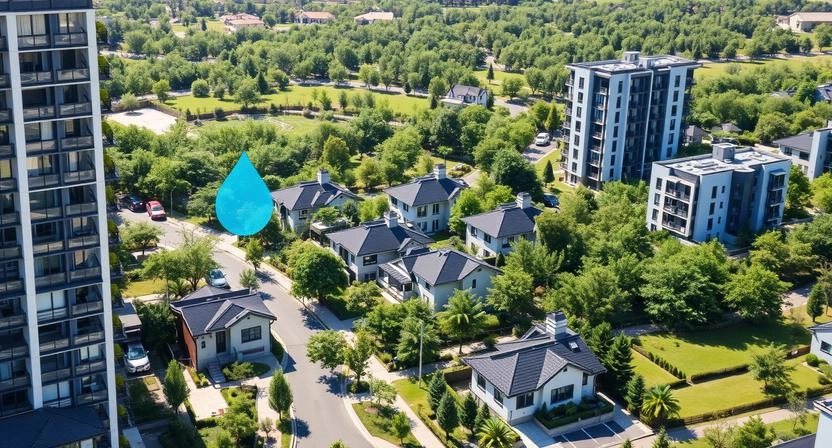
Colorado's semi-arid climate and snowpack-dependent water supply have pushed Front Range utilities, HOAs, and builders toward water efficiency far faster than in most parts of the country. Submetering, WaterSense-labeled fixtures, and xeriscaping have moved from niche upgrades to routine features in Denver metro communities, and each one affects a buyer's monthly costs and an HOA's budget differently.
Colorado's water supply depends heavily on mountain snowpack that melts into the rivers and reservoirs serving Denver, Aurora, and Colorado Springs, and population growth along the Front Range has outpaced the region's natural water supply for years. Utilities respond with tiered pricing that charges more per gallon as usage climbs, which makes efficient fixtures and landscaping a direct line item on a household budget rather than an abstract environmental goal.
Submetering installs an individual water meter for each unit in a multifamily or HOA-managed community instead of splitting one master bill evenly across every resident. Communities are turning to water submetering systems because research on submetered communities has found residents use meaningfully less water once their own usage, not a shared average, determines their bill, because the direct link between behavior and cost changes how people use water day to day.
Denver Water and several other Front Range utilities have adopted landscaping standards for new development that limit high-water turf area and encourage drought-tolerant plantings. Builders working within Denver Water's service area design new communities around these standards from the start rather than retrofitting them later, which is part of why newer Front Range subdivisions look different from turf-heavy developments built a generation ago.
EPA's WaterSense program labels toilets, faucets, and showerheads certified to use less water than a federal baseline standard while still performing well. A WaterSense-labeled toilet uses 1.28 gallons per flush or less, compared with the 1.6-gallon federal baseline, and a WaterSense showerhead uses 2.0 gallons per minute or less, compared with a 2.5-gallon baseline. These labels apply nationwide, including every fixture sold in Colorado.
| Fixture | Standard flow | WaterSense-labeled flow |
|---|---|---|
| Toilet | 1.6 gallons per flush | 1.28 gallons per flush or less |
| Showerhead | 2.5 gallons per minute | 2.0 gallons per minute or less |
| Bathroom faucet | 2.2 gallons per minute | 1.5 gallons per minute or less |
In many master-planned South Metro and Front Range communities, yes. A metropolitan district's mill levy or an HOA's monthly dues can include the cost of shared irrigation systems, submetering infrastructure, and community landscaping upkeep. Review the Denver special district and metro district tax guide before you buy into a community with heavy shared landscaping.
Yes, measurably. Swapping older fixtures for WaterSense-labeled toilets, showerheads, and faucets, along with converting a portion of turf to drought-tolerant landscaping, directly reduces the gallons billed each month, and it matters most in tiered-rate service areas where the highest usage tier costs the most per gallon.
Several Front Range utilities and regional water conservation programs offer rebates for homeowners who replace turf with drought-tolerant landscaping, and program details and rebate amounts change from year to year. Check directly with your city or water provider, such as Denver Water, Aurora Water, or Colorado Springs Utilities, for the current program before you start a landscaping project.
A well-designed xeriscape reads as a lower-maintenance, lower-cost feature to Front Range buyers rather than a downgrade, particularly as water rates continue climbing. Ask about a Smart Pricing Report to see how landscaping choices are showing up in current comparable sales in your neighborhood.
Confirm whether the home is served by a municipal utility like Denver Water or Colorado Springs Utilities, or by a smaller water district or well, since those sources carry different rate structures and supply reliability. A community's water tap fees and any pending infrastructure assessments also belong in a buyer's due diligence before closing.
Most Front Range drinking water originates as mountain snowpack that melts into reservoirs and rivers feeding Denver metro and Colorado Springs utilities. A below-average snowpack year can trigger tighter watering restrictions the following summer, which is one more reason efficient fixtures and low-water landscaping have shifted from optional to standard across new Front Range communities.
Swapping an older toilet for a WaterSense-labeled model and updating showerheads and faucets are inexpensive, quick pre-listing upgrades that read well in listing photos and appeal to buyers already thinking about utility costs. Ask for the printable pre-listing checklist in the form below and the Kenna Real Estate Group emails it the same day.
Many Front Range cities and water providers set seasonal watering schedules, commonly limiting outdoor irrigation to specific days of the week during the peak summer months, and those schedules can tighten further in a low-snowpack year. A landscape designed around drought-tolerant plants needs far less adjustment when restrictions change than a lawn that depends on daily watering to survive.
Check the water meter before and after a two-hour period when no water is being used inside or outside the home; any movement on the meter during that window points to a leak somewhere in the system. Smart leak-detection devices that monitor flow continuously catch a slab or irrigation leak faster than waiting for a surprise water bill to reveal it.
Yes. Some condo and multifamily buildings still bill water through a shared master meter split across units by square footage rather than actual use, which can mean paying for a neighbor's high usage. Ask the HOA directly whether the building uses submetering or a shared allocation method before you make an offer on a Colorado condo.
Drip irrigation delivers water directly to plant roots instead of spraying it into the air where wind and evaporation waste a share of it before it reaches the ground, which matters on windy Front Range lots. Converting garden beds and foundation plantings from sprinkler heads to drip lines is one of the highest-value, lowest-cost water upgrades a homeowner can make in a single weekend.
If you are buying into a community with shared irrigation and landscaping costs, or selling a home and wondering which water-efficient upgrades are worth making first, the Kenna Real Estate Group can walk you through it. Call or text 303-955-4220. A live person answers. Not a robot, not a phone tree. Or search every home for sale in Colorado to see what is on the market right now.
Questions about any home in Colorado? Call or text 303-955-4220. A live person answers.
It certifies the fixture meets EPA-tested water-efficiency thresholds, such as 1.28 gallons per flush for a toilet, while still performing to a minimum standard for flow and function.
Studies of submetered communities show residents use less water once billed individually rather than through a shared master meter, because usage and cost become directly connected.
Requirements vary by city and community. Denver Water and other utilities have pushed new development toward lower-water landscaping standards, but the specific rules depend on the builder and HOA.
A well-designed xeriscape with layered plantings and hardscaping reads as an upgrade to Front Range buyers, not a downgrade, particularly as water costs rise.
Primarily mountain snowpack that melts into reservoirs and rivers feeding Denver metro and Colorado Springs utilities, which is why a light snow year can trigger watering restrictions the following summer.
Most in-ground irrigation conversions on an existing residential lot do not require a city permit, but check with your municipality and HOA before digging, since rules vary by city and community.


