New - Just Now

.jpg)


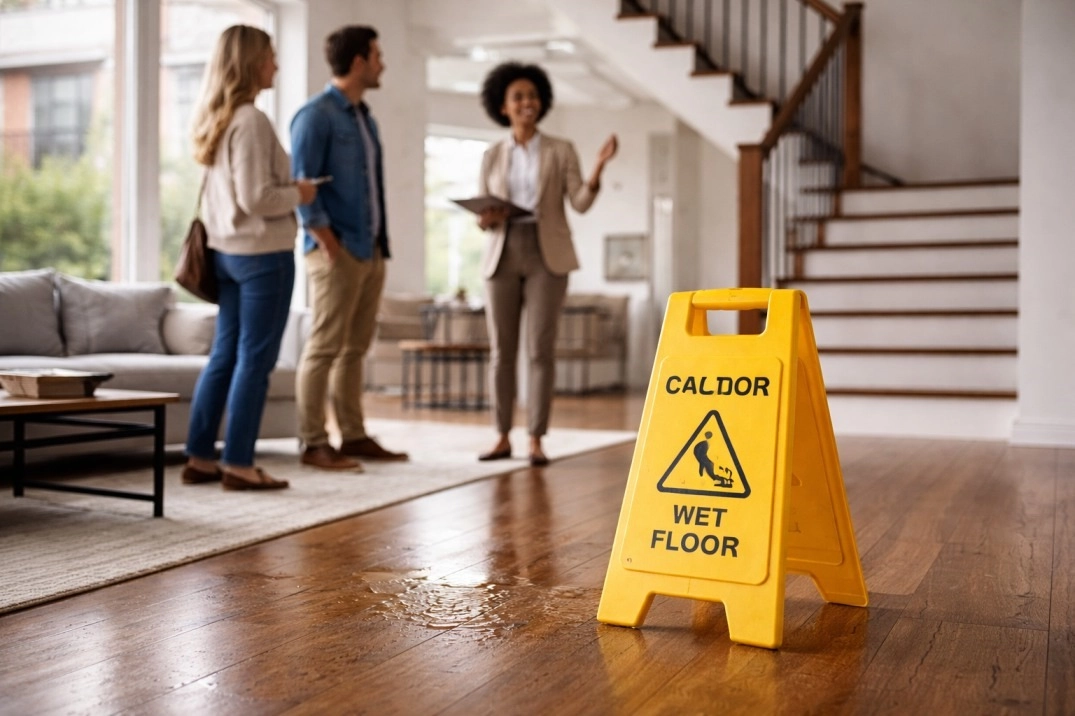
If you're injured during a home showing or open house in Colorado, get medical attention first, then document the hazard and report it to the listing agent right away. Liability falls in most cases on whoever failed to maintain or warn about the condition that caused the injury — the homeowner, the seller, or occasionally a property manager — and Colorado has its own statute that spells out how much care a property owner owes a visitor.
Buyers, agents and open house visitors walk through unfamiliar homes constantly, and Front Range showings bring their own set of hazards: icy front steps in winter, uneven flagstone walkways, unlit basements, and staircases without a secure handrail. When someone gets hurt, the next steps — medical care, documentation, and figuring out who is responsible — determine how smoothly any insurance claim or dispute resolves.
Responsibility depends on who controlled the property and what they knew about the hazard before the injury happened. In most cases, liability falls on one of these:
A listing agent is rarely held responsible directly unless their own negligence, such as failing to disclose a known hazard they were told about, contributed to the injury. A buyer hurt in a home they went on to purchase has a related but separate set of questions to work through, covered in what rights homebuyers have after getting injured in their new home.
Colorado's premises liability statute (C.R.S. 13-21-115) sets a different duty of care depending on why the injured person was on the property. An invitee — which covers most home shoppers at a showing or open house — is owed the highest duty: the property owner has to use reasonable care to protect against dangers they knew about or should have discovered through a reasonable inspection. A licensee, such as a social guest, is owed a lesser duty, and a trespasser the least.
Prompt documentation matters because a hazard like a loose step or a wet floor commonly gets fixed within days of an incident, which makes it harder to verify later.
Looking for a Colorado Realtor Referral? Let us help you. Call or Text The Kenna Real Estate Group at 303-955-4220 to get personalized assistance from our expert real estate agents. Find out what your home is worth in today's market.
Most Colorado homeowners policies include personal liability coverage that can pay medical bills, lost wages and other damages tied to an injury on the property, including one that happens during a showing. Insurers still contest claims where they can, arguing the injured visitor wasn't paying attention, the hazard was obvious, or the homeowner had no way to know about the condition beforehand. Disputes over these claims sometimes need outside help to resolve; a personal injury attorney familiar with premises cases can weigh in on whether a settlement offer is fair.
Ice on front steps, an unshoveled walkway, and packed snow hiding an uneven surface are some of the most common hazards during a Colorado listing period between October and March. Denver's municipal code requires property owners to clear sidewalks within a set window after snow stops, and a seller who ignores that during an active listing period is exposed if a buyer or agent slips.
Sellers actively marketing a home should treat snow and ice removal as part of showing prep, not an afterthought. Clear walkways and steps before each scheduled showing, salt or sand icy spots, and keep exterior lighting working so agents and buyers can see hazards after dark during winter's shorter daylight hours.
Yes, if the injury happened in a shared space — a condo hallway, a community walkway, a shared parking area — the HOA or its management company, not the individual seller, holds responsibility for maintaining that area in most cases. Check who maintains the specific space where the injury occurred before assuming the unit owner is automatically liable.
Vacant homes and properties mid-renovation carry hazards a lived-in home mostly doesn't: exposed wiring, unfinished flooring, temporary staircases, construction debris, and missing handrails. Determining responsibility in these situations can involve the seller, a contractor, or an investor owner, and the answer is less clear-cut when several parties touched the property recently.
A buyer touring a home solo through a lockbox code has less direct supervision than one on an agent-led showing, but the property owner's duty to maintain sound, reasonably kept conditions doesn't change based on who's present. Sellers using lockbox access should still keep walkways clear and lighting working, since an unaccompanied visitor has no one on site to warn them about a hazard.
Serious or long-term injuries, a denied or disputed insurance claim, significant medical bills, or lost income from missed work are the situations that call for legal advice beyond what the insurance company offers on its own, in most cases. A property damage or personal injury attorney can assess the strength of a claim and handle negotiations directly.
An unresolved injury claim tied to a specific hazard can complicate closing if it raises questions about the property's condition or about pending litigation against the seller. Buyers' lenders and title companies sometimes ask about known claims, so resolving or clearly documenting the situation before closing keeps the transaction on schedule. Sellers working through this mid-contract can reach out through Kenna's contact page for guidance on next steps.
Yes. Colorado's seller's property disclosure covers known defects and conditions that affect the property, and a hazard that already caused one injury, or one the seller knows about and hasn't fixed, needs to be addressed there. Skipping this exposes a seller to more risk than fixing the issue or disclosing it up front.
Rarely, unless the agent's own conduct contributed — for example, if a seller told the agent about a hazard and the agent failed to warn visitors or arrange a repair before showings continued. Agents mostly carry errors and omissions coverage that responds to claims tied to their own professional conduct, separate from the homeowner's liability coverage.
Premises liability law and insurance requirements vary by state, so an injury during a showing in another state follows that state's own rules, not Colorado's. If you're relocating and get hurt on a trip to look at property in Charleston, for example, a local specialist such as a Charleston Personal Injury Lawyer can advise on South Carolina's premises liability rules, which differ from Colorado's statute in what they cover and how claims get filed. Coping with the stress that follows any injury and the dispute process is its own challenge, and resources like anger management for women exist for people who want extra support processing the frustration, though most people just need clear next steps and time.
The Kenna Real Estate Group helps Colorado sellers prep a home for better showings and walks buyers through what to do if something goes wrong during a tour. Call or text 303-955-4220. A live person answers. Not a robot, not a phone tree. Ready to schedule your own showing? Search every home for sale in Colorado.
Questions about any home in Colorado? Call or text 303-955-4220. A live person answers.
Liability falls in most cases on whoever controlled the property and knew, or should have known, about the hazard that caused the injury: the homeowner, seller, or landlord.
C.R.S. 13-21-115 sets a different duty of care based on why the injured person was on the property. Most home shoppers count as invitees, owed the highest duty of reasonable care.
Most Colorado homeowners policies include personal liability coverage that applies to injuries on the property, including during a showing, though insurers can still dispute a claim.
Ice on steps, unshoveled walkways and snow-covered uneven surfaces are common hazards between October and March. Sellers should clear and light walkways before every showing.
Yes. Colorado's seller's property disclosure covers known defects and conditions, and a hazard tied to a prior injury needs to be addressed there.
Yes, if the injury happened in a shared space such as a condo hallway or community walkway that the HOA or its management company maintains.
Serious or long-term injuries, a denied or disputed insurance claim, or significant medical bills and lost income are the usual triggers for getting legal advice.
Rarely, unless the agent knew about a hazard and failed to warn visitors or arrange a repair. Agents mostly carry separate errors and omissions coverage for their own conduct.