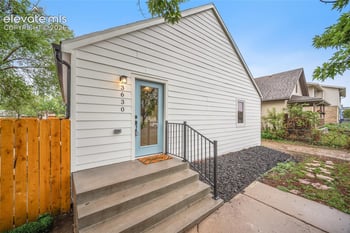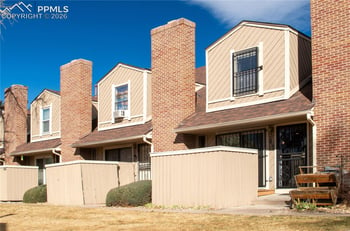
$345,000
Pending
3
Beds
2
Baths
1538
Sqft
0.0202
Acres
3300 W Florida Ave #48, Denver, CO 80219
MLS#: 9397860
.jpg)


A house in Colorado does not transfer to a spouse or descendants the moment the owner dies. Without a will, a trust, or a deed set up to pass the property directly, the house becomes part of a probate estate, and a Colorado court decides who receives it and when. Until that happens, no one has legal authority to sell, refinance, or transfer the title.
Dying without a will is called dying "intestate." Colorado's intestacy statute, not the household, decides who inherits the house. The rules split the property between a surviving spouse and descendants in shares that depend on whether the descendants are also the spouse's descendants, whether the decedent had descendants from another relationship, and whether any parents are still living. A caseworker in Denver County Court does not know what the heirs would have wanted; the court applies the statute exactly as written, which is why a home can end up split among heirs in proportions no one would have chosen on their own.
Not automatically, and not always in full. If every descendant of the decedent is also a descendant of the surviving spouse, and the spouse has no other descendants, the spouse inherits the entire house. If the decedent has a descendant from a prior relationship, or the surviving spouse has descendants the decedent did not adopt, the house is split between the spouse and the descendants under the statute. This surprises second-marriage households across the Front Range more than any other rule in Colorado probate.
Probate is the court process that appoints someone with legal authority over the estate, pays remaining debts, and transfers the house to the right heirs. A Colorado probate case for a single-family home with no dispute among heirs takes roughly six to twelve months from filing to closing. A contested estate, a missing heir, or a house with title problems stretches that timeline past a year. Nothing about owning a house in Colorado speeds this up; the calendar runs on the court's schedule, not the family's.
Denver is the only county in Colorado with a standalone Probate Court. Every other county on the Front Range, including Arapahoe, Jefferson, Douglas, Adams, Boulder, and El Paso, handles probate inside its District Court. The filing fee, forms, and process are the same statewide; only the courthouse and the judge's calendar change based on where the homeowner lived.
Colorado offers two tracks. Informal probate is a registrar-level process for an estate with a clear will and no disputes; it moves faster and needs fewer hearings. Formal probate goes in front of a judge and applies when the will is contested, an heir cannot be located, or there is no will at all and the family disagrees on who should serve as personal representative. Most single-family homes with a cooperative family go through informal probate.
Only after the court appoints a personal representative and issues letters testamentary or letters of administration. Those letters give one person the legal authority to sign a listing agreement and a purchase contract on the estate's behalf. Until that document exists, a title company will not close on the house, no matter how ready the family is to sell.
All three keep coming due. The mortgage servicer still expects a payment on the first of the month, the county treasurer still bills property taxes on the same schedule as every other Front Range homeowner, and an HOA still assesses its monthly or quarterly dues. Heirs who let payments lapse while probate is open put the house at risk of a tax lien or a foreclosure filing on top of an already slow court process. Many Front Range heirs list the house for sale as soon as the personal representative is appointed specifically to stop this bleeding.
No. Colorado repealed its state estate tax decades ago and has no inheritance tax. A federal estate tax applies only to estates worth several million dollars, which puts the overwhelming majority of Front Range homes well outside it. The cost of skipping an estate plan in Colorado is the probate process itself, not a state tax bill.
Colorado allows heirs to collect a deceased person's personal property, such as a bank account or a car, using a sworn affidavit instead of a full probate case, as long as the estate stays under a dollar threshold set by statute. A house titled solely in the decedent's name is real property, not personal property, and a small estate affidavit does not transfer title to it. A home almost always needs probate, a beneficiary deed, joint tenancy, or a trust to change hands.
A beneficiary deed, sometimes called a transfer-on-death deed, is a document a Colorado homeowner records now that names who inherits the house later, without giving that person any ownership rights while the owner is alive. When the owner dies, the named beneficiary records a death certificate and takes title directly, with no probate case at all. It costs far less than a trust and is one of the most common tools Front Range estate planning attorneys use for a single home.
When two or more owners hold a Colorado house as joint tenants with right of survivorship, the surviving owner automatically owns the whole property the moment a co-owner dies. No probate case opens for that share of the house. Married couples on the Front Range commonly hold title this way already; the risk is that it only solves the problem for the first spouse to die, not the second.
A homeowner who signs a trust and then records a new deed moving the house into the trust's name takes the property out of the probate estate entirely. The trust document, not a judge, controls who receives the house and when. This costs more up front than a will or a beneficiary deed, and it only works if the deed transfer is actually completed; a trust that never received the deed does nothing for the house.
| Tool | Avoids probate on the house | Typical setup cost | Best fit |
|---|---|---|---|
| Will only | No, still requires probate | Lowest | Naming an executor and guardians, not avoiding court |
| Beneficiary deed | Yes | Low | A single homeowner naming one or two heirs |
| Joint tenancy | Yes, for the first owner to die | Low | Married couples or co-owners |
| Revocable living trust | Yes | Higher | Multiple properties, blended households, or minor heirs |
The house still goes through probate. A will speeds the process up because it names a personal representative and states who inherits the property, which removes the guesswork the intestacy statute otherwise creates. It does not remove the court case itself; only a beneficiary deed, joint tenancy, or a funded trust does that.
If a Colorado court cannot locate a single legal heir after a genuine search, the house escheats to the state. This is rare. Most estates have at least a distant relative once an heir search firm gets involved, which is one more reason probate on an unplanned estate runs long: the court has to be sure no one closer in line exists before the case closes.
Once letters testamentary or letters of administration are issued, the personal representative signs the listing agreement and the sale contract, and the closing happens before the rest of the estate is fully wound down. The proceeds go into the estate to be distributed under the will or the intestacy statute once the court approves the final accounting. This is the path most Front Range heirs use, because carrying an empty house through a full year of probate costs real money in taxes, insurance, utilities, and upkeep.
An attorney who handles Estate Planning drafts the will, the beneficiary deed or trust, the financial and medical powers of attorney, and reviews how the house is titled against the rest of the plan. If a family is already facing a court case because a homeowner died without any of this in place, the same firm's Probate team files the case, gets letters issued, and clears the way for the house to be sold or transferred.
Heirs selling a house they did not buy themselves need three things fast: a realistic price, a short list of repairs worth making before showings, and an agent who understands the probate paperwork a title company will require at closing. The Kenna Real Estate Group's Smart Pricing Report gives heirs comparable Front Range sales so the house is not priced by guesswork, and the step-by-step selling guide lays out what a probate sale needs beyond a standard listing. Heirs who want to keep an aging parent in the home longer first should also look at downsizing options in the Denver metro before a health event forces the decision.
The Kenna Real Estate Group helps Front Range heirs sell an inherited home once probate authority is in place, from pricing it correctly with recent comparable sales to coordinating a closing a title company will accept. Call or text 303-955-4220. A live person answers. Not a robot, not a phone tree. Start by looking at every home for sale in Colorado to see what similar Front Range properties are selling for right now.
Questions about any home in Colorado? Call or text 303-955-4220. A live person answers.
It becomes part of a probate estate. A Colorado court appoints someone with legal authority over the property and applies the state's intestacy statute to decide which family members inherit it and in what shares.
Only if every descendant of the decedent is also a descendant of the spouse and the spouse has no other descendants. Otherwise the house is split between the spouse and the descendants under Colorado's intestacy statute.
About six to twelve months for a single-family home with no dispute among heirs. A contested estate or a missing heir pushes the case well past a year.
No. Colorado has no state estate tax or inheritance tax. Only a federal estate tax applies, and only to estates worth several million dollars.
A deed a homeowner records now that names who inherits the house later, without probate. The owner keeps full control of the property while alive, and the named beneficiary takes title by recording a death certificate.
Yes, once the court issues letters testamentary or letters of administration naming a personal representative. That person signs the listing agreement and the sale contract on the estate's behalf.
Denver County has its own standalone Probate Court. Every other Front Range county, including Arapahoe, Jefferson, Douglas, and El Paso, handles probate through its District Court.
They keep coming due on the same schedule as before the owner died. Heirs who stop paying risk a tax lien or foreclosure on top of the probate case.