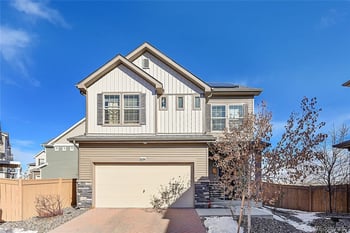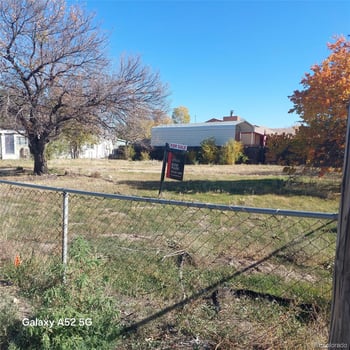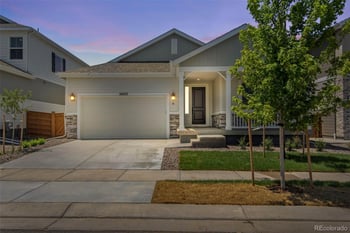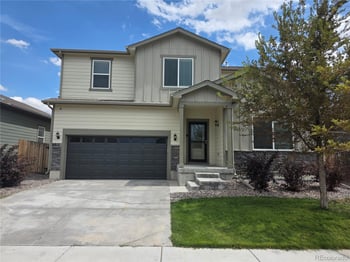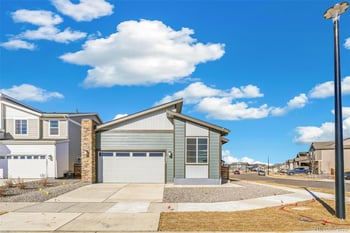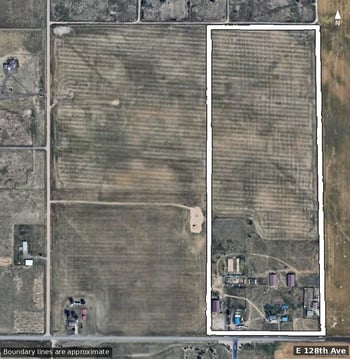
$1,800,000
Active
7
Beds
4
Baths
3304
Sqft
55.68
Acres
23863 - 23889 E 128th Ave, Commerce City, CO 80022
MLS#: REC8775137
.jpg)


A house and land package in Colorado is one of two things: a builder-owned lot with a set floor plan in a metro-district community, or a custom lot you buy first and build on with your own construction loan. The first closes in 6 to 10 months for $450,000 to $900,000 on the Front Range; the second takes 12 to 24 months and runs $250 to $450 per square foot before the land.
This guide covers the Colorado version of the question: which path fits, what a metro district costs, how construction loans are paid out, what wells and septic mean on a rural lot, which county issues the permit, and why you bring your own agent to the model home. Outside the United States the phrase means something different; home and land packages in Australia bundle a lot and a build under two contracts and a stamp duty rule. Colorado has no stamp duty. Colorado has metro districts, bentonite clay and a water court.
Colorado builders do not sell a "package" by that name. They sell a lot and a plan: you pick a homesite in a community the builder controls, pick one of the builder's floor plans, pick a structural option list, then pick finishes at the design center. One purchase agreement covers the lot and the house. You close once, when the home is finished.
The other path is a custom lot. You buy the land in its own closing, hire a builder, and finance the build with a construction loan. Two closings, two contracts, and you carry the land while the house goes up.
| Question | Builder community | Custom lot |
|---|---|---|
| Front Range examples | Sterling Ranch (Douglas County), The Canyons (Castle Pines), Crystal Valley (Castle Rock), Painted Prairie (Aurora), Reunion (Commerce City), Barefoot Lakes (Firestone), RainDance (Windsor) | Elizabeth and Kiowa (Elbert County), Franktown, Sedalia and Larkspur (Douglas County), Hudson and Keenesburg (Weld County), Evergreen and Conifer (Jefferson County) |
| Lot size | 4,000 to 9,000 sq ft | 1 to 35 acres |
| Water and sewer | District tap fees rolled into the price | Well permit and septic system, $35,000 to $70,000 combined |
| Property tax | Metro district mill levy on top of county and city | County levy only in most unincorporated areas |
| Financing | Standard mortgage at closing, builder lender incentives | Lot loan plus construction-to-permanent loan |
| Time to move in | 6 to 10 months from contract | 12 to 24 months from land closing |
| Design freedom | Plan library plus structural options | Anything the county approves |
Pick the builder community when you want a fixed price, a known close date and a walkable community with parks and trails. Pick the custom lot when you want acreage, a shop, horses, or a plan that no production builder offers. The benefits of buying new construction in Colorado page covers the production side; the custom home versus pre-built comparison covers the other.
Nearly every builder community built on the Front Range since 2000 sits inside a metropolitan district, a Title 32 special district under Colorado law. The district sold bonds to pay for the roads, water lines and parks, and it repays those bonds through a mill levy on every home inside its boundary.
The Denver special district and metro district tax guide walks through reading a tax bill, and the post on what a Denver new-build tax district costs you runs the math on a real community.
A construction-to-permanent loan (one-time close) funds the build in draws, then converts to a 30-year mortgage when the county issues the certificate of occupancy. Front Range lenders that write them ask for 20 to 25 percent of the total project cost as equity, and land you already own counts toward it.
Builder communities skip all of this. You put down $5,000 to $25,000 in earnest money plus a design-center deposit, and you close on a standard mortgage at the end. Production builders push their in-house lenders (Lennar Mortgage, DHI Mortgage, HomeAmerican Mortgage) with $10,000 to $30,000 in rate buydowns or closing-cost credits. Compare that offer against an outside lender; you are free to use any provider. Our Colorado mortgage pre-approval guide and the 3-2-1 buydown page explain what those incentives are worth.
Water is the first question on any lot outside a district. Colorado allocates every drop, and the Colorado Division of Water Resources (the State Engineer) issues the well permit.
Permit fees on a $700,000 custom home run $8,000 to $15,000 in county fees plus land-dedication and impact fees that differ by county.
The Front Range sits on bentonite clay that swells when wet and shrinks when dry. That is why Colorado law (C.R.S. 6-6.5-101) requires the seller of a new home to hand the buyer a soils report at least 14 days before closing. A swell potential above 3 percent means a post-tensioned slab, caissons or an over-excavation and re-compaction, all of which the builder prices into the foundation line. On a custom lot, order your own geotechnical report before the land closing goes hard.
| Stage | Builder community | Custom lot |
|---|---|---|
| Contract to permit | Builder already holds permits or pulls them in 2 to 4 weeks | 3 to 6 months for design, engineering and county review |
| Foundation to drywall | 3 to 5 months | 5 to 8 months |
| Finish and certificate of occupancy | 2 to 3 months | 3 to 5 months |
| Total | 6 to 10 months | 12 to 24 months |
Winter slows concrete and framing from December through February. A builder contract signed in September closes the following spring.
Production builders use their own contract, not the Colorado Real Estate Commission form. Read these clauses:
The sales rep in the model home works for the builder. In Colorado that person is the seller's agent, and every document you sign was written for the seller. A buyer's agent for a new build costs you nothing at most Front Range builders (the builder pays the co-op), and the builder requires you to register that agent on your first visit. Walk in alone and the builder records you as unrepresented.
The agent negotiates the incentive package, reads the metro district disclosure, checks the lot premium against resale data, and orders independent inspections at pre-drywall and at final. Read do you need a buyer's agent for new construction in Colorado and the best agent for new construction buyers post for the full list.
The Kenna Real Estate Group at Keller Williams DTC represents buyers at every Front Range builder and on custom lots from Elbert County to Weld County: we read the metro district disclosure, price the lot premium against resale, check the well and septic paperwork, and order the pre-drywall inspection. Call or text 303-955-4220. A live person answers. Not a robot, not a phone tree. Or search every home for sale in Colorado, including lots and new builds.
Questions about any home in Colorado? Call or text 303-955-4220. A live person answers.
A production build in a Front Range metro district prices $20,000 to $60,000 above a comparable 10-year-old resale, and the metro district levy adds $150 to $250 a month. The builder incentive on the mortgage rate closes part of that gap.
Yes on a builder-community home, because you close on a finished house with a standard mortgage. On a custom lot you need a one-time-close construction loan; VA and FHA versions exist through a small number of Colorado lenders.
In most Front Range builder communities, yes. The HOA (or the district acting as one) charges $50 to $150 a month for covenants and common areas, and the metro district mill levy shows up on the county property tax bill.
A domestic well permit that allows outdoor watering needs 35 acres or more, or an augmentation plan. Lots under 35 acres get a household-use-only permit with no outdoor use.
The county or town building inspector checks code at each stage. Hire your own inspector for a pre-drywall and a final inspection, $400 to $700 each, because the code inspector does not check workmanship.
Only if the contract has an escalation clause. Ask for a fixed price and a fixed option list before you release earnest money.
$5,000 to $25,000 at contract plus 25 to 50 percent of design-center upgrades as a deposit. Most of it goes non-refundable within 3 to 10 days.