$345,000
Pending
3
Beds
2
Baths
1538
Sqft
0.0202
Acres
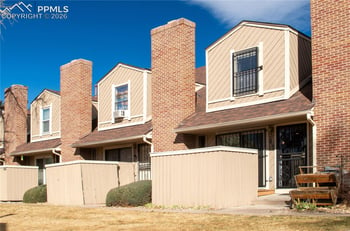
3300 W Florida Ave #48, Denver, CO 80219
MLS#: 9397860
.jpg)


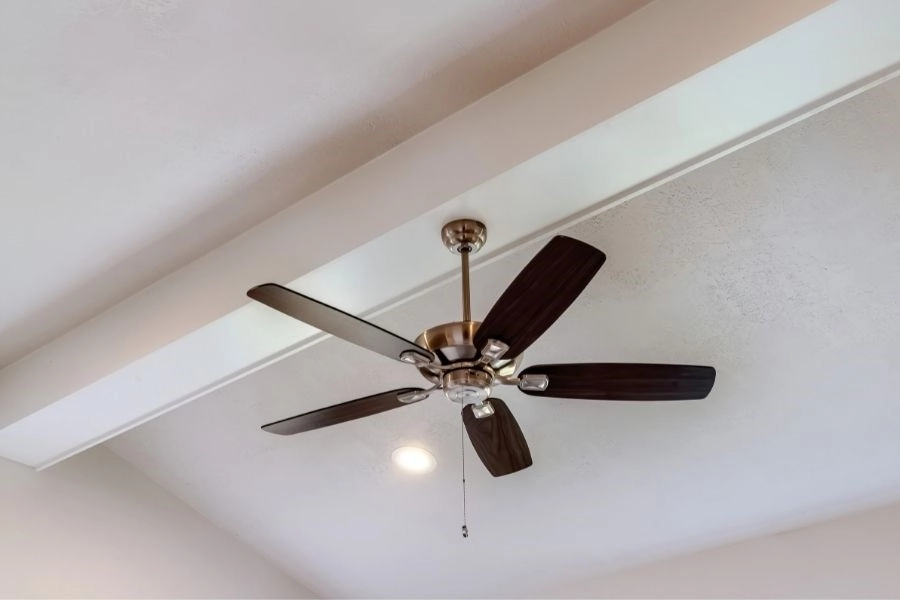
Colorado's dry climate and wide day-to-night temperature swings make a ceiling fan more useful here than in a humid state: moving air feels cooler even at a lower air conditioning setting, and many older Denver metro homes still run without central air at all. Here is what a ceiling fan costs to install on the Front Range, how much it actually saves, and what to check before buying one.
Yes. Low humidity increases evaporative cooling from moving air, so a ceiling fan makes a room feel several degrees cooler without lowering the thermostat, which matters directly in a market where a large share of older Denver, Aurora, and Lakewood homes rely on swamp coolers or window units rather than central air.
Installing a ceiling fan where wiring and a switch already exist runs $150 to $350 for licensed electrician labor on the Front Range; adding new wiring or a box where none exists, common in older homes without a ceiling fixture, runs $300 to $600 more. Fan units themselves range from $60 for a basic model to $400 or more for a high-end fixture with integrated lighting.
Running a fan lets a household raise the thermostat 3 to 4 degrees in summer while feeling just as cool, which cuts cooling costs directly for homes with central air, and a fan uses a fraction of the electricity an air conditioner draws for the same comfort level. In winter, reversing the fan direction to pull warm air down from the ceiling reduces how hard a furnace runs to heat the same room.
Xcel Energy periodically offers rebates on ENERGY STAR-certified ceiling fans and broader home efficiency upgrades through its residential rebate programs; check current offers before buying, since rebate amounts and eligible models change. Combining a fan purchase with a broader HVAC efficiency upgrade sometimes qualifies for a larger rebate bundle. See Kenna Credit Care for financing options tied to home efficiency upgrades.
Clockwise, on the lowest speed, pulls cool air up and pushes the warmer air that naturally collects near the ceiling back down into the room, which helps in Colorado's dry, heated winter air where furnaces run long hours. Most fans have a small switch on the motor housing that reverses the blade direction between seasons.
Yes, and they matter more in that situation: a fan combined with a swamp cooler or window unit, common in older Front Range homes, extends comfortable hours during hot afternoons without the cost of adding central air. A whole-house fan is a different product from a ceiling fan and moves attic and whole-home air rather than circulating a single room.
Altitude itself does not affect a fan motor's performance, but dry air at 5,280 feet and above dries out wood blade materials over time, so a solid wood blade in a Front Range home benefits from an occasional check for warping compared to composite or MDF blades. Dust also accumulates faster in dry climates, and a dusty blade both looks worse and moves less air efficiently.
Yes, with a down rod long enough to hang the fan at a standard 8 to 9 feet from the floor rather than mounting it flush at the peak of the vault, where airflow is far less effective. Mountain and foothills homes with vaulted great rooms commonly need a longer down rod kit, sold separately from the fan itself.
Replacing a fan where a ceiling fixture and switch already exist is a project many homeowners handle themselves with basic tools; adding new electrical where none exists requires a licensed electrician and, in most Front Range jurisdictions, a permit. Ceiling fans are heavier than a standard light fixture, so the electrical box must be fan-rated to support the weight and vibration.
A fan and its light can share a single wall switch, or a homeowner can add a separate switch or remote control to run the fan and light independently, which is worth the extra cost for a bedroom used at different times of day. Smart ceiling fan controls that connect to a home automation system add $50 to $150 to the project.
Ceiling fans are a low-cost, high-visibility upgrade that buyers notice during a showing, especially in bedrooms and living rooms without central air, and they read as a sign of a well-maintained home. They are not a major driver of appraised value on their own, but they support the overall impression during a listing walkthrough. See preparing and adding value before selling for other low-cost upgrades worth prioritizing.
Most Front Range homes benefit from a fan in every bedroom, the primary living area, and any finished basement space used regularly, which for a standard 3-bedroom home means 4 to 5 fans total. A whole-house installation at that scale runs $700 to $2,000 depending on wiring conditions and fixture quality chosen.
Yes, an outdoor-rated fan is built to resist moisture, UV exposure, and temperature swings, all relevant on a covered Front Range patio that sees intense summer sun and winter freeze cycles. A standard indoor fan installed outdoors corrodes and fails within a season or two under those conditions.
Many older Denver bungalows and Highlands-era homes have 8-foot ceilings, which pushes buyers toward a low-profile or flush-mount fan instead of a standard down-rod model to keep at least 7 feet of clearance from the blades to the floor. A flush-mount fan moves slightly less air than a down-rod fan at the same blade size, so choosing the largest fan that still fits the room helps offset that difference.
The Kenna Real Estate Group points out low-cost upgrades, including ceiling fans and other energy fixes, that support a stronger first impression when a Front Range home goes on the market. Call or text 303-955-4220. A live person answers. Not a robot, not a phone tree. Ready to search? Search every home for sale in Colorado.
Questions about any home in Colorado? Call or text 303-955-4220. A live person answers.
$150 to $350 in labor where wiring already exists; $300 to $600 more when a new electrical box or wiring run is needed.
Clockwise on the lowest speed, which pushes warm air that collects near a high ceiling back down into the room during dry, heated winters.
Yes. A fan extends the comfortable hours a swamp cooler or window unit provides during hot Front Range afternoons without the cost of adding central air.
Xcel Energy periodically offers rebates on ENERGY STAR-certified fans and broader efficiency upgrades; check current program offers before buying since terms change.
A 36 to 42 inch fan fits most bedrooms between 76 and 144 square feet, which covers a typical Denver metro bedroom.
Replacing an existing fixture needs no permit in most cases; adding new wiring or an electrical box requires a licensed electrician and, in most Front Range cities, a permit.
No. An outdoor-rated fan resists moisture, UV, and temperature swings; a standard indoor fan corrodes and fails within a season or two outside.
They are not a major driver of appraised value on their own, but they read well to buyers during a showing and support a stronger overall impression.